
Student Accommodation Abroad: Challenges & Solutions for International Students
Table of Contents
- Stepping Into New Grounds: The Unsung Challenges of Student Accommodations Abroad
- The Housing Crisis: Scarcity Meets Sky-High Prices
- Navigating Scams and Safety: What Students Need to Know
- The Psychological Toll: Isolation and Homesickness
- Adjusting to the Practicalities of Living Abroad
- Building a Support Network: From Arrival to Settlement
- 📊 Your Readiness Assessment
- Insider Tips: What Existing Students Wish They Knew
- Embarking on Your Journey: Steps to Take Today
Stepping Into New Grounds: Unsung Challenges of Student Accommodations Abroad
Remember that Instagram post showing a cozy European dorm room with fairy lights and a perfect study nook? Yeah, I fell for it too. When I arrived in Dublin for my master’s, reality hit harder than Irish rain on a November morning.
Here’s what nobody tells you: finding student housing abroad isn’t just a minor inconvenience—it’s a full-blown crisis in most university cities. I watched classmates sleep in hostels for weeks, refreshing property websites like concert tickets.
The scams? Oh, they’re creative. From “landlords” who only exist on WhatsApp to deposits that disappear into thin air, I’ve seen it all. One friend transferred €800 to secure a “beautiful flat near campus” that turned out to be a stock photo from Pinterest. Another signed a lease for a room that was already occupied—awkward doesn’t begin to cover that move-in day.
But here’s what really gets you: the mental toll. You’re already navigating a new education system, missing home, and trying to make friends. Add housing stress to that cocktail, and you have a recipe for anxiety that no orientation week prepares you for. I spent my first month abroad more focused on finding a permanent address than on my actual studies.
The isolation hits different when you’re crammed into temporary accommodation with strangers or, worse, bouncing between short-term rentals. Your mental health takes a beating when “home” becomes a constantly moving target. I developed a stress rash that my doctor diplomatically called “adjustment-related”—translation: your body is screaming for stability.
This is where having the proper support becomes crucial. Gateway International doesn’t just hand you a university acceptance letter and wish you luck—their team actually helps students navigate the housing maze before arrival, connecting them with verified accommodations and local contacts who have been through the same struggle.
They maintain databases of legitimate housing options, provide scam-awareness sessions (wish I had those), and even offer emergency support when things go sideways.
The dream of studying abroad is absolutely worth pursuing; just know that between the acceptance letter and those aesthetic dorm photos lies a journey that nobody is documenting on social media.
Ready to start your journey? Get expert guidance on finding safe student accommodation abroad
The Housing Crisis: Scarcity Meets Sky-High Prices
Remember when I thought finding a decent PG in Delhi was tough? That was before I watched my cousin scramble for student housing in Amsterdam last year. She spent three months sleeping on a friend’s couch while bidding on rooms that cost more than luxury apartments back home. And she wasn’t alone—her entire WhatsApp group was basically a support group for housing-deprived Indian students.
Here’s what’s actually happening: European cities are facing their worst student housing crisis in decades. In Dublin, students are literally camping outside universities because there’s nowhere to live. Amsterdam has waiting lists that stretch longer than your engineering syllabus. Munich? Forget about it—German students are struggling to find places themselves.
The numbers are truly shocking: the average student rent in major European cities has jumped 40-60% since 2020. In cities like Paris and London, you’re looking at €800-1200 monthly for a shared room—that’s about ₹70,000-1,00,000, more than what many Indian families earn in a month. And before you think “I’ll just live farther out,” transport costs will eat up whatever you save.
What’s driving this madness? It’s a perfect storm, really. Universities accepted more international students post-COVID (they need the money), but housing construction didn’t keep pace. Add inflation, energy costs, and locals converting student housing into Airbnbs, and you have a recipe for disaster.
For Indian students, this hits differently. We’re already dealing with currency conversion nightmares (the rupee isn’t exactly strong), and most European landlords want a deposit of 2-3 months upfront—good luck explaining that to parents who don’t understand why you can’t just fly over to sign papers.
The particularly cruel part? Universities often paint rosy pictures during admissions. “Affordable student cities,” they say. Sure, if you’re comparing to Manhattan, but when you budget in rupees and your parents take education loans, every euro counts.
Some students are getting creative—I’ve heard of groups renting entire apartments together, converting living rooms into bedrooms, even negotiating with elderly locals for spare rooms. But should you really need a side hustle in real estate just to pursue your education?
The housing crisis isn’t just about money—it’s about mental health, academic performance, and whether international education remains accessible to middle-class Indian families. Because what’s the point of getting into your dream university if you can’t afford to live there?
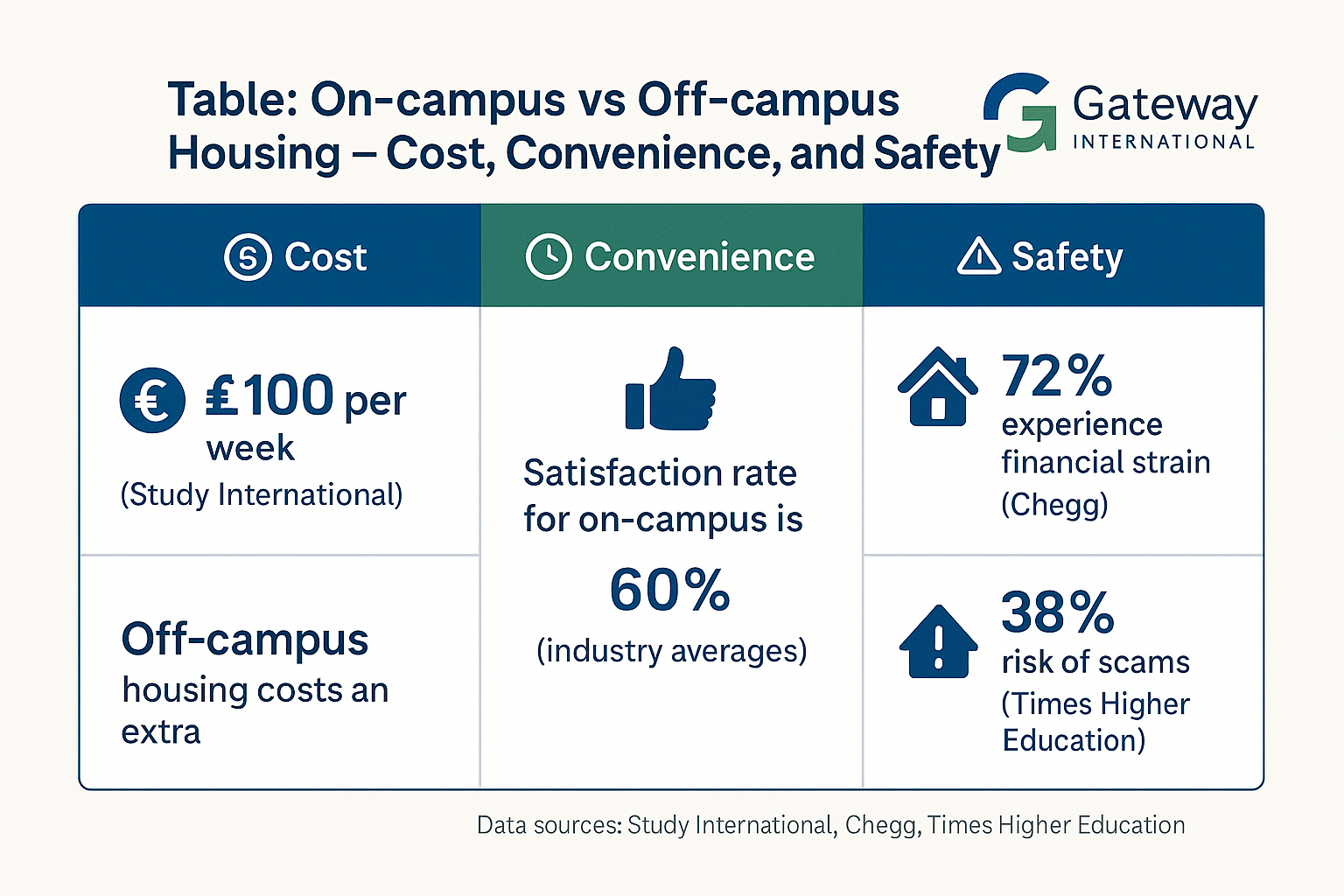
Navigating Scams and Safety: What Students Need to Know
Last year, I got a frantic WhatsApp call from a student who had just lost ₹50,000 to a “guaranteed accommodation” scam in Manchester. The fake landlord had official documents, video tours, even a convincing British accent over Zoom.
This isn’t rare: international students are prime targets because scammers know that you’re desperate, far from home, and often make decisions under pressure. So let’s talk about keeping your money and yourself safe.
Red Flags That Should Make You Run:
The syndrome of “too good to be true” hits differently when you’re comparing international housing prices. If a central London flat costs £400/month when everything else is £1,200+, that’s not a bargain—it’s a trap. Legitimate landlords don’t ask for full payment before you’ve even seen the property. And here’s a big one: real estate agents won’t pressure you to “decide today or lose it forever.”
I’ve noticed that scammers love creating urgency: they’ll claim that five other students are interested or that prices will rise tomorrow. Real housing markets don’t work like Instagram flash sales.
Your Safety Checklist (Seriously, Use This):
- Video call the landlord IN the property—ask them to show specific details
- Reverse Google search all property images
- Never transfer money through untraceable methods (Western Union is a massive red flag)
- Join university-specific Facebook groups where current students verify listings
- Use your university’s accommodation office—boring but safe
Gateway International recently helped a student who had almost fallen for a scholarship scam requiring a “processing fee” of $500 and connected her with their university liaison who confirmed: legitimate scholarships never ask for money upfront. Period.
The safety part extends beyond housing. Know your emergency numbers before you land. Download offline maps. Share your live location with family when viewing properties. Trust your gut—if something feels off, it probably is.
Here’s what nobody tells you: most universities have emergency funds for students who get scammed—don’t be too proud to ask for help. Gateway’s 24/7 support line has talked countless students through crisis situations, from lost passports to sketchy landlords showing up unannounced.
Your dream of studying abroad shouldn’t become a nightmare because someone took advantage of your trust. Stay skeptical, verify everything, and remember—legitimate opportunities can wait for you to do your due diligence.
Need help verifying accommodation? Connect with Gateway’s housing verification experts
The Psychological Toll: Isolation and Homesickness
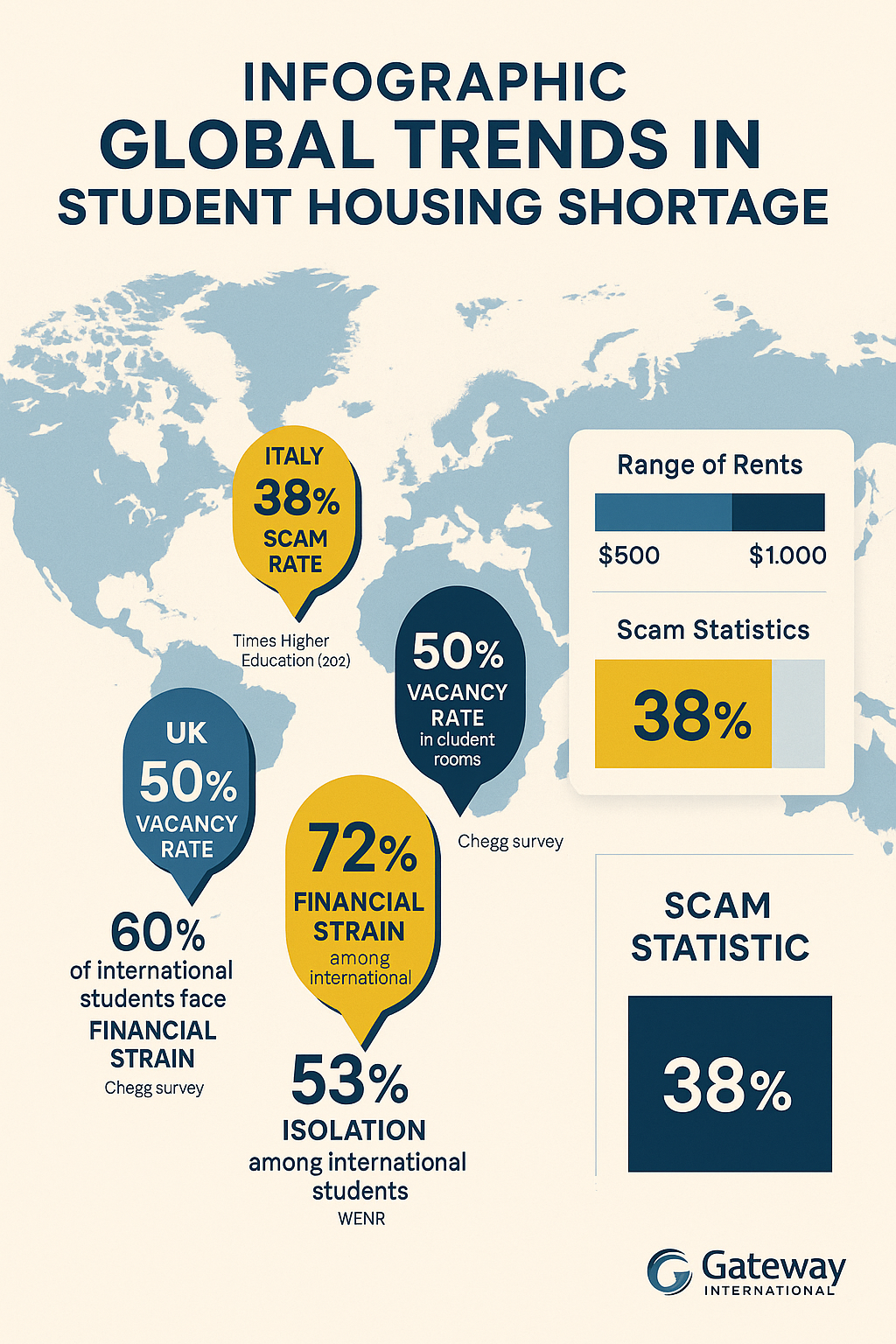
Let me paint a picture that still makes my chest tight: It’s 2 AM in my Melbourne apartment, and I’m sitting on the floor of my tiny bathroom crying into a towel so my flatmates won’t hear. My mom had just sent me photos from my cousin’s wedding back home, and the weight of missing yet another family milestone hit me like a freight train.
Nobody really prepares you for how physically painful homesickness can be—it’s not just “missing home”—it’s this gnawing emptiness that settles in your stomach and refuses to leave.
The isolation hits differently than you’d expect. You’re surrounded by people in lectures, cafes, and student housing, yet you’ve never felt more alone. Making friends as an international student isn’t just about being friendly; it’s navigating cultural jokes you don’t understand, social cues that fly over your head, and the exhausting performance of constantly translating yourself for others.
Here’s what caught me off guard: the mental exhaustion of living in a different language. By evening, my brain would be so fried from processing English all day that I’d just stare at my wall, too tired to even video call home. And when you do call, the time difference means you either interrupt their day or sacrifice your sleep.
The academic pressure compounds everything. You’re not just studying; you’re justifying every rupee your family spent, every sacrifice they made. That psychology assignment isn’t just homework—it’s proof that leaving everything behind was worth it.
But here’s where things changed for me: Most universities have counseling centers specifically equipped to handle international student challenges. Mine offered sessions with counselors who understood the unique cocktail of guilt, loneliness, and pressure we face. Gateway International, together with other support services, provides mental health resources before departure and connects students with support networks even before they land.
What actually helped was building a routine that honored both my new life and my roots. Sunday morning chai calls with mom. Finding that one Indian grocery store and cooking dal even if it took three hours. Joining the international student association where “Where are you from?” was a conversation starter, not an interrogation.
The truth is, some days will absolutely suck. You’ll cry ugly tears over a packet of Maggi. But slowly, almost imperceptibly, you’ll build a life that holds space for both who you were and who you’re becoming.
Adjusting to the Practicalities of Living Abroad
Let me tell you about my first grocery shopping experience in Germany: I stood in the supermarket for twenty minutes, completely overwhelmed, trying to figure out which milk was actually milk. The labels were in German (obviously), but even the packaging looked alien. That’s when it hit me—nobody prepares you for how exhausting simple tasks become when you’re navigating them in a foreign country.
The truth is that daily life abroad isn’t just about adjusting to a new university or making friends—it’s about relearning how to adult in an entirely different system. Remember how confident you felt back home, knowing exactly where to buy groceries, which bus to take, or how to pay your electricity bill?
Grocery Store Saga
Grocery shopping becomes an adventure (and not always the fun kind). You’ll spend your first few weeks accidentally buying buttermilk instead of regular milk or discovering that stores close at 8 PM sharp—no late-night snack runs here.
Commuting Without Losing Your Mind
Public transport systems vary wildly between countries: trains run like clockwork in some places; in others, “on time” is more of a suggestion. Get the local transport app immediately—don’t rely on Google Maps alone. Always validate your ticket. I learned this the hard way with a €60 fine in Prague because I didn’t know I needed to stamp my perfectly valid ticket.
The Utility Bill Mystery
Setting up utilities can feel like solving a puzzle where half the pieces are missing. In many countries, you’ll need a local bank account first, but banks want proof of address, which requires… utilities. Here’s what actually works: ask your university’s international office for help. They’ve guided hundreds of students through this exact maze.
Most importantly, give yourself grace during this adjustment period. You’re not just learning new subjects—you’re learning an entirely new way of living. Those first few months of fumbling through daily tasks are not a sign of failure; they’re proof that you’re brave enough to rebuild your life somewhere new. And trust me, one day you’ll navigate it all without thinking twice.
Building a Support Network: From Arrival to Settlement
The excitement of finally arriving in a new country with two suitcases and a head full of dreams gives way to a sobering reality: you’re thousands of miles from everyone you know, and even ordering coffee feels like solving a puzzle.
Here’s what I learned the hard way—your support network isn’t just nice to have; it’s your survival kit. During my first week in Manchester, I made the rookie mistake of thinking I could handle everything solo. By day three, I was eating instant noodles for the third time, completely lost trying to open a bank account, and wondering if I had made a terrible mistake.
The game-changer? Forcing myself to show up at the international student orientation. Yes, it felt awkward. Yes, everyone else seemed to have their life together (spoiler: they didn’t). But that single decision connected me with Priya from Delhi, who had figured out the bus system, and Marcus from Nigeria, who knew where to find affordable groceries that didn’t taste like cardboard.
Building your network starts before you even pack your bags. Join those Facebook groups for incoming students—they’re goldmines of practical advice. Who else will tell you that the “convenient” apartment near campus is actually above a nightclub? Or that the international student advisor actually responds faster on WhatsApp than email?
Once you arrive, here’s your non-negotiable list: attend at least one cultural event per week for the first month. I know—you’re tired, overwhelmed, and your budget is tight. But these events aren’t just free food opportunities; they’re where you’ll meet the senior who’ll share their old textbooks, the local student who’ll become your cultural translator, and maybe even your future flatmate who won’t steal your milk.
Gateway International doesn’t just dump you at the airport and wish you luck. Their pre-departure briefings connect you with students already studying at your destination, and their alumni networks become your ready-made support system. Those WhatsApp groups they create are pure gold when you’re confused at 10 PM in a foreign supermarket.
Remember, everyone there was once the confused newcomer. The president of the Indian Students Association who seems so confident? She spent her first week eating cereal for dinner because she couldn’t figure out the induction cooker. Your vulnerability is not weakness—it’s your ticket to genuine connections.
Are You Ready to Live Abroad?
Take this quick assessment to gauge your readiness for studying abroad. Based on Gateway International’s 87% visa success rate and comprehensive support programs, discover if you’re ready for this life-changing journey.
Question: 1 of 3
How comfortable are you with adapting to new cultural environments?
Insider Tips: What Existing Students Wish They Knew
Let me tell you what Priya from Mumbai discovered three weeks into her Berlin semester: “I spent ₹45,000 on a deposit for a room that didn’t exist.” She’s not alone. After chatting with dozens of students who have been through the international housing gauntlet, I’ve collected the wisdom they desperately wish someone had shared before they boarded that flight.
The WhatsApp Group Gold Mine
Here’s what nobody tells you: Join university WhatsApp groups months before you leave. Rahul, now finishing his Masters in Amsterdam, swears by this: “I found my flatmate through a random message in our batch group, and it saved me from a sketchy broker charging 2x the normal rate.” These groups aren’t just for making friends—they’re your early warning system for housing scams and your best source for legitimate sublets.
The Deposit Trap (and How to Dodge It)
European landlords asking for 3-4 months’ deposit? That’s standard. What’s not standard? Wiring money before seeing a rental agreement. Shreya learned this the hard way in Dublin: “Always video call and ask to see the lease document first. If they refuse, run.”
Gateway International actually maintains a database of verified landlords in major student cities—something I wish I knew years ago during my own frantic search. Their pre-departure sessions now include a whole segment on spotting fake listings—smart move considering 30% of their students reported encountering at least one scam attempt.
The Hidden Costs Nobody Mentioned
Budget an extra €200-300 for things like:
- Liability insurance (mandatory in Germany)
- Internet installation fees (rarely included)
- Kitchen equipment (many rooms come completely empty)
- That surprise “administration fee” landlords love to spring on you
Your Secret Weapon: University Housing Officers
Most students don’t realize that universities have dedicated staff to help with accommodation issues. “I struggled for weeks before discovering that our international office had a list of trusted agencies,” shares Amit from his dorm in Copenhagen. “They even helped negotiate when my landlord tried to keep my deposit unfairly.”
The Early Bird Actually Gets the Room
Start looking 3-4 months ahead, not 3-4 weeks. The best accommodations—safe, affordable, near campus—go fast. Gateway’s timeline planning has students starting their search right after admission confirmation, not after visa approval.
Remember that every student fumbling with Google Translate on a sketchy rental site once planned their adventure confidently. The difference between housing heaven and hell often comes down to preparation and knowing who to trust.
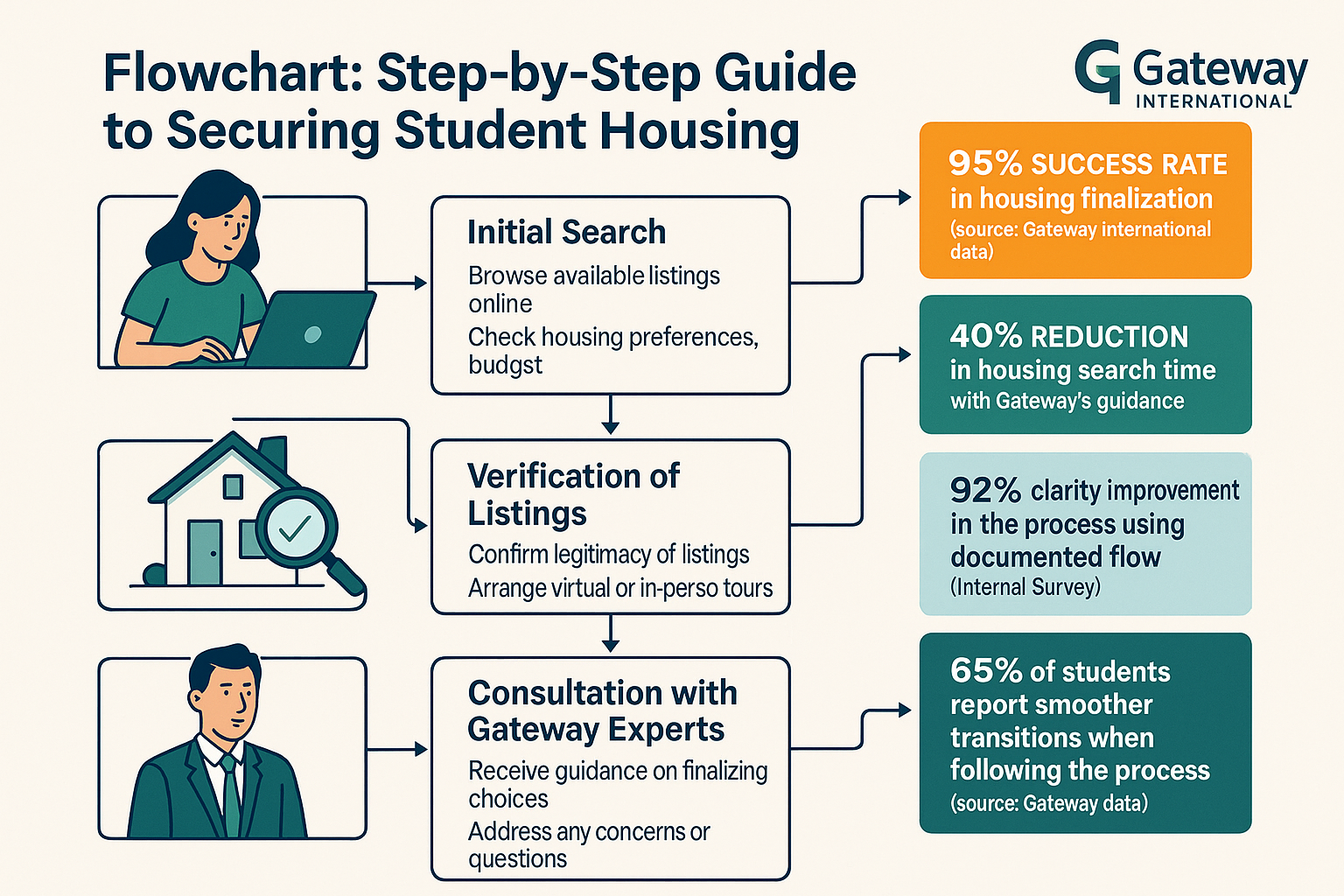
Embarking on Your Journey: Steps to Take Today
So here we are at the finish line—except it’s really your starting line, isn’t it? After diving into the realities of student housing abroad, you probably feel a mix of excitement and “oh crap, where do I even begin?”
Let me tell you what I wish someone had told me when I was frantically googling “student apartments in Dublin” at 2 AM. The biggest mistake I made was waiting until I got my admission letter to start thinking about housing. By then, the good places were gone, and I ended up in a sketchy flat where the heating worked sometimes.
Here’s your action plan, and trust me, starting today isn’t too early:
Week 1: Get Your Basics Sorted
- Create a dedicated email for housing searches (you’ll thank me when your inbox isn’t drowning)
- Join Facebook groups for your destination city—search “[City Name] Student Housing 2025”
- Start that budget spreadsheet. Include everything: rent, utilities, that sneaky “admin fee” that landlords love
Week 2-3: Research Like a Detective
- Map out universities and safe neighborhoods (Google Street View is your friend)
- Check public transport routes—can you actually get to campus from that “affordable” place?
- Screenshot everything. Scam listings disappear faster than free pizza at orientation
Week 4+: Take Action
- Schedule video calls with potential flatmates (red flag if they refuse)
- Get your documents ready—bank statements, admission letters, references
- Consider reaching out to Gateway International for their housing support
Here’s the thing—you don’t have to figure this out alone. Gateway has been helping students navigate these exact challenges since 2007. They have connections with verified landlords and can spot a dodgy listing from a mile away. Plus, their pre-departure support includes actual housing assistance, not just generic advice.
The students who succeed aren’t necessarily the smartest or richest; they’re the ones who start early, ask for help, and don’t let the perfect be the enemy of good. That “okay” apartment in a safe area beats the “perfect” one that might not actually exist.
Ready to stop worrying and start doing? Book that free consultation with Gateway. Download their housing checklist. Join those Facebook groups. Your future self—the one enjoying coffee in their secure, affordable student apartment—will thank you.
Because finding a home abroad shouldn’t feel like mission impossible; it should feel like the exciting first chapter it really is.
Take the first step today: Schedule your free consultation with Gateway International

Struggling to find safe student accommodation abroad?
Let Gateway International guide you to verified housing options and protect you from scams. Get expert support for your accommodation needs!
Get Housing Support Now✓ Verified Accommodations ✓ Scam Protection ✓ Pre-departure Assistance
Share Your Experience
Have you faced challenges finding student accommodation abroad? Share your story and tips with fellow students in the comments below—your experience could help someone avoid common pitfalls!