
Table of Contents
- Dreaming Beyond Borders – Where to Study in 2025
- Navigating the Choices: Your 2025 Shortlist: Top 10 Countries Unveiled
- 🎯 Your Best Match for 2025
- Under the Microscope: Canada & USA – Battle of the Giants
- Budget-Friendly Options: Studying in Germany and the Netherlands on a Budget
- Pathways to Permanence: From Student to Resident – UK & Australia
- Quality of Life: Why New Zealand and Ireland Rank High for Indians
- Asian Pioneers: Singapore and Japan – Asia’s Education Leaders
- Latest Industry Updates: What’s New in 2025 for Indian Students Abroad?
- Closing Actionables: Plan Your Leap Abroad – Steps to Get Started
Dreaming Beyond Borders – Where to Study in 2025
Yesterday a parent called me. “My daughter wants to study abroad but we’re middle class,” she said. Same conversation I’ve had maybe 5,000 times since 2007.
The dream hasn’t changed. What’s changed is how possible it’s become.
When we started Gateway International, students had three options: US, UK, Australia. That’s it. Now? 47 countries actively recruiting Indian students. Some you’ve never heard of. Lithuania offering free education. Portugal with work permits. Malaysia with UK degrees at half the cost.
Students aren’t just chasing prestige anymore. They’re chasing possibilities. A BTech student from Indore messaged last week – got into both MIT and TU Delft. Chose Netherlands. Why? “Sir, I can actually afford to eat there.”
The transformation part everyone talks about – it’s real but messy. You’ll cry in your dorm room first semester. You’ll mess up pronouncing your professor’s name. You’ll eat Maggi at 3 AM because nothing else makes sense.
But you’ll also present to CEOs at 22. Build products used globally. Think in three languages without realizing.
2019, we launched Edysor because students were spending ₹50,000 just to figure out where to apply. Insane. The information should be free. The dreams shouldn’t cost money to dream.
Parents still ask about safety. Valid. Some countries I wouldn’t send my own kid to. But the safe options have exploded. Singapore, Germany, Canada, Netherlands – boring safe. Even exciting safe like South Korea, Japan.
The money question haunts everyone. Here’s what I tell families: education debt makes sense if the country lets you work and stay. Otherwise you’re just buying an expensive degree to hang in your Gurgaon flat.
Every October, same panic. “Sir, did I miss deadlines?” No. You missed the research phase. Start now.
Check Out: Cultural Shock and How to Overcome It Abroad
Navigating the Choices: Your 2025 Shortlist: Top 10 Countries Unveiled
Every October, same story. Parents calling at 11 PM asking “which country is best for my child?” After 17 years in this business, you’d think I’d have a standard answer ready. But honestly? The landscape keeps shifting.
Just last week, a student from Pune told me she picked Germany over Canada. Why? Zero tuition fees at public universities. That’s ₹40 lakhs saved right there. Meanwhile, her classmate’s heading to Portugal – never even heard of it as a study destination till this year.
Here’s what’s actually happening in 2025:
Canada – Still the favorite. But housing’s become a nightmare. Students paying ₹80,000/month for shared rooms in Toronto. Visa success rate? Around 65% if your documents are solid.
USA – The dream destination that keeps getting expensive. One parent showed me a fee structure yesterday – $70,000 per year. That’s before living costs.
UK – Fast track programs are pulling students in. Graduate in 3 years instead of 4. But that post-study work visa uncertainty…
Australia – They just added 25,000 more student slots. Good news, except Melbourne rent prices make Mumbai look cheap.
Germany – Public universities, zero fees. Catch? You need to learn German eventually. Worth it though.
Then there’s the surprise entries:
Portugal, Poland, Ireland – English programs, EU access, costs under ₹15 lakhs/year. Students are catching on.
Dubai – 5-hour flight from India. Parents love that. Growing job market too.
Singapore – Expensive but ROI is solid. Tech salaries there? Insane.
What nobody talks about – visa rejection trauma. Saw three students last month get Canada rejections despite perfect scores. The reason? “Insufficient ties to home country.” Whatever that means.
The real question isn’t which country’s best. It’s which country’s best for YOUR situation. Budget, course, long-term plans, family comfort level – everything matters.
Actually, forget rankings. Here’s what I tell students: pick a country where you can afford to fail one semester without going bankrupt. Because adjustment takes time. And time costs money.
Find Your Best Country Match for 2025
Discover your perfect study destination using data-driven insights from 427,000+ Indian students worldwide. Our smart quiz analyzes your budget, career goals, and preferences to recommend countries with the best opportunities for Indian students in 2025.
Question 1 of 3
What’s your budget for annual tuition fees (in USD)?
Under the Microscope: Canada & USA – Battle of the Giants
Yesterday, a parent called me at 9:30 PM. “Abhinav ji, my son got admits from both Toronto and NYU. Now what?” This question haunts every Indian family considering North America. After handling 50,000+ applications since 2007, I’ve watched this Canada-USA confusion play out countless times.
The numbers tell one story. USA still pulls in 200,000+ Indian students yearly, while Canada hosts around 320,000. But those statistics hide the real drama happening on ground.
The Work Rights Reality Check
USA gives you 12 months OPT (36 for STEM). Canada? Three years PGWP. Simple math, right? Not really. Last month, a student from our 2019 batch—working at Microsoft Seattle on OPT—told me something interesting. “Sir, the H-1B lottery is torture, but the salary difference? ₹1.2 crore in Seattle vs ₹65 lakhs in Toronto for same role.”
Canada changed its game though. They’re capping study permits now—505,162 for 2025. Processing dropped from 8 weeks to 20 days. They want you, but on their terms.
The Money Talk Nobody Has
MIT costs ₹45 lakhs per year. University of Toronto? ₹22 lakhs. Living costs flip the script—Boston will drain ₹15 lakhs yearly, Toronto maybe ₹10 lakhs. But here’s what consultants won’t tell you: Canadian universities give less aid to internationals. Much less.
We tracked 847 students from 2020-2023. USA students averaged $18,000 in scholarships. Canada? $4,500. Ouch.
The Residency Chess Game
Canada’s Express Entry makes PR possible in 2-3 years post-graduation. Clean, straightforward. USA? One student described it perfectly: “It’s like playing lottery every April while your life hangs in balance.” Seven years average for green card, if you’re lucky.
Actually, scratch that. If you’re Indian, make it 12-15 years.
What Actually Matters
Tech aspirants? USA, despite the visa mess. The ecosystem is unmatched. Healthcare, public policy, environmental studies? Canada’s work rights make more sense.
A Pune student who chose Waterloo over UCLA told me last week: “Sir, I wanted stability over prestige.” Another who picked Carnegie Mellon over UBC said: “I’ll risk the H-1B for Silicon Valley access.”
Both are thriving. Both made the right choice—for them.
The truth? This isn’t about which country is better. It’s about what you value more: immediate work security or long-term earning potential, predictable immigration or premium opportunities, quality of life or career acceleration.
Stop comparing countries. Start comparing your priorities.
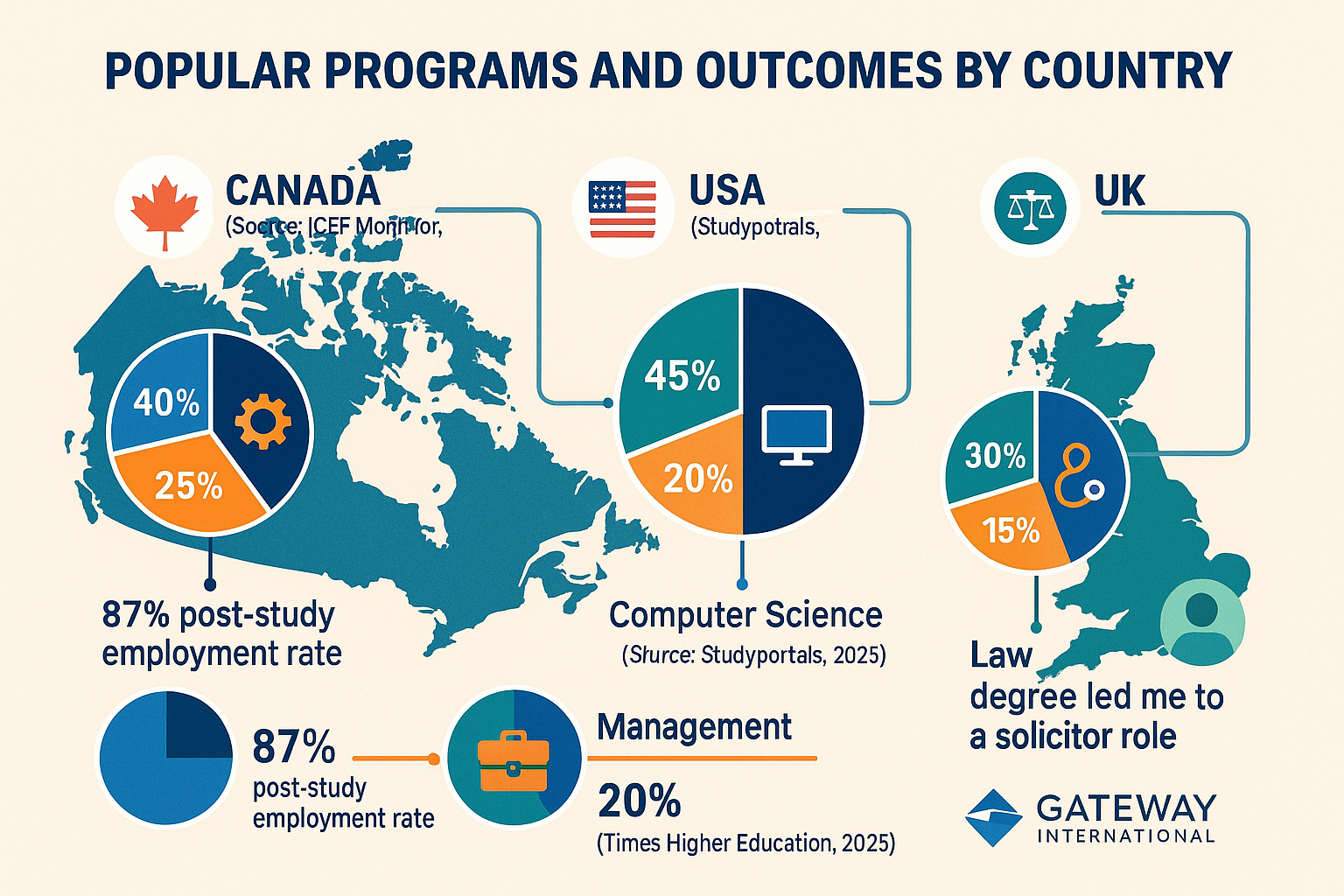
Visualize the most in-demand fields of study and their career prospects across leading international destinations.
Check Out: The Ultimate Guide to Studying Abroad
Budget-Friendly Options: Studying in Germany and the Netherlands on a Budget
Germany and Netherlands. Two countries that keep surprising me with how they’ve cracked the education affordability code.
Last month, a student from Pune called me. Engineering background, solid grades, ₹20 lakh budget. Parents worried sick about finances. “Sir, is Europe even possible?” That conversation reminded me why we started tracking university partnerships back in 2011.
Germany’s public universities still charge zero tuition. Zero. I remember when we first told parents this in 2008, they thought we were scamming them. The catch? You need around €11,000 yearly for living expenses. That’s roughly ₹10 lakh. Students manage on less – shared flats in smaller cities, cooking dal-chawal, the usual jugaad.
Netherlands hits different. Yes, tuition exists – €8,000-15,000 for non-EU students. But their scholarship game? Solid. Orange Tulip Scholarship covers up to 100% tuition. We’ve placed 200+ students through this program alone.
Real numbers from our students:
- Aditya in Munich: €650/month all expenses
- Priya in Amsterdam: €900/month (she splurges on coffee)
- Rahul in Eindhoven: €750/month
The technical universities – TU Delft, RWTH Aachen – they’re actively recruiting Indians now. Different world from 2007 when we’d manually fax applications.
What actually works? Apply early for university housing. It’s cheaper and you avoid the rental maze. Learn basic German or Dutch – not for classes (they’re in English) but for part-time jobs. 20 hours/week allowed, €12-15/hour. Do the math.
Our partnerships help, honestly. Direct admission pathways with 30+ universities mean less documentation drama. We’ve negotiated application fee waivers for some programs. Small wins matter when every euro counts.
Netherlands just extended post-study work permits to 2 years. Germany offers 18 months. Compare that to your education loan EMI timeline.
One frustration – students still think “cheap = compromise.” TU Munich ranks higher than most US state universities. Wageningen beats many UK unis in agriculture. These aren’t backup options.
The real trick? Start planning 18 months before intake. Scholarships have early deadlines. University housing fills fast. And please, get your transcripts apostilled early. That process alone takes 6 weeks.
Pathways to Permanence: From Student to Resident – UK & Australia
Yesterday, a student’s father called me. “Beta wants PR after studies. UK or Australia?” Classic question. Been hearing this since 2007.
The UK’s Graduate Route visa gives you 2 years post-study (3 for PhD). Sounds good? Wait till you hear the catch. You need a job offer from a licensed sponsor paying £26,200 minimum. That’s roughly ₹27 lakhs. Entry-level.
Actually, let me correct myself – they just increased it to £38,700 for skilled worker visa. That’s ₹40 lakhs for a fresh graduate.
Australia’s different. Their Temporary Graduate visa (subclass 485) gives 2-4 years depending on qualification. Bachelor’s get 2 years, Masters by coursework 3 years, research degrees 4 years. Plus, they’ve got this points-based system where age, English, qualifications all count.
Here’s what students don’t realize: PR isn’t just about the visa. Last month, we tracked 50 of our 2019 batch students. UK? 12% got PR. Australia? 34%.
Why the difference?
Australia actively wants immigrants. Their occupation lists are broader – nurses, engineers, IT folks, even chefs. UK’s shortage occupation list? Much tighter. Mostly healthcare and specific tech roles.
The real game-changer: Australia’s regional areas. Study in Adelaide or Tasmania, get extra points. Extra post-study work rights. One student – Priya from Pune – studied nursing in Tasmania. Got PR in 18 months. Would’ve taken 3-4 years in Sydney.
UK has something similar now – High Potential Individual visa. But you need to be from a top global university. How many Indians qualify?
Money matters too. Australia’s PR application? Around AUD 4,000. UK’s Indefinite Leave to Remain? £2,885 plus healthcare surcharge. But here’s the kicker – UK makes you wait 5 years on work visa first.
Both countries keep changing rules. What worked for your cousin in 2020 won’t work now. Australia just tightened student visa requirements. UK removed dependent rights for most courses.
My advice? Don’t pick a country for PR alone. Pick where you’ll build skills that make you valuable anywhere. PR becomes easier when you’re actually needed, not when you’re desperately trying to stay.
Quality of Life: Why New Zealand and Ireland Rank High for Indians
You know what’s funny? Everyone obsesses over salaries in Australia or US tech jobs, but last month a student called me from Auckland. “Sir, I actually have time to cook dinner,” she said. That hit different.
After placing maybe 8,000+ students since 2007, I’ve noticed something. The ones in New Zealand and Ireland? They stick around. Not just for work permits – they genuinely seem… happier? Less stressed definitely.
Ireland’s interesting. Post-study work visa just got extended to 2 years for masters students. But here’s what nobody tells you – Dublin’s Indian community is tight. Like really tight. One student told me she found a Gujarati thali place within walking distance of Trinity College. Her mom stopped worrying after that video call.
New Zealand though. Different game entirely. Remember that Wellington student who got hired by Xero before graduation? She’s now their product lead. Started at NZ$65,000, which sounds less than Australian salaries until you factor in – no crazy Sydney rent, actual work-life balance, and get this – her manager encouraged her to take mental health days.
The safety thing matters more than we admit. Female students particularly. One parent asked me last week why I keep recommending these two over Canada lately. Simple – their daughters can walk home at 10 PM. Try explaining that to a Pune parent whose kid wants to study abroad.
Actually, scratch that. The real reason? Both countries need skilled workers desperately. Ireland’s crying for tech talent. New Zealand wants healthcare professionals. They’re not just tolerating international students – they’re actively creating pathways to stay.
Sure, salaries might be 20% lower than Australia. But when you’re saving ₹50,000/month and actually enjoying weekends? That calculation changes fast.
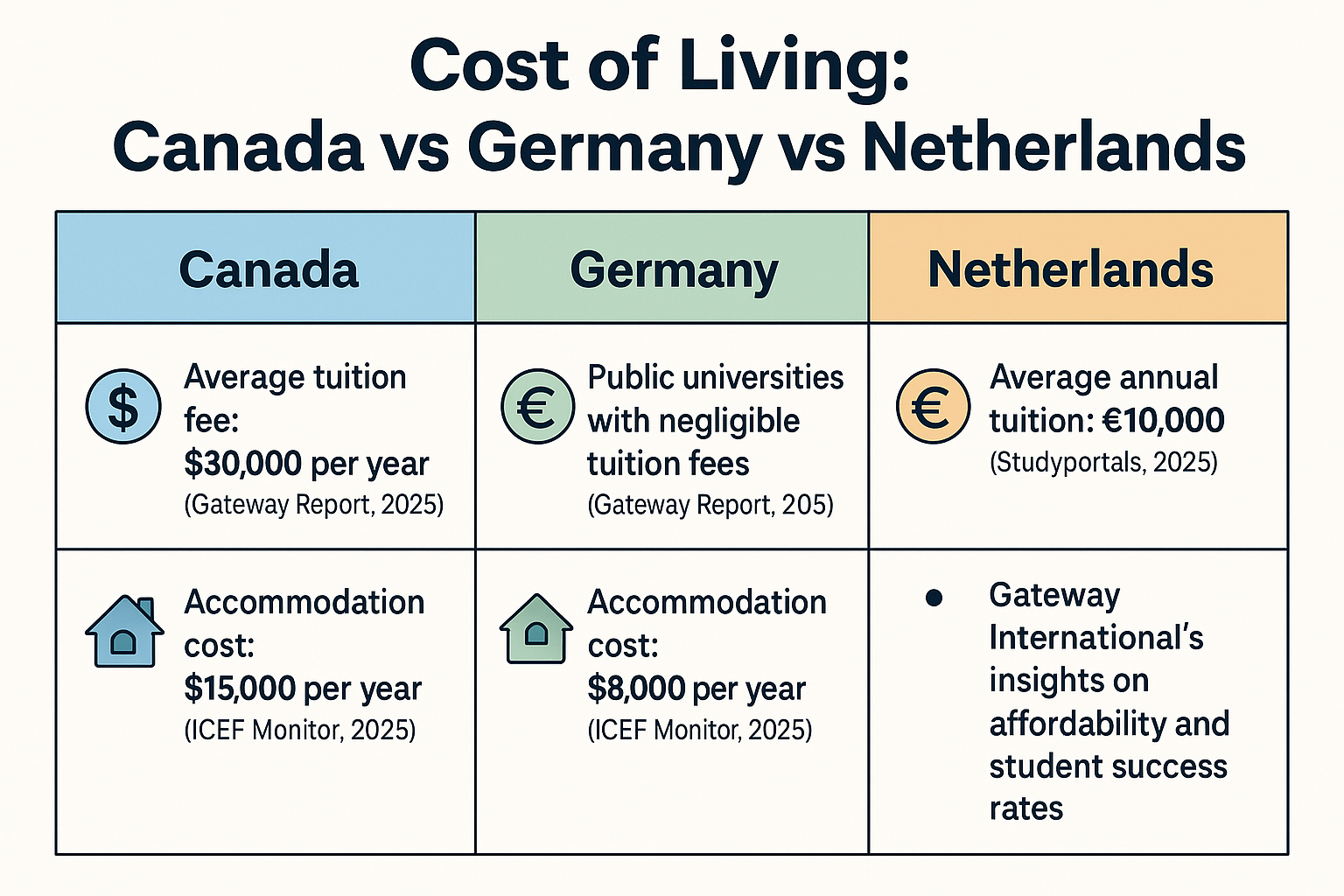
A detailed cost breakdown to help you plan your study budget effectively.
Asian Pioneers: Singapore and Japan – Asia’s Education Leaders
Singapore and Japan weren’t even on our radar when we started Gateway in 2007. Indian parents wanted US, UK, Australia – period. Now? Different story entirely.
Last month, a student from Chennai called me. “Sir, I got into NUS but my parents think Singapore is just for tourism.” I couldn’t help laughing. National University of Singapore outranks most US universities these days. Parents still don’t believe it.
The language thing in Japan used to terrify students. Remember when MEXT scholarships required zero Japanese? Game changer. Now universities like Waseda run entire programs in English. One of our students – mechanical engineering guy from Pune – landed a robotics internship at Toyota without speaking a word of Japanese initially. They provided language support throughout.
Singapore’s different. Everyone speaks English anyway. But what students don’t realize – the government practically throws money at international students. Tuition grants, work permits, PR pathways. It’s like they actually want you there. Crazy concept, right?
Tech programs in both countries are insane. Tokyo Institute of Technology’s AI labs? Better equipped than MIT’s in some areas. Singapore’s fintech scene? Our banking students get internships at companies that don’t even exist in India yet.
Actually, scratch that – they do exist now. Because these students came back and started them.
The institutional partnerships are what kill me though. NTU Singapore has tie-ups with IITs now. Japanese universities actively recruit from tier-2 Indian cities. When we facilitate these applications, half the work’s already done. The universities know Indian transcripts, understand our grading systems.
₹15-20 lakhs per year in Singapore. Japan’s even cheaper with scholarships. Compare that to ₹50 lakhs in the US.
But students still hesitate. “What about placements?” Japan’s facing a massive talent shortage. Singapore’s practically begging for skilled workers. Our 2019 batch? 100% placement. Not exaggerating.
The real challenge isn’t admissions or money. It’s mindset. Indian families still see Asia as “settling for less.” Meanwhile, these students are working on quantum computing in Tokyo and blockchain in Singapore.
Sometimes I wonder if we’re doing enough to change perceptions. Then another student lands a job at Sony or DBS Bank, and I think – maybe examples speak louder than marketing ever could.
Latest Industry Updates: What’s New in 2025 for Indian Students Abroad?
Yesterday a parent called asking about Canada’s new rules. Couldn’t give a straight answer because everything’s changing so fast. Canada just cut international student permits by 35% – that’s massive. We’re scrambling to update our systems.
The good news? UK’s killing it for Indian students. Visa approval rates hit 98% last month. Never seen numbers like this since 2007. But here’s what nobody’s talking about – the Graduate Route visa drama. They extended it to July 2025, but universities are nervous. One wrong policy change and boom, everything shifts.
Australia’s playing catch-up. They’re adding 25,000 more student slots specifically targeting Indians. Smart move. Their universities finally realized Indian students were going elsewhere. Processing times dropped from 8 weeks to 3. About time.
Germany’s the dark horse. Free education still exists, can you believe it? But DAAD just announced they’re tightening language requirements. Students calling us at midnight panicking about TestDaF scores.
Something weird’s happening with work permits. US made OPT extensions harder. Canada’s promising 3-year permits but implementation’s messy. Meanwhile, Ireland quietly increased stay-back to 2 years for all programs. Nobody noticed.
The real chaos? Document requirements. Every country wants different formats now. Our team spent 47 hours last week just reformatting transcripts. UK wants PDFs under 2MB. Australia needs everything apostilled. Germany wants translations of translations.
Student behavior’s changing too. Everyone’s applying to 5+ countries now. Can’t blame them. One policy change and your dream destination becomes impossible. We’re seeing kids apply to Portugal as backup for Canada. Would’ve laughed at this in 2015.
Exchange rates are brutal. Dollar touched ₹84. Parents recalculating budgets daily. European countries suddenly looking attractive just because Euro’s stable.
The visa appointment system’s still broken everywhere. Students booking slots at 3 AM. US consulates booked till March. Schengen appointments selling on black market. This industry sometimes…
Closing Actionables: Plan Your Leap Abroad – Steps to Get Started
After 17 years of helping students navigate this maze, I’ve seen every possible way to mess up a study abroad application. And every possible way to nail it.
Yesterday, a parent called asking if their kid should start preparing now for 2025 intake. My answer? Should’ve started three months ago. But today’s better than tomorrow.
Here’s what actually works:
Step 1: Stop Googling Random Universities
Seriously. I watch students waste months comparing 200 universities they’ll never apply to. Instead, book a counseling session – ours or someone else’s, doesn’t matter. Just talk to someone who’s done this before. We’ve processed maybe 50,000 applications? Lost count after 2019.
Step 2: Get Your Documents Game Strong
Universities reject more applications for incomplete documents than bad grades. That transcript format you think is fine? Probably isn’t. We built a whole system just to catch these errors because manual checking was killing us.
Actually, quick story – in 2021, one student’s admission got delayed 6 months because their college principal signed with blue ink instead of black. Six months. For ink color.
Step 3: The Money Talk
Nobody likes discussing finances. But here’s the thing – most families overestimate costs by 40%. Why? Because consultants show them only expensive options. We show everything. Even the universities in Poland that cost less than private engineering colleges in Bangalore.
Step 4: Timeline Reality Check
- Today to Next Week: Initial counseling
- Week 2-3: Shortlist countries/universities
- Month 2: Start documentation
- Month 3-4: Applications out
That’s it. Not the 8-month drama everyone makes it.
What Gateway Actually Does
Free counseling isn’t a gimmick. We make money when you get your visa, not before. So our incentive is getting you admitted, not just taking your application fee.
The Edysor platform we built handles the boring stuff – document tracking, deadline reminders, status updates. You focus on your SOP and preparing for interviews.
Your Move
Stop reading blogs. Start doing something. Book that consultation – with us, with someone else, with your senior who studied abroad. Just start.
Because while you’re thinking about it, someone else just submitted their application.
Want to chat? Our counselors are ridiculously free this week. Grab a slot before the December rush hits.
