
Cheap Rent or Safe Stay? Tough Choices for Students Abroad
Table of Contents
- Hero’s Dilemma: Choosing Between Cost and Comfort
- Understanding Your Options: From Halls to Homestays
- Real Costs Unveiled: What to Expect Where
- The Safety Spectrum: How Secure is Your Stay?
- Scam Alert: How to Spot and Avoid Housing Frauds
- Start Early, Stay Ahead: Timing Your Accommodation Hunt
- Gateway International’s Edge: Navigating Housing Abroad
- When to Go Premium: When is On-Campus Housing Worth the Splurge?
- Step-by-Step: A Foolproof Housing Hunt Strategy
- 🏆 Your Ideal Accommodation Match
- Closing Thoughts: Making Informed Choices Abroad
Hero’s Dilemma: Choosing Between Cost and Comfort
Picture this: You’re scrolling through accommodation listings for your dream university in Toronto and your heart sinks. That “affordable” basement apartment is $800/month but has reviews mentioning break-ins. The secure student residence? $1,400 with meal plans you don’t need.
Welcome to the reality check of every Indian student.
Last year, a cousin reached out from Melbourne with a cracking voice: “Didi, I found a place for $600, but it’s 90 minutes from campus and the area feels sketchy at night.” She had budgeted $800 for rent, thinking that would get her something decent. The safe neighborhoods started at $1,200.
The accommodation landscape has transformed dramatically since 2020, with costs jumping 40% in popular study destinations. Sydney, London, New York – they’re not just expensive anymore; they’re prohibitively expensive. And Indian families, already stretching budgets for international education, face an impossible equation.
Should you save money and risk your safety, or blow your budget on secure housing and survive on Maggi for months?
The pressure intensifies when you factor in our specific concerns: Indian students often arrive with limited local knowledge, making us vulnerable to rental scams. Our parents lose sleep imagining us in unsafe neighborhoods. Yet with education loans averaging 20-30 lakhs, every dollar saved matters.
This isn’t about being paranoid or penny-pinching. It’s about making informed choices when both options feel wrong. Because here’s the truth: that “cheap” accommodation might cost you more than money if something goes wrong, but overspending on rent could mean dropping out when funds run dry.
How do we solve this? By getting smarter about our choices, understanding our options, and knowing exactly what we’re trading off.
Ready to find safe, affordable housing abroad? Get expert guidance from Gateway International’s housing specialists
Understanding Your Options: From Halls to Homestays
Navigating accommodation options for international students requires understanding the unique advantages and challenges of each housing type. After helping numerous students through this process, I have identified key factors that make or break the housing experience.
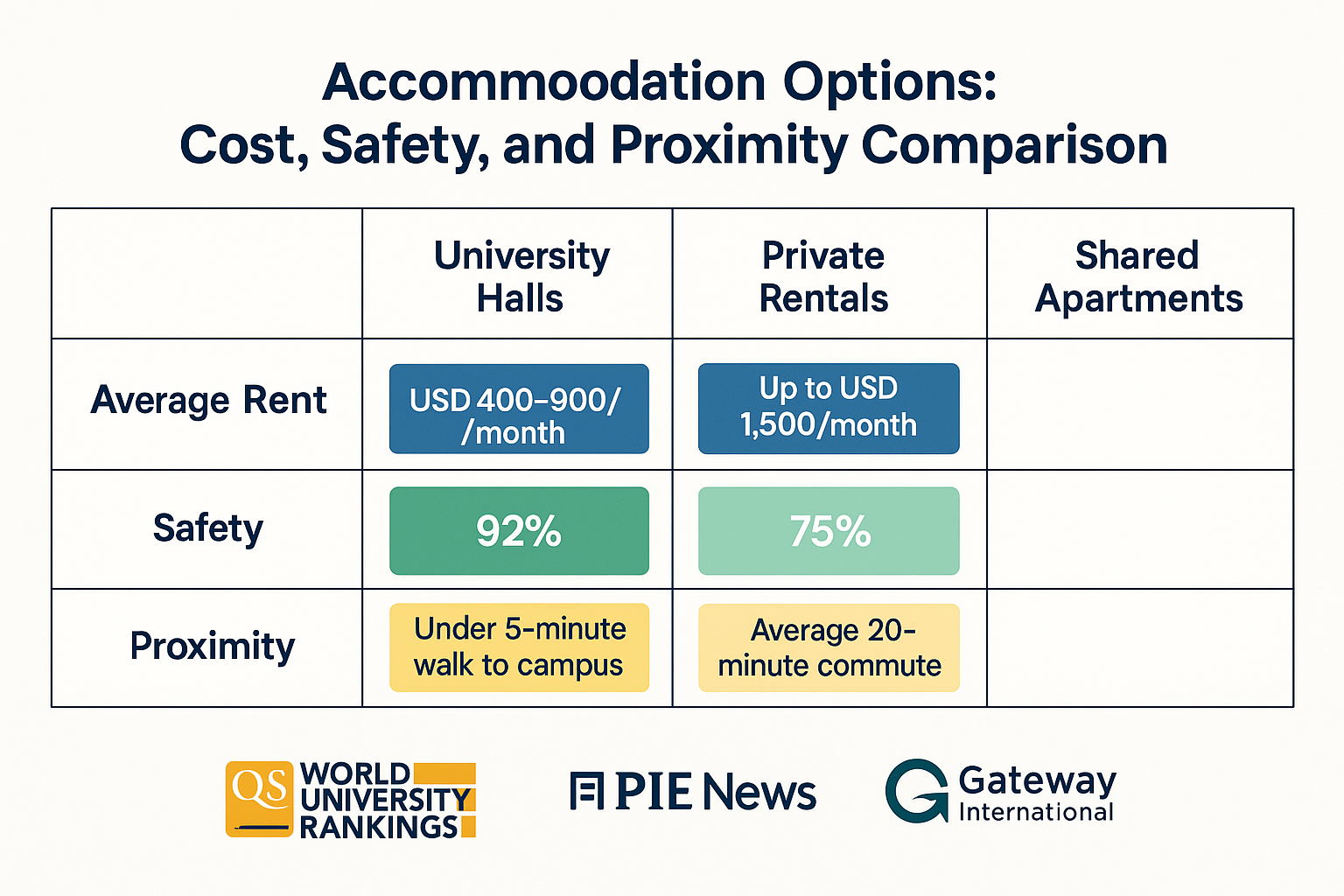
University Halls: The safest bet for first-year students. Yes, they’re pricier (think ₹60,000-80,000 monthly), but you get security, proximity to campus, and built-in social circles. My friend Priya swears that her hall experience at Leeds helped her adjust faster than anything else could have.
Private Rentals: The best value but here’s the catch – you need to know the area. Furthermore, I’ve seen students land in sketchy neighborhoods just to save £50 monthly. Not worth it. Always check crime statistics and visit during different times of the day.
Homestays: Work brilliantly for students who want that family feel abroad. You’ll pay mid-range prices but get meals included and someone looking out for you – perfect if you’re worried about the whole “cooking dal in a shared kitchen at midnight” scenario.
Shared Apartments: The trick is finding compatible flatmates to give you independence at reasonable rates. Indian student Facebook groups are goldmines for this. You’ll find people who understand why pressure cookers matter and won’t complain about turmeric stains.
My take: start with halls if budget allows, then move to shared apartments once you know the city. For Indian students specifically, proximity to Indian grocery stores and reliable public transport should factor into every decision.
Remember, the cheapest option isn’t always the smartest. That £30 monthly saving means nothing if you spend it on extra transport or feel unsafe walking home. Balance is everything – find accommodation that lets you focus on studies, not survival.
Need help choosing the right accommodation? Explore Gateway’s comprehensive housing support services
Real Costs Unveiled: What to Expect Where
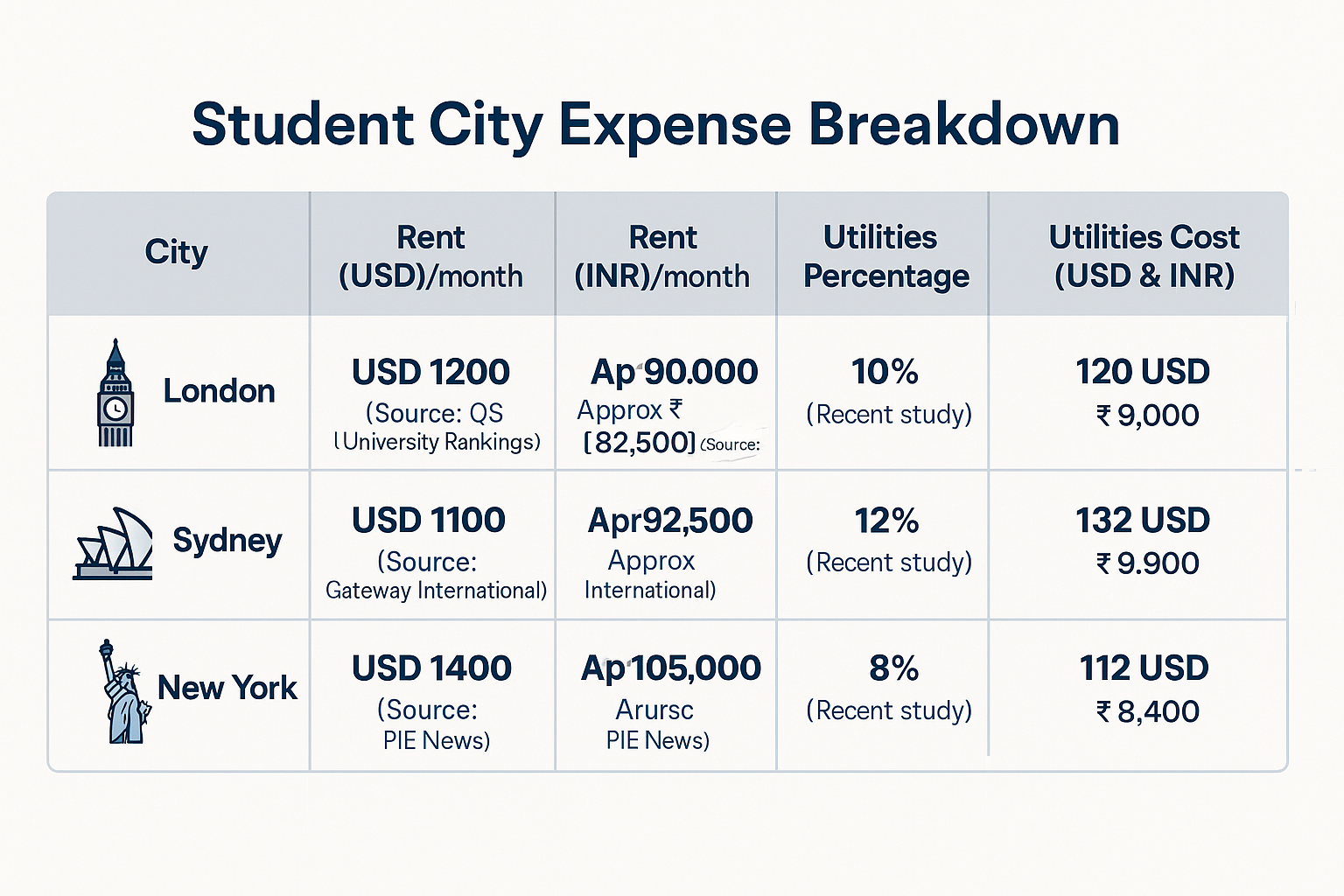
Understanding the true cost of student accommodation abroad goes far beyond the advertised rent. Last month, my cousin called from Toronto, laughing nervously about her “budget miscalculation.” She had planned for CAD 1,200 monthly rent but forgot about the mandatory tenant insurance, utility deposits, and that sneaky “first and last month” requirement. Total damage? An extra 1.5 lakhs upfront that nobody warned her about.
The glossy brochures won’t reveal the actual living costs you’ll face:
USA (Monthly INR)
- Shared accommodation: ₹50,000-80,000 (cities like NYC, Boston)
- Groceries: ₹15,000-20,000
- Hidden killer: health insurance at ₹8,000-12,000/month
UK (Monthly INR)
- London zones 3-4: ₹60,000-75,000
- Outside London: ₹35,000-45,000
- Council Tax (yes, students pay this): ₹3,000-5,000
Canada (Monthly INR)
- Toronto/Vancouver: ₹55,000-70,000
- Smaller towns: ₹30,000-40,000
- Winter utilities spike: Add 30% November-March
Australia (Monthly INR)
- Sydney/Melbourne: ₹65,000-85,000
- Brisbane/Adelaide: ₹45,000-55,000
- Bond money: 4-6 weeks of rent upfront
The real shockers are these “additional” expenses that blindside students:
- Security deposits (often non-refundable)
- Furniture for unfurnished spaces (₹50,000 minimum)
- Internet setup (₹3,000-5,000)
- Local transportation passes (₹6,000-10,000/month)
After watching dozens of students navigate this maze, here’s my advice: Budget 40% above your initial calculation. Sounds extreme? Trust me, it’s realistic. That “cheap” room listing at ₹40,000 becomes ₹56,000 after utilities, internet, and transport.
A pro tip for savvy planning: Join Facebook groups like “Indians in [City Name]” three months before departure. Current students share actual bills, warn about scam listings, and sometimes even have rooms opening up. One Mumbai student saved 2 lakhs annually just by finding a roommate through these groups instead of going through agencies.
Remember, expensive doesn’t always mean safer, and cheap doesn’t always mean compromising. It’s about finding that sweet spot where your budget meets your peace of mind.
Want accurate budget planning for your destination? Get personalized cost estimates from Gateway International
The Safety Spectrum: How Secure is Your Stay?
Safety considerations for international students extend beyond simple crime statistics. Having witnessed numerous housing situations go wrong, I’ve learned that true security encompasses multiple factors that directly impact your academic success and well-being.
A friend from Delhi discovered this reality the hard way after signing a lease for a suspiciously cheap apartment in Manchester. The photos looked fine online, but the reality was a ground floor flat with bars on windows that screamed “break-in magnet” and a neighborhood where even locals avoided certain streets after dark. She lasted three weeks before breaking her lease and losing her deposit.
Here’s what actually matters when evaluating safety:
The neighborhood vibe is everything. Visit at different times – morning rush hour tells you one story, but 9 PM on a weekday reveals the real character. Are there families around? Well-lit streets? Active shops and cafes? These subtle signs matter more than any crime map.
Building infrastructure is another beast entirely. Check if there’s secure entry (not just a broken intercom), working smoke alarms, and proper locks on windows. One Mumbai student I know discovered her “secure building” in Poland had a back entrance that was permanently propped open with a brick. Not exactly Fort Knox.
Then there’s the scam factor – and trust me, international students are prime targets. Fake listings with stolen photos, deposits demanded before viewings, landlords who suddenly “live abroad” and can only communicate via WhatsApp. If someone is pushing you to transfer money immediately because “other students are interested,” that’s your signal to run.
Your parents aren’t wrong to worry. They need real information, not WhatsApp forwards. Share actual neighborhood safety ratings from police websites. Show them Google Street View walks of your area. Maybe introduce them to your future flatmates over video call.
Remember, the cheapest option isn’t worth it if you’re constantly looking over your shoulder. Budget an extra ₹5,000-10,000 monthly for peace of mind – it’s cheaper than therapy later.
Concerned about safety in your chosen city? Access Gateway’s verified safe housing database
Scam Alert: How to Spot and Avoid Housing Frauds
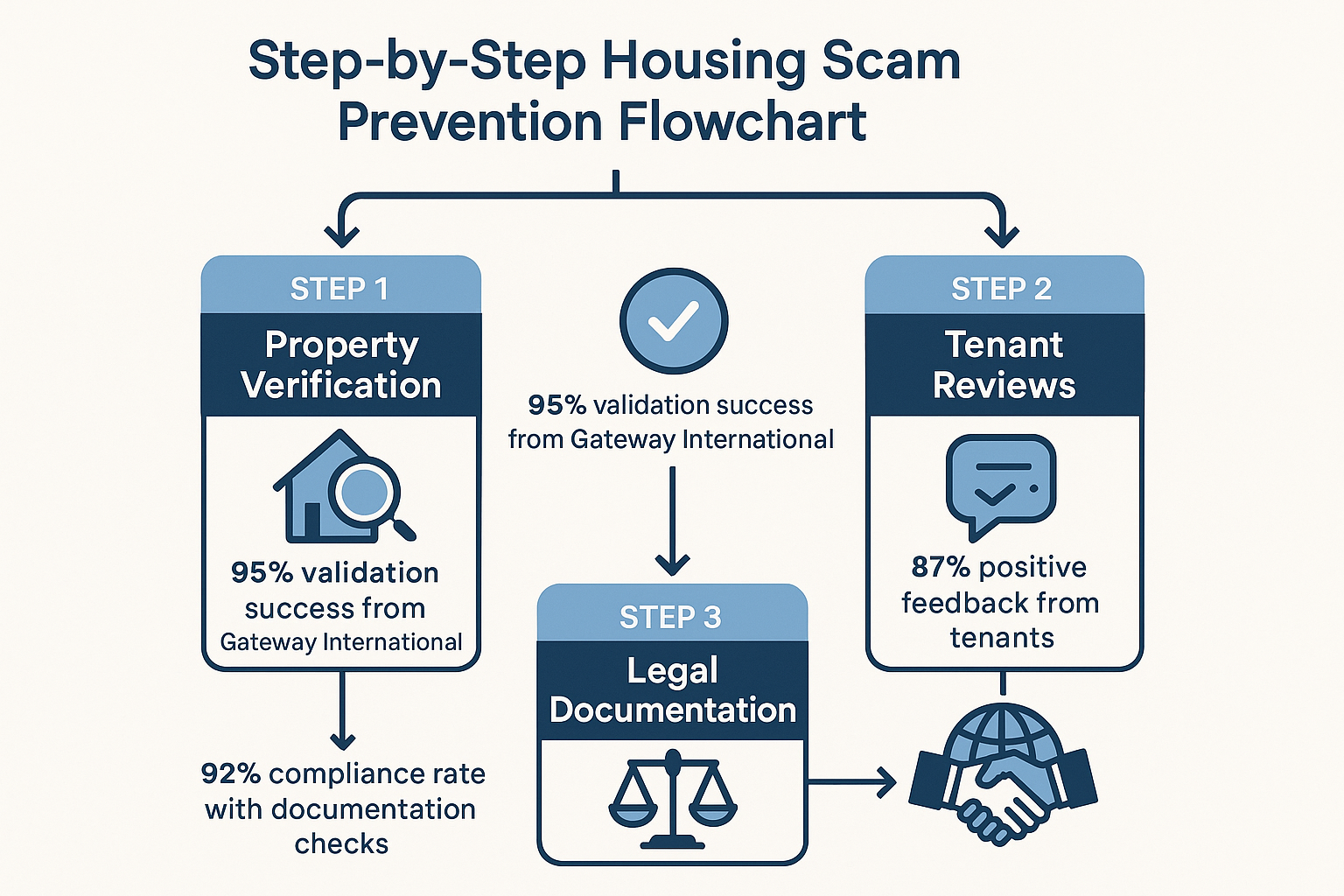
The housing scams targeting international students have become increasingly sophisticated, preying on urgency and unfamiliarity with local practices. My friend Priya’s nightmare serves as a cautionary tale: She found what seemed like the perfect apartment in Manchester – great location, reasonable rent, landlord was “traveling abroad” but super responsive on WhatsApp.
These fraudsters know exactly which buttons to push. They prey on your urgency, unfamiliarity with local practices, and the distance factor. The sophistication of these scams makes my blood boil.
Red flags that should make you run:
The “too good to be true” pricing is obvious, but here’s what’s sneakier: landlords who refuse video calls, claim they’re overseas, or push for immediate wire transfers. If someone asks for Western Union or cryptocurrency? That’s not a red flag; that’s a whole parade.
Another classic move? Fake listing photos. I’ve seen scammers use the same luxury apartment photos across multiple cities. Do a reverse image search on Google – it takes 30 seconds and could save you thousands of dollars.
Your defense strategy:
Never, and I mean never, transfer money without seeing the property virtually or in person. Legitimate landlords understand this. Use university-recommended housing platforms or verified sites like Rightmove (UK), Wunderflats (Germany), or SeLoger (France).
Most guides overlook this crucial tip: create a “verification checklist.” Ask for the landlord’s ID, property ownership documents, and previous utility bills. Real landlords have these readily available. Scammers will ghost you or make excuses.
When things go south:
If you’ve been scammed, act quickly. File a police report immediately – yes, even from India. Contact your bank for a possible reversal. Report to the platform where you found the listing. Document everything – screenshots, conversations, receipts.
For Indian students specifically, connect with Indian student associations in your target city. They’re goldmines for verified housing leads and can warn you about known scams in the area.
Remember that legitimate housing processes might feel slow and bureaucratic, but that’s actually a good sign. The easier someone makes it to send money, the more suspicious you should be. Your safety and financial security are worth a few extra verification steps.
Worried about housing scams? Let Gateway verify your housing options before you commit
Start Early, Stay Ahead: Timing Your Accommodation Hunt
Timing your accommodation search strategically can mean the difference between securing ideal housing and settling for leftovers. It’s 2 AM in Mumbai and you’re frantically refreshing property websites while your potential flatmate in Manchester is fast asleep.
The reality is that starting your accommodation search 3-4 months before departure isn’t early – it’s actually cutting it close. The best properties (read: safe neighborhoods with reasonable rent) disappear faster than samosas at a college fest. I’ve seen students settle for overpriced, poorly-located housing simply because they started looking in July for September intake.
Your strategic timeline should look like this:
- 4-5 months before: Research neighborhoods, understand transport links, join university housing groups
- 3-4 months before: Start actively viewing properties online, schedule virtual tours
- 2-3 months before: Finalize and pay deposits
For managing those pesky time zone differences, here’s what actually works: Schedule calls for early morning IST (around 7-8 AM) which aligns with UK evening hours. Use tools like Calendly to avoid the back-and-forth WhatsApp coordination nightmare.
A strategy that pays dividends: Create a dedicated email for housing inquiries. Trust me, when you’re juggling responses from 15 different landlords while preparing for exams, you’ll thank yourself for the organization.
Remember that universities often release their accommodation in waves. Missing the first wave doesn’t mean game over, but it does mean fewer choices. Set those email alerts, bookmark those portals, and most importantly – don’t let FOMO push you into accepting the first option without proper research.
The early bird here doesn’t just get the worm; they get the safe, affordable room with the working heater and reasonable flatmates.
Start your housing search the smart way! Get Gateway’s timeline checklist and early-bird housing options
Gateway International’s Edge: Navigating Housing Abroad
Gateway International’s approach to student housing support stands out through years of refined expertise and genuine care for student welfare. Last year, Priya from Pune was all set for her Master’s in Data Science at a mid-tier German university when her “perfect” apartment listing turned out to be a scam. She had already sent the deposit when she reached out to Gateway International, and honestly, their approach to student housing surprised even me.
Their method differs fundamentally from typical consultancies. They don’t just send you apartment links and wish you luck. They’ve built relationships with verified landlords and student housing providers across 25+ countries. Think of it as having a local friend who has already vetted everything for you.
Pre-Departure Planning
They start housing conversations during your initial counseling – not as an afterthought. Students get realistic budgets based on actual living costs (not outdated Google searches). For example, they’ll tell you that Porto’s student areas cost €250-350/month while Munich costs €600-800 for similar setups.
Partnerships on the Ground
Gateway maintains exclusive tie-ups with student residences and trusted real estate agents. These aren’t random connections – they’re relationships built over 17 years of placing 50,000+ students. Consequently, when you arrive, you’re not browsing sketchy Craigslist ads. You’re choosing from pre-verified options.
The Safety Net
What really impressed me was their 24/7 support that doesn’t end at visa approval. Students have reported getting help with everything from understanding rental contracts in Polish to negotiating with difficult landlords in France. One student even got emergency temporary housing when her Barcelona flat fell through last minute.
The real game-changer is their country-specific housing guides. They don’t just say “budget €500 for rent.” They break down neighborhoods, commute times, and even which areas have active Indian student communities.
Is finding housing abroad still challenging? Absolutely. But having someone who has already helped thousands navigate these exact challenges transforms a nightmare scenario into a manageable checklist. And unlike most consultancies that ghost you post-admission, Gateway’s housing support continues until you’re settled in.
When to Go Premium: When is On-Campus Housing Worth the Splurge?
The decision to invest in premium on-campus housing often comes down to more than just money. During my first grad school experience abroad, I was that student who scoffed at on-campus housing prices. “Why pay double when I could rent a sketchy basement apartment 45 minutes away?”
The value of splurging on campus reveals itself in specific situations. If you land in a completely unfamiliar country where you don’t speak the language fluently, those first few months on campus can be a lifesaver. I watched my roommate from Delhi struggle with off-campus hunting in Germany – between deciphering rental contracts in German and figuring out which neighborhoods were actually safe at night, she lost three weeks of classes just sorting accommodation.
The math changes when you factor in hidden costs. Sure, that off-campus flat looks cheaper, but add up:
- Daily transport (Minimum €60-100/month)
- Internet setup and monthly bills
- Furniture (yes, many places are empty)
- The time lost commuting during exam season
Suddenly, that “expensive” dorm with included utilities, furnished rooms, and 5-minute library access doesn’t seem so outrageous.
For Indian students specifically, consider proximity perks. My friends in on-campus housing at UC Berkeley could walk to the Indian grocery store on Telegraph Avenue. Those living in cheaper Oakland areas? Weekend trips for dal and maggi became whole-day affairs.
The sweet spot? Use campus housing for your first semester while you figure out the lay of the land. Join Indian student WhatsApp groups, scout neighborhoods during this time, and move off-campus once you’ve built a network. Some universities even offer short-term contracts for this exact reason.
Is it worth the premium? If you’re heading somewhere with significant cultural barriers, extreme weather, or safety concerns – absolutely. Think of it as insurance for your academic performance and peace of mind.
Step-by-Step: A Foolproof Housing Hunt Strategy
Finding safe, affordable housing abroad requires a systematic approach that balances thorough research with timely action. After years of experience, here’s the exact process that consistently delivers results.
Week 1-2: Start with Your University
First stop: the international student office of your university. They usually have pre-vetted housing lists that won’t scam you. When I helped my cousin find housing in Toronto, their university portal had exclusive listings 30% cheaper than public sites.
Weeks 3-4: Expand Your Search Smartly
- University forums: Join Facebook groups like “[University Name] Indian Students 2025”
- Trusted sites: HousingAnywhere, Student.com, Uniplaces (they verify listings)
- WhatsApp groups: Ask current Indian students to add you – this is gold
Week 5-6: Leverage the Desi Network
Most guides overlook this goldmine: Indian alumni associations are housing treasures. Message seniors on LinkedIn (yes, really) and they’ll share insider tips like “avoid X neighborhood” or “Y area has great Indian grocery stores nearby.”
Week 7-8: Virtual Viewings and Verification
- Schedule video tours (non-negotiable in 2025)
- Ask for utility bills to confirm address
- Request current tenant references
- Screenshot everything
Final Week: Paperwork Preparation
Before signing anything:
- Get rental agreements reviewed by student services
- Confirm what’s included (heating costs in Europe can shock you)
- Never transfer money without a signed contract
- Keep copies in cloud storage
Pro tip: Start this process 2-3 months before departure. Join housing groups the moment you get admission – good rooms go fast. Create a simple spreadsheet tracking rent, distance from campus, and grocery store proximity.
The sweet spot? Finding that senior who’s graduating and needs someone to take over their lease. That’s how you get furnished places at local prices, not international student rates.
Are You Ready to Find Your Ideal Accommodation?
Take this quick assessment to discover your perfect student housing match. Based on insights from over 57,000 students and Gateway International’s 95% success rate, we’ll help you find accommodation that fits your budget, lifestyle, and safety preferences.
Question 1 of 4
What type of housing arrangement best suits your needs?
Closing Thoughts: Making Informed Choices Abroad
After spending years helping students navigate the maze of international education, I’ve learned one thing: the “perfect” housing choice doesn’t exist – but the right one for you absolutely does.
Every student who walks into my office stressed about whether to save money or splurge on safety needs to understand this: you’re not choosing between cheap rent and safe stays. You’re choosing what trade-offs you can live with. That cramped but secure apartment near campus might mean fewer weekend trips but better sleep. The budget-friendly shared house in the suburbs? Sure, you’ll save money, but factor in those late-night transport costs (and worries).
During a counseling session, Priya was torn between a ₹15,000/month room in central Dublin versus a ₹8,000 option 40 minutes away. We sat down, mapped out her daily schedule, calculated real costs including transport, and most importantly – discussed her comfort level with commuting alone after evening classes. She chose the pricier option and later told me it was worth every penny for her peace of mind.
The truth is, you’ve already done the hardest part by researching and asking questions. Whether you’re heading to hidden gems like Portugal or mainstream destinations like the US, remember that housing anxiety is temporary, but your education is permanent.
Your next steps? Create a realistic budget that includes a safety buffer. Join online communities of Indian students in your destination country – they’re goldmines of current, honest housing advice. And yes, lean on support systems like Gateway International who have guided 50,000+ students through these exact decisions.
This journey isn’t just about finding four walls and a roof. It’s about creating a foundation for your dreams. Make choices that help you sleep well – literally and figuratively. Your future self will thank you.

Find Your Perfect Student Accommodation Abroad!
Let Gateway International guide you to safe, verified housing options. From pre-departure planning to reliable landlord partnerships, we’re here to make your international student journey stress-free!
✓ Verified Housing Options
✓ Scam Protection
✓ Complete Budget Planning
Join thousands of students who have found their home abroad with Gateway International
Share Your Housing Experience
Have you faced challenges finding student accommodation abroad? Share your story and tips in the comments below – your experience could help someone make a better housing decision!