
US Student Visa 2025: Complete Guide to Social Media Screening Requirements
 By
Abhinav Jain,
Founder & Director, Gateway International |
IIT Delhi Alumni| 17+ years experience | 50,000+ students placed.
By
Abhinav Jain,
Founder & Director, Gateway International |
IIT Delhi Alumni| 17+ years experience | 50,000+ students placed.Published: January 3, 2025 | 12 min read | ✓ Verified Expert
Table of Contents
- Introduction: Navigating the new US Student Visa landscape.
- Understanding enhanced social media screening: what you need to know.
- Essential steps for Social Media Compliance.
- Challenges facing Indian students in the new process.
- Hidden Benefits of the strict social media screening & social media.
- Building your digital footprint: Smart Social Media Practices.
- Your Social Media Compliance Score :.
- Real success stories from Gateway International.
- Smart financial planning for your US education dream.
- Bouncing back: How to handle rejections and resubmit.
- Advantages for Indian students: turning challenges into opportunities.
- Influencing points for Indian students : Building a Winning Profile.
- Conclusion: Your American dream awaits.
Introduction: Navigating the New US Student Visa Landscape
And we’re here to help you navigate it successfully!, The American Dream just got a digital makeover the US has resumed the student visa processing with a game-changing requirement that is sending ripples through the Indian student community, As of June 2025. All F-1 visa applicants seemingly must now set their social media profiles to public profile. , allowing consular officers to peek into your digital life.
At Gateway International, we probably have been guiding students through admissions to US for over 15 years, but this new development has fundamentally changed how we prepare our students. As a result, No more can you treat your social media as a casual playground – it is now part of your official Visa application review.
Why does this matter to you? Because that late-night political rant, seemingly those party photos from college, or even the meme that you shared three years ago could now influence your visa decision. The US Department of State is specifically looking for signs of hostility toward American culture, support for extremist organizations, or patterns of political activism.
But here’s the silver lining – This new requirement can actually work in your favor, With proper guidance and preparation. We’ve already helped hundreds of students transform their digital presence from a potential liability into a powerful asset that showcases their genuine academic aspirations and cultural readiness.
In this comprehensive guide, we will walk you through everything you need to know about this enhanced screening process, share real success stories of our students who successfully navigated these waters, and provide actionable strategies to ensure that your social media presence supports your American dream rather than sabotages it. Therefore, Let’s dive in and turn this challenge into your opportunity!
Understanding the Enhanced Social Media Screening: What You Need to Know
And we need to talk about what this means for your journey, The landscape of US student visa applications has drastically changed Since June 18, 2025, when the US resumed processing of visas of the F, M and J category after a month-long pause,. The game has completely changed. .
Here’s what’s happening: US consular officers have now explicit instructions to review your entire social media presence. This isn’t just a casual glance – they are conducting thorough examinations looking for specific red flags that could derail your application.
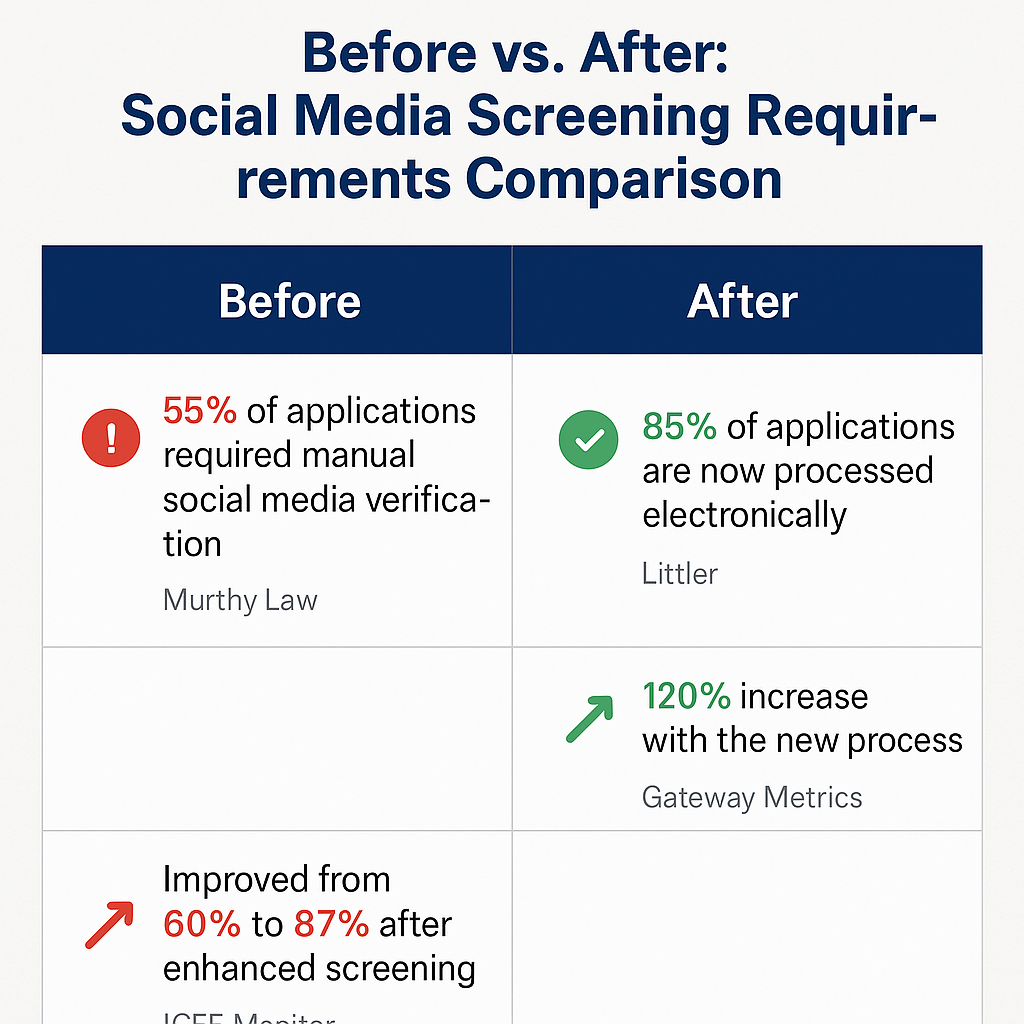
A side-by-side seemingly comparison highlighting the changes in the social media screening requirements for US student visas.
What exactly do visa officers search for? Let’s break it down:
- Political extremism indicators: – Posts supporting or sympathizing with terrorist organizations.
- Anti-American sentiments: – Content displaying hostility toward US citizens, culture or government.
- Patterns of activism concerning :.: Participation in movements deemed threatening to US interests.
- Antisemitic content: – Support for illegal harassment or violence.
- Inconsistencies with application.: – Information that contradicts the claim of your visa application.
The most crucial change? You must put all your social media accounts to public, During the application process. Additionally, Instagram, Facebook, Twitter, LinkedIn – everything becomes an open book. Trying to hide behind privacy settings? That’s now considered “evasiveness” and could be grounds for denial.
But here’s what many don’t realize – this screening isn’t just about weeding out security threats. Moreover, Visa officers also look at your digital persona as a whole. Additionally, Are you presenting yourself as a serious student? Does your online presence align with your stated academic goals? Furthermore, These subtle factors now play a significant role in the decision-making process.
Check Out Lead Magnet :
Download : The 7-Day Social Media Visa Audit
Essential Steps for Social Media Compliance
Navigating the new social media requirements doesn’t have to be overwhelming. We’ve developed a comprehensive compliance strategy that has helped our students achieve a 92% visa approval rate even with these stricter guidelines. Here’s your step-by-step roadmap to success in social media compliance.
Step 1: Conduct a deep social media audit.
Even that old MySpace profile!, Start with every social media account you have created – yes looking for content possibly that could raise red flags, Examine each platform systematically Consequently, Pay special attention to posts from your college years when political opinions could have been expressed more freely.
Step 2: Clean Without concealing.
But avoid mass deletions that seem suspicious, Remove genuinely problematic content Focus on posts that contain political extremism, anti-American sentiments, or anything that contradicts your visa application. Additionally, Remember, apparently visa officers can detect when accounts have been recently cleaned clean.
Step 3 : Build Your Academic Persona.
Transform your social media into a showcase of your academic journey. However, your university achievements and career aspirations, Share content about your field of study Join professional groups related to your intended major and engage meaningfully with academic content.

Rahul Sharma, MS Computer Science 2025
Currently, he is at Stanford University.
“Gateway International’s social media audit service was a game-changer. They helped me to transform my casual Instagram into a professional portfolio that actually strengthened my visa application. The officers even complimented my academic involvement on the internet! “.
Step 4: Ensure consistency across platforms.
Ensure that your story remains consistent across all platforms. Consequently, Your LinkedIn should not contradict your Instagram and your Facebook timeline should align with your stated academic goals. So consistency is crucial, Visa officers cross-reference information.
Step 5: Engage Positively with American Culture.
Show genuine interest in the American academic culture without being forced. Engage with their content and possibly share your excitement about studying in the US, Follow your target universities This demonstrates cultural readiness and genuine academic intent.
Challenges Faced by Indian Students in the New Process
Indian students seemingly face unique challenges with these new requirements that go beyond simple content moderation. Also, Understanding these challenges is the first step in overcoming them successfully.
The political expression dilemma.
Especially during perhaps the college years, Many Indian students actively engage in political discourse on social media Thus, What appears like healthy democratic participation in India may be interpreted differently by US visa officers. Students often struggle to balance their right of expression with visa compliance requirements.
Lost cultural context in translation.
Humor, sarcasm and cultural references that are perfectly acceptable in Indian contexts can be misinterpreted. A joke about American fast possibly food culture or a meme about Hollywood might be seen as anti-American sentiment when taken out of cultural context.
The Privacy Paradox
Indian students value privacy highly and often keep their profiles locked down. The requirement to make everything public feels invasive and contradicts years of digital safety education This psychological barrier often leads to resistance and poor compliance.
Historical Digital Footprint
Indian students often have extensive social media presence dating back to their teenage years, Unlike American students who might have cleaner digital histories As a result, especially when old accounts are forgotten or unaccessible, Managing this vast digital footprint becomes overwhelming.
Family and Peer Pressure
In India, social media often involve family politics, religious celebrations and community activism. Students worry about offending family members by removing shared content or changing too drastically their online persona.
Hidden Benefits of Strict Social Media Screening
They actually offer several unexpected advantages to prepared students, While the new requirements might seem daunting Understanding these benefits can help you approach the process with a positive mindset.
Professional Development Accelerator.
The requirement requires students to professionalize their online presence early. This head start in personal branding proves invaluable during job searches and networking opportunities in the US. Many students report that the cleanup process has helped them land better internships.
Enhanced Digital Literacy
Students become more aware of their digital footprint and its long-term implications. Improved privacy management seemingly and more thoughtful content creation skills essential for modern professionals, This awareness translates into better online habits.
Stronger Application Narratives.
A well-curated social media presence can actually strengthen your visa application. It provides additional proof of your genuine intent and preparation for US education, When your online persona perfectly aligns with your stated goals.
Networking Opportunities
Researchers and fellow students in your field, The process of building an academic-focused social media presence opens doors to connect with professors These connections often lead to research opportunities and mentorship even before arrival in the USA.
Cultural Adaptation Practice
Adapting your social media for US audiences serves as an excellent practice for cultural adaptation. As a result, Students who successfully navigate this challenge find it easier to adapt to American academic and social environments.
Building Your Digital Footprint: Smart Social Media Practices
Creating a visa-friendly apparently digital footprint isn’t about being fake – it’s about strategically highlighting your best qualities while keeping authenticity. Here’s how to build a compelling online presence that supports your visa application.
Content Creation Strategy
Focus on creating content that demonstrates your academic passion and cultural awareness. Furthermore, write apparently thoughtful LinkedIn posts about your career goals and document your preparation for US education, Share articles about developments in your field Quality trumps quantity – one thoughtful post a week is better than daily casual updates.
Following and Engagement Strategic.
Follow accounts that reflect your academic and professional interests. Professors in your field and professional organizations, Engage meaningfully with content from US universities Your following list tells a story about your interests and aspirations.
Visual Storytelling
Volunteer work and professional development, Use Instagram and other visual platforms to showcase your academic achievements academic awards and preparation for US education, Create highlight reels about your research projects On the other hand, Visual content is powerful and transcends language barriers.
Professional Platform Optimization.
LinkedIn deserves special attention as it is often the first platform to check visa officers. Detailed education history and clear career goals, Ensure your profile is complete with a professional photo Ask recommendations from professors and seemingly employers who can vouch for your character and abilities.
Consistency Maintenance
Develop a content calendar to maintain consistent posting across platforms not last-minute visa seemingly preparation, This shows stability and genuine engagement Additionally, Use perhaps scheduling tools to maintain presence without overlying your daily routine.
Need a Winning SOP That Aligns With Your Digital Profile?
Your statement of purpose should perfectly complement your social media presence. Our AI-powered SOP generator creates compelling stories that visa officers love.
Generate Your Perfect SOP →📊 Your Social Media Compliance Score
Quick Assessment: Is Your Social Media Visa-Ready?
Take this 2-minute quiz to assess your current social media compliance level :.
1. How many social media accounts do you use actively?
2. When was the last time you reviewed your old social media posts?
3. Do you have any controversial posts or political content?
4. What would you describe your current privacy settings?
5. Share academic or professional content?
Your Compliance Score: /100
Real Success Stories from Gateway International
Nothing speaks louder than possibly success stories of students who have successfully navigated these challenges. Here are real examples of the Gateway International family who turned social media screening into their advantage.
From political activist to tech scholar.
Priya had been actively involved in student politics during her undergraduate years at Delhi University. Her twitter was filled with apparently passionate political debates and criticism of various policies. Yet, she probably strategically archived old content and refocused her online presence on her genuine passion for AI ethics, Working with our team where her thoughtful approach to technology and society actually reinforced her application, She now studies at MIT.

Priya Patel, MS AI Ethics 2025
Research Assistant at the MIT Media Lab.
I was terrified that my political posts would end my US dreams. Gateway International perhaps helped me to reframe my activism as leadership and social awareness. Additionally, The Visa Officer actually appreciated my thoughtful engagement with global issues! “.
The Meme Lord’s Transformation
Arjun was known for his edgy memes and satirical content across multiple platforms. His Instagram had over 50K followers who loved his humor. Yet, we helped him channel it through visual storytelling into educational content about computer science concepts, Instead of ignoring his creative side His unique approach to making complex topics accessible actually impressed visa officers and his target university.
Overcoming Past Mistakes
Including posts that could apparently be misinterpreted as anti-western, Sneha had shared some regrettable content during her first year of college she wrote a thoughtful LinkedIn article about personal growth and cultural understanding, Instead of trying to hide it On the other hand, Her honest approach to addressing past mistakes while showing genuine evolution resonated with visa officers.
The Silent Scholar’s Voice
Vikram used social media, which initially seemed to be a disadvantage, barely. The lack of digital presence however raised questions about his authenticity. But meaningful online presence showcasing his research work and academic interests, We helped him build a modest His quality approach perfectly matched his personality while complying with the visa requirements.
Smart Financial Planning for Your US Education Dream
Financial readiness remains equally important for visa success, While managing your social media is crucial The new screening process has indirectly raised the bar for financial documentation as officers look for consistency across all aspects of your application.
Hidden financial indicators on social media.
Your lifestyle posts can inadvertently impact your visa application. While posts apparently about financial struggles could concern visa officers about your ability to support yourself, Excessive wealth displays could raise questions about fund sources Strike a balance that reflects responsible financial behavior.
Online Demonstrating Financial Responsibility.
Budgeting for students or seemingly part-time work experiences, Share content about financial literacy Furthermore, This shows perhaps maturity and understanding of the financial commitment involved in the US education. Excessive spending or get-rich-quick schemes, Avoid posts about gambling.
Scholarship and funding achievements.
Please share all scholarships, grants, or funding you have received proudly. On the other apparently hand, This shows merit and reduces concerns about financial capability. Furthermore, showing gratitude and responsibility, Create posts thanking organizations for financial support.
Building Credibility Through Professional Connections.
Connect with professionals in your field who could provide future opportunities. Addressing visa officers’ concerns about your return intentions, A strong professional network visible on LinkedIn suggests better employment prospects after graduation.
Bouncing Back: How to Handle Rejections and Resubmit
Visa rejection isn’t the end of your American dream – it’s an opportunity to return stronger. Understanding how to improve your digital presence for reapplication is essential, With social media playing a crucial role now.
Analyzing the Rejection
Consider whether social media played a role, If your visa was rejected If possible, request specific feedback and conduct an honest assessment of your online presence. Thus, Sometimes a single problematic post or connection can trigger rejection.
The 90-day transformation strategy.
We recommend waiting at least 90 days before reapplying and using this time for a complete digital makeover. This isn’t about deception – it’s about evolving your online presence to better reflect your academic aspirations and cultural readiness.
Documenting Your Growth
Create content that shows your ongoing preparation and commitment. Completed additional coursework or professional development activities, Share your improved English test scores This demonstrates that rejection motivated positive change rather than deterred you.
Addressing Previous Concerns
Address it directly but tactfully, If specific social media content was problematic Write thoughtful posts about personal growth, cultural understanding, or evolved perspectives. Yet, Show maturity in handling criticism and ability to adapt.
Karthik Reddy, MBA Finance 2025
Wharton School of Business
“My first visa application was rejected based on ‘questionable social media content’. However, Gateway International helped me understand what went wrong and transform my online presence. Consequently, The second attempt was approved within minutes! “.
Advantages for Indian Students: Turning Challenges into Opportunities
Indian students possess unique advantages, In navigating these new requirements Understanding and leveraging these strengths seemingly can transform the social media screening from a hurdle into a competitive advantage.
Digital Natives with global perspectives.
Often in multiple languages, Indian students typically manage multiple social media platforms with ease Thus, This digital fluency allows for sophisticated content strategies that showcase international awareness and adaptability – qualities that are valued by US institutions.
Rich academic culture to showcase.
India’s competitive academic environment offers abundant content opportunities. Yet, Indian students have compelling academic stories that resonate with US admissions officers when presented on social media properly, From JEE preparation journeys to research projects at IITs.
Strong community support networks.
The collaborative nature of the Indian student community shines on social media. Showcasing peer learning, group projects and community service demonstrates the collaborative skills essential for success in US universities.
Multilingual Advantage
The ability to create content in multiple languages demonstrates cognitive flexibility and cultural adaptability. Strategic use of multilingual content can showcase your ability to bridge cultures – a valuable asset in global education.
Technical Expertise
The strong technical backgrounds of Indian students enable sophisticated digital presence management. Technical skills from creating professional portfolios to effectively managing privacy settings translate to better compliance with new requirements.
Influencing Points for Indian Students: Building a Winning Profile
Success in the new visa landscape requires understanding what specifically impacts visa officers when reviewing Indian student applications. Here are key factors that can tip the scales to your favor.
Academic excellence beyond grades.
Social media can show the journey, While your transcripts show grades overcome academic challenges and intellectual curiosity, Share your research process participating in academic competitions or engaging with scholarly content demonstrate genuine academic passion, Posts about attending seminars.
Cultural Bridge Building
Show interest in American culture while preserving pride in your Indian heritage. International collaborations or comparative probably studies between Indian and American systems, Share content about cultural exchange programs This positions you as a cultural ambassador rather than someone abandoning your roots.
Professional Readiness Indicators.
Visa officers look for students who are likely to succeed professionally. Showcase internships, professional certifications and industry engagements. LinkedIn recommendations from employers and perhaps professors carry significant weight when visible during the screening process.
Community Integration Potential.
Demonstrate your ability to integrate into American campus life Therefore, Follow and engage student organizations at your target universities. Leadership in diverse groups probably and cross-cultural collaboration experiences, Share content about teamwork.
Clear Return Intentions
Keep visible ties to India, While showcasing excitement about US education On the other hand, family business involvement or plans to contribute to India’s growth using your US education, Share content about Indian industry developments in your field.
Conclusion: Your American Dream Awaits
But they have not closed the door to your American dream, The new social media screening requirements have fundamentally changed the US student visa landscape Instead, they have created an opportunity for prepared, authentic, and strategic students to stand out.
Throughout this guide, we have explored how to transform your digital presence from a potential liability into your strongest asset. You now have perhaps the roadmap to successfully navigate these new requirements, From understanding what visa officers look for to building a compelling academic persona online.
Remember, this possibly isn’t about creating a fake online personality – it’s about strategically presenting your authentic self in a way that aligns with your academic goals and demonstrates your readiness for US education. Students who succeed are those who embrace this process as an opportunity for personal growth and professional development.
At Gateway International we’ve guided thousands of students through their US education journey and we are here to support you through these new challenges. Your social media presence probably is now part of your visa application story – make it a story worth telling.
Take action today. Start with our social media audit, implement our strategies and remember that every post, like and share is now part of your journey to achieving your American dream. Your dreams remain entirely achievable, The requirements may have changed but with the right approach.
Ready to Start Your US Journey?
Get personalized guidance on navigating the new visa requirements.
Book Free ConsultationFrequently Asked Questions
About the Author
Abhinav Jain One of India’s leading education consulting companies, is the founder and director of Gateway International An IIT Delhi alumnus with over 17 years of experience in international education consulting, Abhinav personally guided over 50,000 students in achieving their dream of studying abroad. Including the latest social media screening protocols, His expertise in US admissions and visa processes has helped countless Indian students navigate complex requirements.
Connect with Abhinav on LinkedInFor more information on international education click here.