
Avoid These Budgeting Mistakes: Understanding Housing Costs for Study Abroad Students
Table of Contents
- Beginning Your Journey With Eyes Wide Open
- Understanding Housing Costs Abroad: What You Didn’t Know
- Common Pitfalls in Budgeting for Housing and How to Avoid Them
- Why Location Matters: Choosing Your Housing Abroad
- How to Navigate Foreign Rental Markets: A Guide for Indian Students
- Expert Advice: Safe Housing Strategies for Study Abroad
- Leveraging Gateway International’s Resources for Housing Success
- The Unseen Costs: What Often Gets Overlooked
- Cost Effective Strategies for Indian Students
- Secure Your Dream, Not Just a Room
Beginning Your Journey With Eyes Wide Open
Three years ago, I witnessed a scene that still haunts me: My cousin sat on the floor of an empty Dublin apartment and ate instant noodles for the third consecutive day. Her “affordable” housing had devoured two months of budget in deposits and hidden fees.
“I thought I’d planned everything,” she told me, and honestly she had, just not the right things.
The harsh reality of studying abroad hits differently when you discover that tuition fees displayed on university websites are merely the opening act. The real financial challenge begins when hunting for accommodation in foreign cities where “studio apartment” translates to “glorified closet with a hotplate.”
Most students budget for obvious expenses—rent, groceries, maybe transportation, but what about security deposits demanding three months’ rent upfront? The mandatory insurance nobody mentioned? Those mysterious “administration fees”? Or heating bills in countries where turning on the radiator feels like burning money?
This isn’t meant to scare you off, but to save you from eating instant noodles on an empty floor.
Financial stress compounds the emotional challenges of homesickness and academic pressure, creating a triple threat nobody prepares you for. When choosing between textbooks and decent meals becomes your reality, that dream education transforms into a nightmare.
At this juncture, having proper guidance becomes crucial. Gateway International understands this struggle—they’ve witnessed enough students face these surprises to know exactly what questions need to be asked before applications begin. Starting your journey with eyes wide open isn’t pessimistic; it’s the difference between thriving abroad and merely surviving.
Ready to Plan Smart? Get expert guidance on budgeting for your study abroad journey
Understanding Housing Costs Abroad: What You Didn’t Know
During my exchange semester in Warsaw, an expensive lesson presented itself: I had budgeted €400/month for a shared flat based on online listings. What escaped my calculations? The €800 security deposit (two months rent), mandatory building insurance and heating bills that tripled during Polish winters.
Most housing cost comparisons hide uncomfortable truths: that “affordable” €300 room in Prague might require three months of deposit upfront, while Dublin’s €600 studio includes utilities but demands proof of Irish income. Cities like Lisbon lure students with cheap rent, then surprise them with agency fees worth another month’s payment.
The real budget killers lurk in the shadows: Germany’s broadcasting fee catches everyone off-guard—yes, you pay for public television even without owning one. Italy’s condominium fees somehow escape advertised rent figures. France might require a French guarantor or expensive insurance just to secure housing.
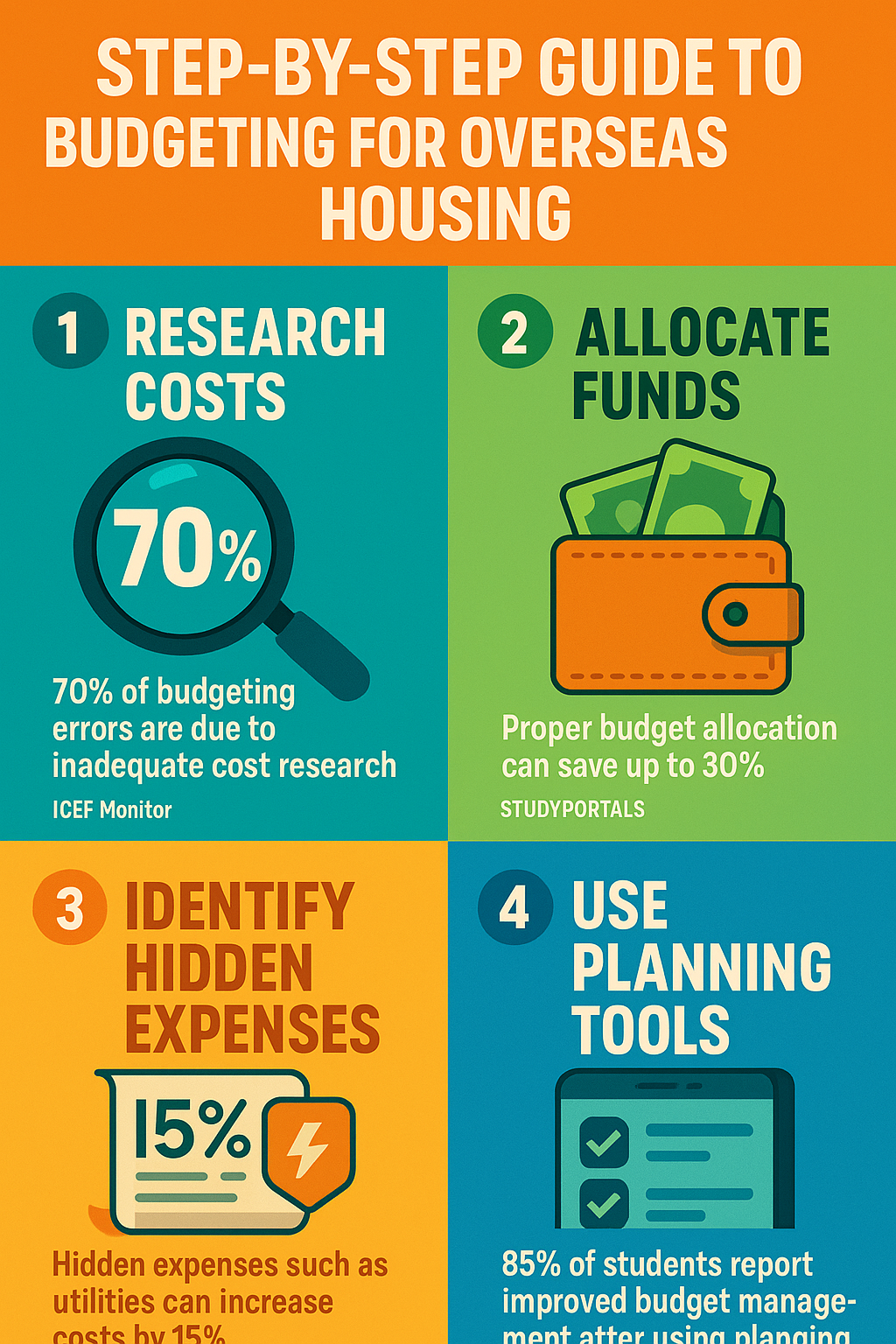
Practical calculations suggest adding 30-40% above the advertised rent for realistic housing budgets: deposit (usually 1-3 months), agency fees (often one month’s rent), utilities (€50-150/month depending on location) and those sneaky “administrative fees” appearing everywhere.
Pro tip: Join Facebook groups for international students in your target city at least three months before arrival. Current students share real numbers, warn about scam listings and sometimes pass on leases. The best defense against housing cost surprises remains intel from students who have already survived them.
Common Pitfalls in Budgeting for Housing and How to Avoid Them
Sarah’s perfectly planned study budget completely unraveled in her first month in Berlin: she’d calculated rent, utilities, even factored in groceries—but still scrambled for extra funds by week three.
The culprit? Those sneaky hidden costs that nobody warns you about.
Setup Fee Trap
Most students budget for monthly rent but forget upfront costs. In Germany, expect security deposits (often 2-3 months’ rent), agency fees and sometimes “handover fees” just for keys. Sarah’s €500/month room suddenly required €2,500 upfront.
The Laundry Surprise
Sounds trivial until each load costs €5-7 and you do laundry weekly—that’s a monthly unplanned expense of €20-30. Some student housing excludes washing machines, forcing expensive laundromat visits.
Roulette of Exchange Rate
Currency fluctuations sting unexpectedly—budgeting in INR when rates swing wildly. That “affordable” €400 room becomes ₹40,000 one month and ₹42,000 the next. Always buffer 10-15% for currency variations.
Your Survival Checklist
- Before signing: Request a complete breakdown of ALL initial costs
- Monthly buffer: Add 20% to the estimated housing budget
- Track everything: Use apps such as Splitwise or simple Excel sheets
- Local intel: Join Facebook groups for your university—current students share real costs
- Contract clarity: Get everything translated if needed—surprise clauses cost money
Understanding the full financial picture prevents those panicked calls home asking for emergency funds. Housing abroad requires more than finding a place—it requires comprehensive financial planning.
Why Location Matters: Choosing Your Housing Abroad
Priya’s Amsterdam experience taught me everything about location choices: she picked a trendy city center apartment for Instagram appeal. Three months later? Daily instant noodles became her reality because rent consumed 70% of her budget. Her classmate lived 20 minutes away by bike, saving €400 monthly—enough for weekend European trips.
Your housing choice shapes more than just accommodation—it defines your entire study abroad experience.
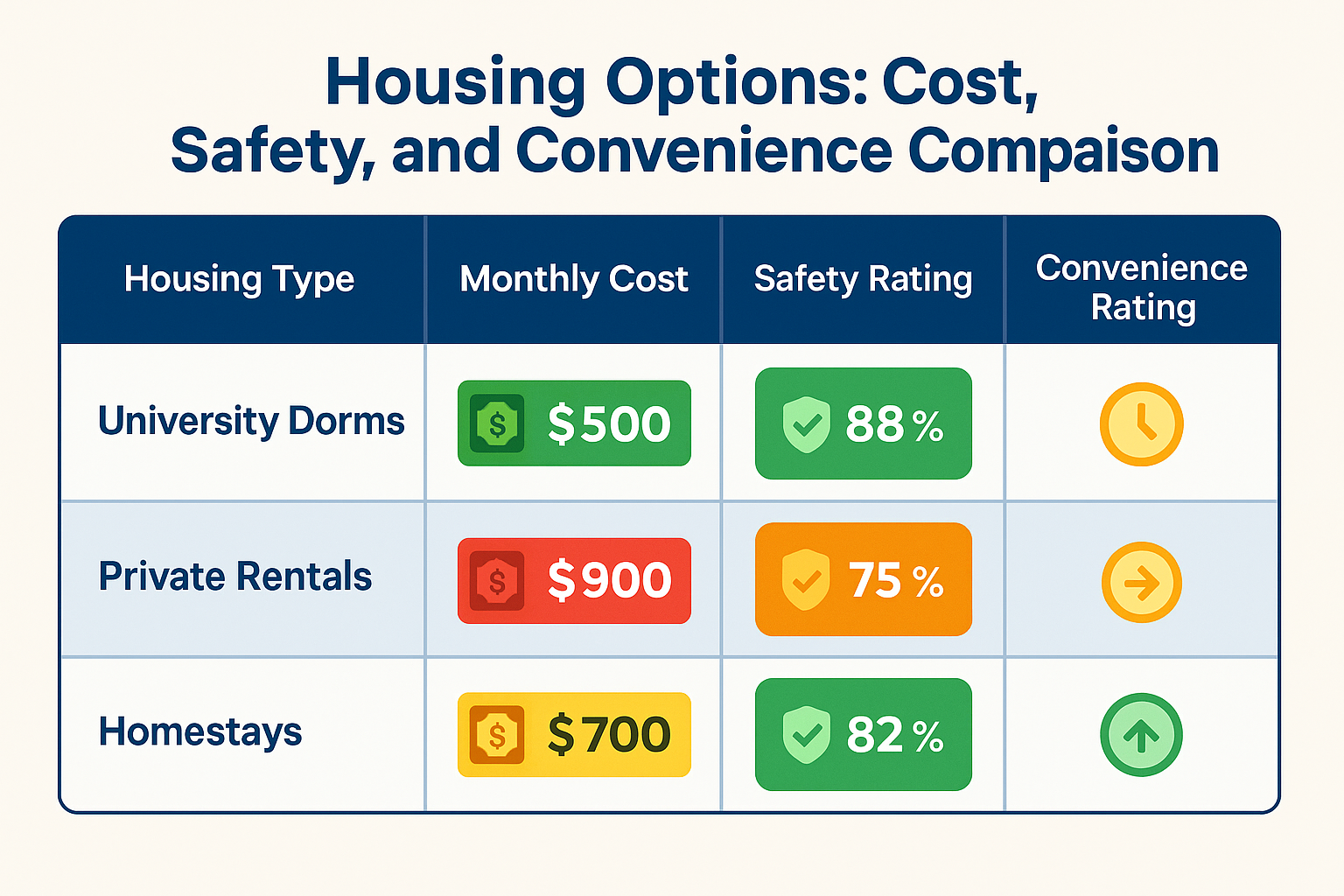
University dorms vs. private rentals? Let’s break it down:
University accommodation typically wins on convenience: campus proximity, included utilities and built-in community offer significant advantages. The catch? Often pricier than expected. London university halls cost £200-300 weekly, while shared flats in Zone 3 might be £150.
Private rentals offer freedom and potential savings, especially with commuter willingness. The trade-off includes handling utilities, landlord negotiations and possible initial isolation. Students save 40% choosing suburbs, but might spend it all on transport and social activities combating loneliness.
The location sweet spot? Consider these factors:
- Transport costs (monthly passes vs walking distance)
- Grocery stores and affordable food options nearby
- Safety ratings of different neighborhoods
- Student communities in the area
Gateway International maps these factors for each city, revealing real costs beyond rent and helps students find perfect balance—safe neighborhoods with reasonable commutes that preserve budgets.
Remember: cheapest options aren’t always the most economical. Factor in your entire lifestyle, not just monthly rent. Housing choices shape your daily routines, social life and ultimately your complete experience abroad.
How to Navigate Foreign Rental Markets: A Guide for Indian Students
Priya from Delhi found her “perfect” London flat online, paying £2,000 upfront. Landing at Heathrow revealed that the listing was fake, and unfortunately her story represents countless others facing similar situations.
Foreign rental markets feel like navigating minefields blindfolded: different rules, confusing terminology and scammers specifically targeting international students create dangerous combinations. After helping numerous students avoid these pitfalls, certain patterns emerge clearly.
First, understand the local rental laws. Germany requires “Schufa” (credit checks), while US landlords demand 2-3 months of rent upfront. These aren’t scams—they’re standard practices that catch Indian students unprepared.
Red flags to watch for:
- Landlords refusing video calls or virtual property tours
- Requests for Western Union transfers
- Prices significantly below market rate
- Pressure to “act quickly” before seeing contracts
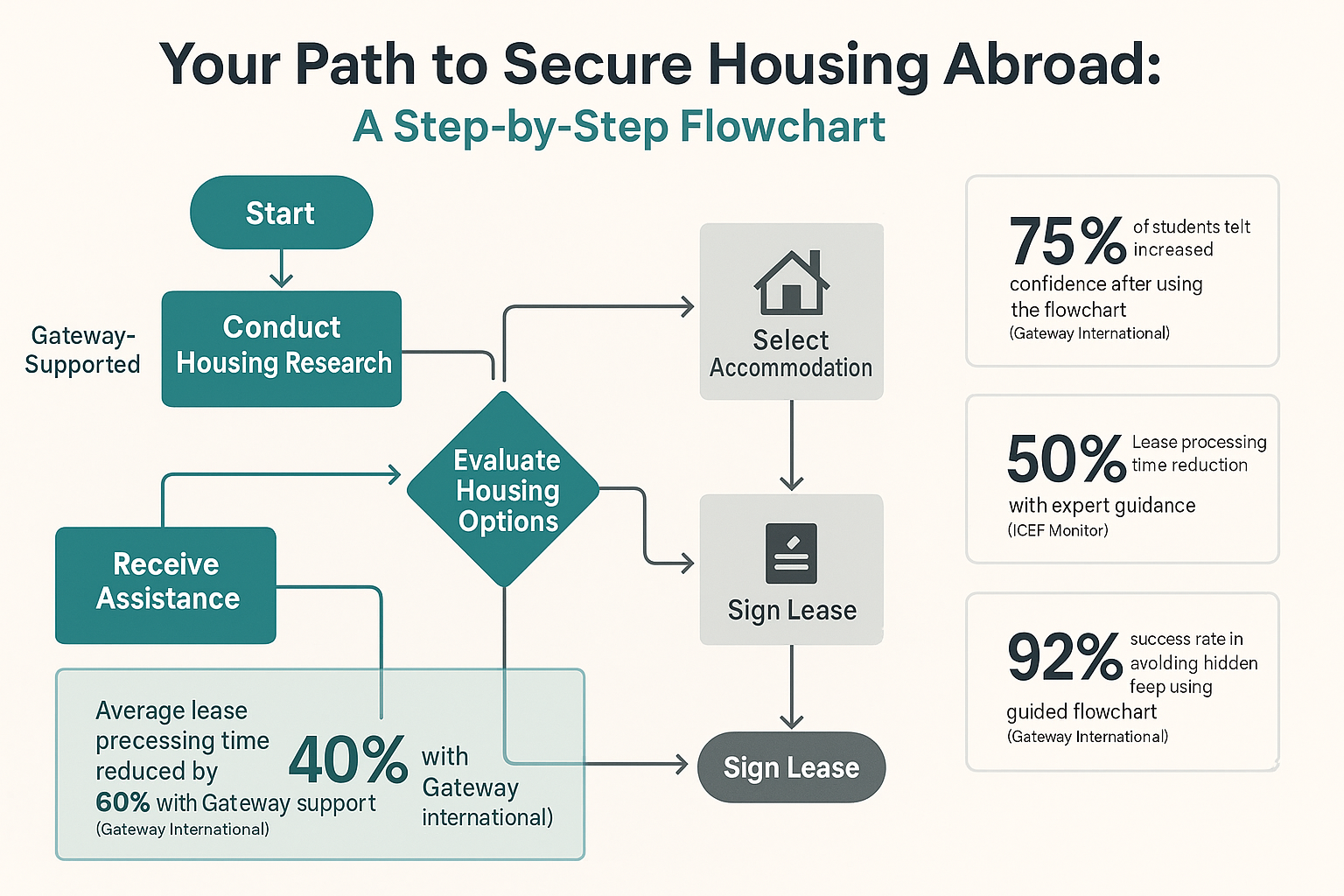
Having the proper support makes crucial differences. Gateway International’s housing assistance goes beyond finding listings—they verify properties, explain local rental laws and help negotiate contracts.
Pro tip: Join Facebook groups for Indian students in destination cities. Current students share genuine listings and warn about known scams. University accommodation might cost more but usually provides the safest first semester option.
Every horror story represents someone who entered unprepared. With proper knowledge and support systems, finding safe, affordable housing abroad becomes completely manageable. Don’t let fear stop you from pursuing your dreams.
Expert Advice: Safe Housing Strategies for Study Abroad
Priya Sharma from the Gateway International housing team shared insights that transformed my understanding: “Students spend months researching universities, but only days thinking about where they will actually live.”
This disconnect costs students thousands unnecessarily.
The housing experts of Gateway consistently emphasize: start accommodation searches immediately upon receiving acceptance letters.
Their top strategy surprised me—create a “housing hierarchy.” List priorities: campus proximity, safety features, included utilities, or social atmosphere, then stick to it.
The experts shared another golden rule: never pay deposits without video verification.
Another game-changing tip involves joining university-specific housing groups on social media three months before arrival.
Budget-wise, experts recommend the “30% rule”—housing shouldn’t exceed 30% of the total monthly budget.
The Gateway team consistently observes that students planning early secure better accommodations at 20-40% lower costs than last-minute bookers.
Leveraging Gateway International’s Resources for Housing Success
A recent conversation with a German-returned student revealed how Gateway International’s housing support prevented a €400/month mistake—a perspective-changing insight.
The unique approach of Gateway involves partnerships with verified accommodation providers across 500+ universities worldwide.
Personalized counseling sessions reveal where real value emerges.
Embassy requirements for accommodation proof receive special attention, preventing last-minute application scrambles.
Free resources alone justify exploration—housing cost calculators for different cities, roommate matching services and virtual tours of popular student areas.
The Unseen Costs: What Often Gets Overlooked
The sinking feeling when checking bank balances after moving abroad hits differently than expected.
The deposit trap catches everybody unprepared.
Furniture and setup costs shock students discovering in Europe “unfurnished” means completely empty.
Shared accommodation surprises include unexpected cleaning service fees.
The real killer emerges as contract exit costs.
My advice remains consistent: Add 30% to calculated housing budgets.
Cost Effective Strategies for Indian Students
Strategic planning from an IIT graduate studying in Germany revealed a harsh truth—perfect tuition budgeting meant nothing when unexpectedly “small” monthly expenses accumulated.
Practical strategies help Indian students effectively stretch their budgets abroad.
The game-changing approach involves: choosing utilities wisely.
Batch cooking and freezing meals proves invaluable for budget management.
Secure Your Dream, Not Just a Room
Years of experience have shown that many students treat housing as an afterthought—a mistake that can make or break their entire study abroad experience.
At this moment, proper support systems become crucial.
Study abroad dreams extend beyond acceptance letters alone.
Check Out: The Complete Guide to Studying Abroad

Find Your Perfect Home Abroad!
Let Gateway International guide you through secure housing options, verify listings and avoid common rental pitfalls—Start your journey with confidence!
Get Expert Housing Help →
Join the Conversation
Have you faced unexpected housing costs while studying abroad? Share your experiences and tips in the comments below to help fellow students prepare better!