
The Complete Reality Check Guide for Student Accommodation Abroad Challenges
Table of contents
- Navigating the Maze: Unveiling the Real Challenges of Student Rooms Abroad
- Financial Challenges in Securing a Room
- Cultural and Emotional Struggles of Living Abroad
- The Scam Ordeal – What Every Student Needs to Know
- Making a Home Away From Home
- Gateway International’s Role in Easing Accommodation Woes
- Building Your Tribe: Finding Support in a Foreign Land
- Long-term Gains from Temporary Pains
Finding the perfect student accommodation abroad is the perfect way to do it. After helping thousands of students navigate this challenge, I’ve seen it all – from dream apartments to absolute nightmares. This guide cuts through the Instagram filters to show you the real deal about student housing overseas.

Struggling with student accommodation search?
Get expert guidance on finding safe, affordable housing abroad. Our team has helped 50,000+ students secure their perfect home away from home.
Get Free ConsultationNavigating the Maze: Unveiling the Real Challenges of Student Rooms Abroad
Remember that Instagram post from your friend studying in Amsterdam? The one with the perfectly lit dorm room, fairy lights strung across exposed brick walls and a caption about “living my best European life”?
When I first moved to Berlin for my master’s, I expected something between a Pinterest board and a Netflix college drama. What I got was a 12-square-foot box with a radiator that sounded like it was auditioning for a death metal band and a shared kitchen where passive-aggressive Post-it notes were the primary form of communication.
Here’s what nobody tells you: student accommodation abroad is basically a crash course in expectation management. Those glossy university brochures showing spacious common areas and smiling students are about as realistic as airline food looking appetizing.
The reality hits different. You’ll likely face cramped quarters where your bed doubles as your desk, dining table and occasionally your closet. In my first week, I discovered that my “furnished” room came with a mattress that had clearly seen better decades and a desk chair that required a PhD in engineering to adjust.
But wait, there’s more fun. Maintenance issues become your new hobby. That leaky faucet you reported three weeks ago? Still dripping. The heating that mysteriously stops working every Friday night? Part of the “authentic experience,” apparently. I once waited six weeks for a broken window lock to be fixed—in winter. My roommate and I became experts at strategic towel placement to block drafts.
The gap between what universities advertise and what you actually get can be jarring. They show you the one renovated building on campus, not the 1970s concrete block where you actually live. They mention “vibrant community spaces” but forget to add that they are booked solid or close at 8 PM.
Don’t get me wrong—studying abroad is still incredible, but knowing what you’re really signing up for helps you prepare mentally (and financially) for the adventure. Pack that toolkit, lower those expectations, and remember: those cramped quarters make for the best stories later on.
Related Reading: Explore More Study Abroad Insights
Financial Challenges in Securing a Room
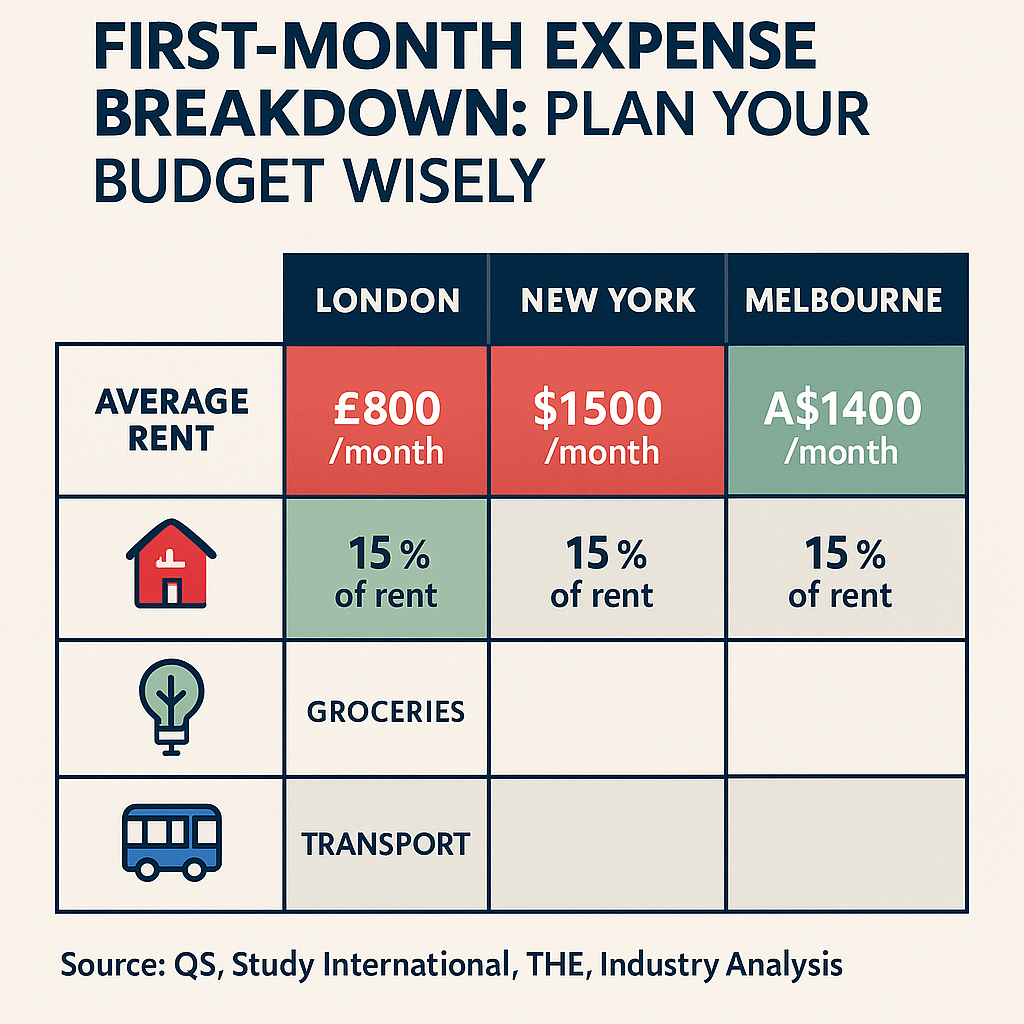
My cousin landed her dream admission to a university in Amsterdam three years ago, and the excitement lasted exactly until she started apartment hunting. Her first shock? A tiny studio apartment—and I mean tiny, like 20 square meters—was asking for €1,200 per month. That’s roughly ₹1,08,000. For perspective, that’s more than what many Indian families spend on their entire monthly household expenses.
But here’s where it gets worse: The landlord wanted three months’ rent upfront as deposit plus the first month’s rent—that’s €4,800 (₹4,32,000) just to move in. And this wasn’t even in the city center.
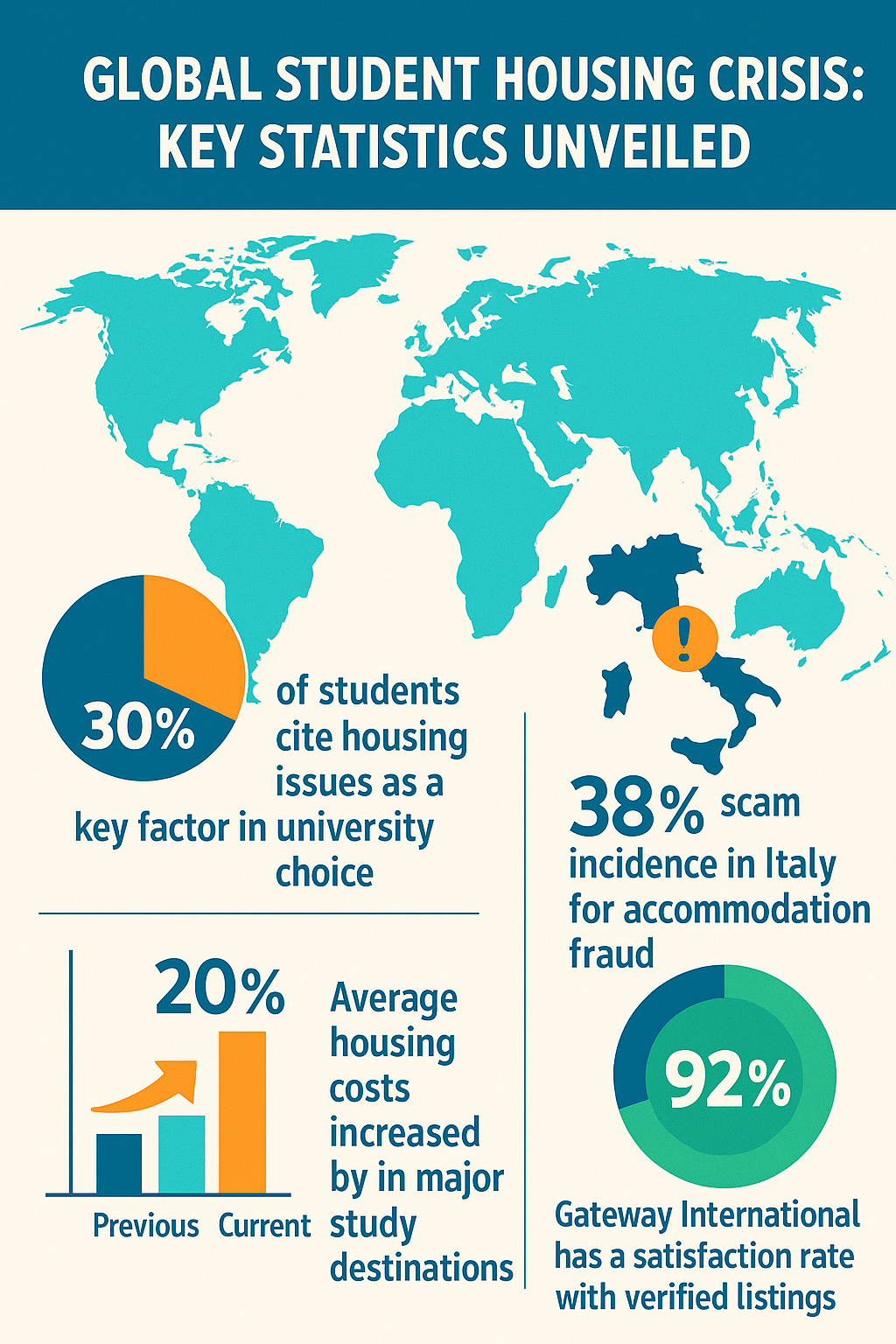
The rental markets in popular study destinations have become absolutely brutal for international students. In cities like London, Sydney or Toronto, you’re competing with working professionals, other students and sometimes even investment buyers. I’ve heard stories of students attending 15-20 viewings before securing a room. One friend literally had to submit a “rental resume” with references just to be considered for a shared apartment in Melbourne.
What really gets me is how these costs derail carefully planned budgets. Most Indian families calculate tuition fees meticulously but underestimate accommodation expenses. You think you’ve saved enough, then security deposits, agency fees, utility deposits and mandatory insurance hit you like a freight train. In the UK, letting agencies can charge up to £400 (₹36,000) just for “administrative fees.”
Here’s what actually works (learned the hard way through countless student experiences):
Start your accommodation search before you leave India. Join university Facebook groups and WhatsApp communities where seniors post about upcoming vacancies. This inside track often bypasses agency fees.
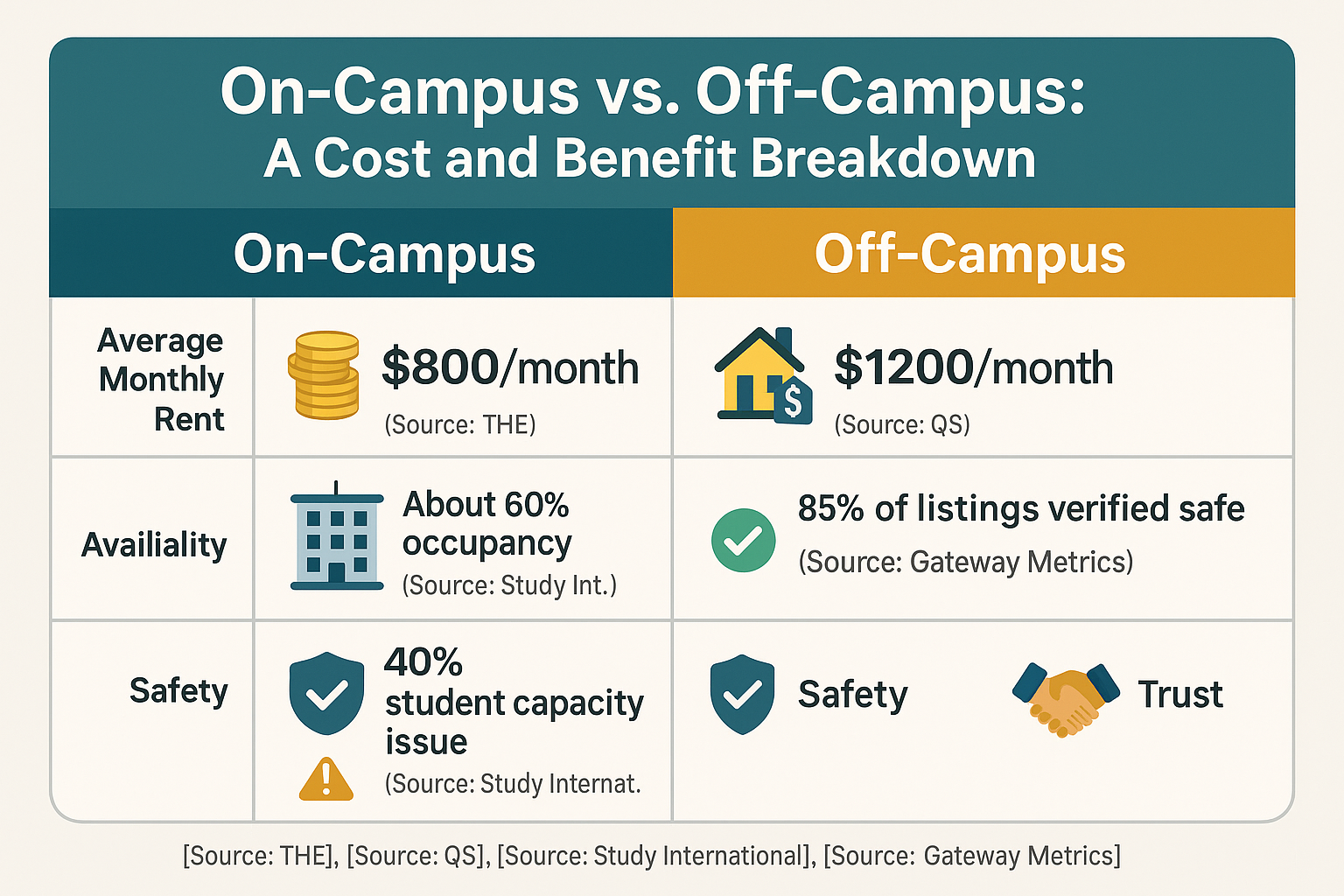
Consider university accommodation for your first semester, even if it’s pricier. Yes, you might pay ₹80,000-90,000 monthly, but you avoid the deposit nightmare and buy time to understand the local market.
Budget at least 40% more than advertised rents. Between utilities, internet, council tax (in some countries) and those sneaky “maintenance charges,” your ₹60,000 room suddenly costs ₹85,000.
Most important? Have a financial buffer specifically for accommodation surprises. I’m talking about at least ₹2-3 lakhs separate from your main budget. Because when you’re standing in a foreign country with your admission letter but nowhere to live, that buffer becomes your lifeline.
The harsh reality is that accommodation costs can make or break your study abroad dream, but with smart planning and realistic expectations, you can navigate this challenge without drowning financially.
Cultural and Emotional Struggles of Living Abroad
It’s 2 AM in Toronto and I’m sitting on my dorm floor desperately trying to recreate my mom’s dal recipe with whatever I could find at the nearest Walmart. The lentils are wrong, the spices taste different, and I’m crying into a bowl of what can only be described as “yellow water with good intentions.”
That was my third week abroad, and honestly, nobody warned me that homesickness would hit my taste buds first.
The cultural shock isn’t just about missing home-cooked meals (though that’s a big part). It’s the thousand tiny moments that catch you off guard – like when your Canadian roommate thinks it’s perfectly normal to walk into the room with shoes on, or when you realize that “fashionably late” means something entirely different here than back in Mumbai.
What really gets you is the isolation that creeps in during those quiet moments. You’re surrounded by people, yet you’ve never felt more alone. Your friends back home are asleep when you’re awake, living their lives in a timezone that no longer synchronizes with yours. Group projects become minefields of cultural misunderstandings – apparently being direct is “rude” here, but being indirect is “confusing.”
Here’s what actually helped me survive (and eventually thrive):
Build your tribe intentionally. I started attending the Indian Student Association meetings not because I wanted to stick only with Indians, but because sometimes you need people who understand why you’re emotional about finding Parle-G biscuits in the international store.
Create new rituals while honoring old ones. Every Sunday, I video-call home during their dinner time. It’s my breakfast, their dinner, but we’re together. I also started “Chai & Chat” sessions with other international students – turns out, everyone is struggling with something.
Embrace the discomfort. The day I stopped fighting the changes and started seeing them as growth opportunities was the day everything changed. Yes, the food tastes different, yes, social norms are confusing, but isn’t that why we came here in the first place?
Most importantly, know that it’s okay to not be okay sometimes. Those counseling services your university offers? Use them. That weird feeling in your chest when you smell something that reminds you of home? That’s normal. You’re not weak for struggling; you’re human for feeling.
This emotional rollercoaster is actually preparing you for a globalized world in ways that no classroom could ever do.
The Scam Ordeal – What Every Student Needs to Know
Three years ago, my friend Priya sent me screenshots of the “perfect” flat she found online for her master’s in Manchester. Modern kitchen, walking distance to campus, £400/month – basically a unicorn in the UK rental market.
You know where this is going, right?
The listing was fake. The “landlord” disappeared. Priya lost £1,200 before even setting foot in the UK. And here’s the kicker – she’s far from alone. International students lose millions to housing scams every year, and scammers are getting craftier.
The Classic Red Flags Nobody Warns You About
First up, the too-good-to-be-true listings. If you see central London flats for £500/month, your scam radar should be screaming. Real landlords in prime locations know what their properties are worth.
Then there’s the “I’m currently abroad” landlord who can’t show you the place but promises to mail keys after payment. This one is so common it’s almost cliché, yet students still fall for it because they’re desperate and running out of time.
Your Defense Strategy (That Actually Works)
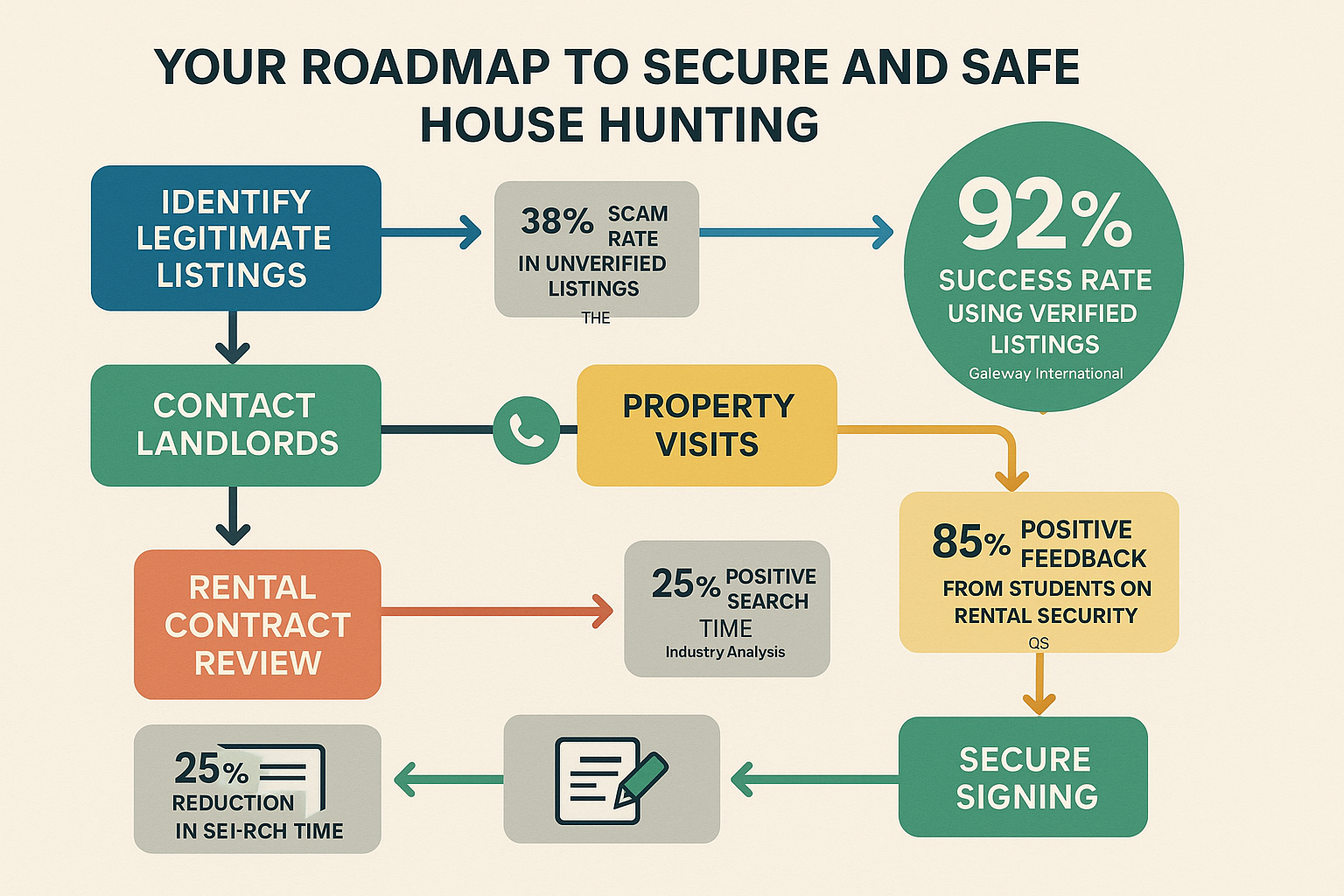
Here’s what I tell every student heading abroad: Never, ever transfer money without seeing the property – either in person or via live video call. Not recorded videos, not photos – live interaction where you can ask to see specific things.
Use official university accommodation services whenever possible. Yes, they might cost more, but they’re legitimate. Most universities also maintain lists of verified private landlords who have previously housed students.
Google Street View is your friend. Cross-reference the property address with the photos. You’d be amazed how many scammers use photos from completely different properties or even different countries.
The Verification Checklist That Could Save Your Semester
Before sending any money:
- Verify the landlord’s identity (Ask for ID, check property ownership records)
- Get everything in writing with proper contracts
- Use secure payment methods with buyer protection
- Join university Facebook groups where current students share legitimate listings
Finding accommodation abroad is stressful enough without losing money to scammers. Take the extra time to verify everything. That “perfect” flat will still be there tomorrow if it’s real. If not, you just saved yourself from joining the heartbreaking statistics of scammed international students.
Making a Home Away from Home
Before I moved to Dublin for my master’s, nobody mentioned that your room becomes your entire world on some days. When it’s raining outside and you have three assignments due, that tiny space needs to feel like more than four walls and a bed.
I learned this the hard way during my first month abroad. White walls, one harsh overhead light, and a mattress that felt like sleeping on cardboard. I’d video call my mom and she’d immediately notice something was off. “Beta, why does your room look like a hospital?” Trust me, the sterile environment wasn’t helping my homesickness one bit.
Here’s what actually works when you’re trying to create comfort on a student budget: First off, lighting is everything. Seriously. I grabbed two warm-toned lamps from a charity shop for €8 total and suddenly my room went from interrogation chamber to cozy corner. String lights aren’t just for Instagram—they’re legitimately mood-changing when you’re studying at 11 PM.
The game changer? Textiles. One throw blanket from home (yes, it took up precious luggage space, but worth it) instantly made my bed feel familiar. I found colorful cushion covers at the local market for €3 each. Pro tip: bring pillowcases from home—they pack flat and smell like comfort when everything else feels foreign.
I created a “memory corner” using twine and mini clothespins (€5 total) to hang photos from home. It became my daily reminder of why I was there, especially during those inevitable “what am I doing here?” moments.
Plants might seem extra, but hear me out. A €4 pothos from the supermarket survived my terrible plant-parenting and made the room feel alive. Plus, having something to care for helped weirdly with the loneliness.
The best addition? A small electric kettle and your favorite tea from home. When anxiety hits at 2 AM, making chai in your room beats wandering dark hallways to shared kitchens. Sometimes comfort isn’t about decoration—it’s about recreating those small rituals that ground you.
Navigate housing markets like a pro
Join our pre-departure workshops to learn insider tips on finding safe, affordable accommodation in your study destination.
Explore Our ServicesGateway International’s Role in Easing Accommodation Woes
Priya, a student I met in a Delhi coffee shop last year, had just returned from her first semester in Manchester and immediately launched into a horror story about getting scammed by a fake landlord. “I was this close to transferring £2,000 for a flat that didn’t exist,” she said, showing me the too-good-to-be-true listing she’d found on Facebook.
That’s when she mentioned Gateway International had literally saved her from disaster.
Here’s what most students don’t realize: finding accommodation abroad isn’t just about scrolling through listings. It’s about understanding local rental laws, recognizing red flags, and having someone who actually knows which neighborhoods are safe for international students. Gateway doesn’t just hand you a list of websites and wish you luck – they’ve built partnerships with verified student housing platforms that they’ve personally vetted.
The game-changer? Their housing coordinators have actual relationships with accommodation providers in major student cities. When Priya’s initial housing fell through (the legitimate one, thankfully), Gateway’s team connected her with their partner platform in Manchester within 24 hours. She had three verified options complete with virtual tours and current tenant reviews.
Another student, Arjun, told me Gateway helped him secure accommodation in Toronto that was not only within his budget but also on a direct bus route to his university. “I didn’t even know to check for transit connections,” he admitted. These aren’t just lucky breaks – they’re the result of Gateway handling thousands of student placements since 2007.
What really sets them apart is their pre-departure housing workshops. They cover everything from understanding deposit schemes to spotting common rental scams targeting international students. One parent told me, “My daughter knew exactly what questions to ask landlords because of Gateway’s checklist.”
While you’re stressing about SOPs and visa applications, having someone handle the accommodation maze – someone who’s helped 25,000+ students avoid housing nightmares – isn’t just convenient. It’s the difference between starting your abroad journey in a safe, verified home versus… well, Priya’s near miss speaks for itself.
Learn More: Schedule Your Free Consultation Today
Building Your Tribe: Finding Support in a Foreign Land
Nobody mentioned this when I was packing for my master’s in Manchester—the hardest part wasn’t the academics or even the weather. It was eating instant noodles alone in my room for the third night straight, wondering if I’d made a massive mistake.
Here’s the thing about studying abroad: everyone talks about the Instagram-worthy moments, but few prepare you for the crushing loneliness that can hit when you’re 7,000 kilometers from home. The good news? Building a support system isn’t as daunting as it seems once you know where to look.
Start Where You’re Comfortable
My first real connection came through the most unexpected place—the Indian Student Association’s WhatsApp group. Within days of joining, I found myself at a Diwali prep meeting, rolling out hundreds of samosas with people who understood why I nearly cried when I couldn’t find proper garam masala at Tesco.
These cultural groups aren’t just about festivals. They’re lifelines for practical stuff too. Need a trustworthy landlord? Someone’s cousin knows one. Confused about NHS registration? There’s always a senior who’s been through it. The Indian diaspora network operates like an extended family—sometimes overwhelming, always helpful.
Branch Out Strategically
But here’s where many students get stuck—they only hang out with other Indians. While that comfort zone feels safe, you miss half the experience. Join clubs based on your interests, not just your nationality. I found my closest friends through the university hiking club. Turns out, struggling up a Scottish mountain together bonds people faster than any orientation mixer.
Pro tip: University societies are goldmines for connections. Whether it’s the debate club, the photography society, or even the cheese appreciation group (yes, that’s real), shared interests create natural friendships that transcend cultural boundaries.
The Digital-Physical Balance
Don’t underestimate online communities either. Facebook groups like “Indians in [Your City]” saved me countless times—from finding authentic Indian groceries to getting referrals for part-time jobs. But remember, online connections should supplement, not replace, real-world interactions.
Building your tribe abroad isn’t about collecting contacts—it’s about creating a support system that gets you through homesickness, celebrates your wins, and occasionally reminds you to eat something besides Maggi. The friends you make while navigating foreign public transport or surviving your first British house party? Those bonds last long after graduation.
Trust me, your tribe is waiting out there. You just need to show up.
Long-term Gains from Temporary Pains
Here’s what nobody mentions in those glossy study abroad brochures: the first three months will test every fiber of your being. But here’s the kicker—the exact moments that make you question your sanity are the ones that completely reshape you.
I remember calling my mom from a tiny dorm room in Manchester, crying because I’d just spent £15 on the world’s saddest grocery haul (bread, instant noodles, and overpriced milk). Fast forward five years, and that same girl now negotiates international contracts without breaking a sweat.
The truth is, every awkward conversation where you stumble over cultural references, every night you figure out public transport in a new city, every time you advocate for yourself in a foreign system—you’re not just surviving, you’re building an invisible armor of competence that stays with you forever.
Think about it: when was the last time a comfortable situation taught you anything meaningful? That homesickness that hits like a truck in week two? It teaches resilience. The academic system that works nothing like back home? You develop adaptability that makes you invaluable in any workplace. Even that disaster of a first apartment (mine had a radiator that sounded like a dying whale) becomes a story about resourcefulness and problem-solving.
Here’s what actually happens when you push through those initial months of chaos: you stop waiting for permission to live your life. You learn to trust your judgment because you’ve navigated situations where Google couldn’t help and your parents were 5,000 miles away. You become the person who says “I’ll figure it out” and actually means it.
The professional benefits are obvious—international experience, language skills, global network. But the real transformation happens in those quiet moments when you realize you’ve become comfortable being uncomfortable, when uncertainty stops being scary and starts being just another Tuesday.
My friends who stayed home are successful too, don’t get me wrong. But there’s something different about those of us who’ve rebuilt our entire lives in foreign countries. We carry this quiet confidence, this knowledge that we can handle whatever comes next because we’ve already proven it to ourselves.
So when you’re standing in that foreign supermarket, completely overwhelmed by different brands and currency conversions, remember this: you’re not just buying groceries, you’re building a version of yourself that can thrive anywhere. Those temporary pains aren’t obstacles—they’re your training ground for a life without limits.
The struggle is real, but so is the growth. And trust me, future you will thank present you for not giving up when things get tough.
Ready to turn housing challenges into success stories?
Let Gateway International’s expertise guide you through every step of your accommodation journey, from pre-departure preparation to settling in abroad.
Book Your Consultation Now
Share Your Experience
Have you faced accommodation challenges while studying abroad? We’d love to hear your story and tips!