
Hidden price of student housing: Planning Your Dream University Journey
Table of contents
- Dream Big, Plan Smart: Unraveling the Hidden Costs of University Housing
- Understanding the Basics of Student Housing Costs
- Real Numbers: A Comparative Cost Analysis
- Why Housing Costs Are Rising: Factors and Trends
- The Mandatory Campus Residency Trap
- Off-Campus vs. On-Campus Housing: What’s Cheaper?
- Gateway International’s Insights: Avoiding Unnecessary Housing Debts
- Interactive Section: Calculate Your Housing Costs
- Student Stories: Real Experiences with Housing Costs
- Navigating Scholarships and Financial Aid for Housing
- Prepare Your Budget: Tools and Tips from Gateway International
- Smart Housing Choices: The Path to a Debt-Free College Life
Dream Big, Plan Smart: Uncovering the Hidden Costs of University Housing
Remember when I thought my biggest expense would be tuition fees? I was helping my cousin plan her move to UC Berkeley and we had budgeted everything perfectly—or so we thought. Then reality hit: $1,800/month for a shared room, mandatory meal plans at $5,000/semester plus internet, laundry cards and those “small” amenities that somehow added up to another $300 monthly .
Here’s what most students miss: housing costs can easily match or exceed your tuition. That dream university acceptance letter is just the beginning of your financial journey .
The Hidden Price Tags Nobody Talks About:
- Security deposits (often 2-3 months in advance)
- Utility setup fees and monthly bills are
- Furniture for unfurnished apartments .
- Transportation from housing off-campus
- Meal plans vs. cooking costs
Think you’ll save money by living off-campus? Consequently, sometimes yes, but factor in commute costs, lost time traveling and missing out on campus resources that on-campus residents get free access to .
The real kicker? These costs vary wildly between universities: NYU might charge $20,000+ for housing, while a state school in the Midwest could be half that. Location matters more than rankings when it comes to your wallet .
This is where smart planning comes in. Gateway InternationalDoesn’t just help with admissions—they break down actual living costs by university and city, they’ve compiled real student experiences showing exactly what you’ll spend beyond the brochure prices – no surprises, no emergency calls home for money .
Want to study abroad without the financial shock? Start by understanding the true cost of living at your target universities.
Ready to plan your university journey?
Get personalized guidance on housing costs and budgeting for your dream university .
Book Free ConsultationUnderstanding the basics of student housing costs
When I first started researching student housing for my master’s degree, I thought that rent was rent – Boy, was I wrong – the sticker price you see on university websites – that’s just the beginning of the story .
Let me break down what actually goes into your housing budget : On-campus dorms might advertise $800/month, but that rarely includes everything . Consequently, my friend Sarah discovered this the hard way when her “all-inclusive” dorm charged extra for laundry ($50/month), faster internet ($30) and even printing credits . Meanwhile, off-campus apartments quote lower base rents but then hit you with utilities, internet setup fees and sometimes parking permits that can add $200-300 monthly .
Here’s what really caught me off guard: location dramatically affects these hidden costs. Additionally, living downtown near campus meant I could walk everywhere, saving on transportation, but groceries? Everything cost 20-30% more than in suburban areas. My roommate chose a cheaper place 45 minutes away, but spent $150/month on gas and parking permits, essentially erasing his savings .
The utilities game is particularly tricky: Older buildings (often the “charming” ones near campus) can have terrible insulation. One December our heating bill hit $180 for a two-bedroom apartment compared to newer student housing complexes that include utilities in the rent – suddenly that extra $100/month doesn’t seem so bad .
Don’t forget the sneaky one-time costs either: security deposits (usually 1-2 months’ rent), furniture if unfurnished, kitchen basics and that brutal first grocery run.
My advice? Create a realistic monthly budget that includes everything: rent, utilities, internet, transportation, food and a buffer for surprises. Because trust me, there will be surprises. Understanding these real costs upfront helps you make smarter decisions about where to live during your university years .
A Comparative Cost Analysis of Real Numbers
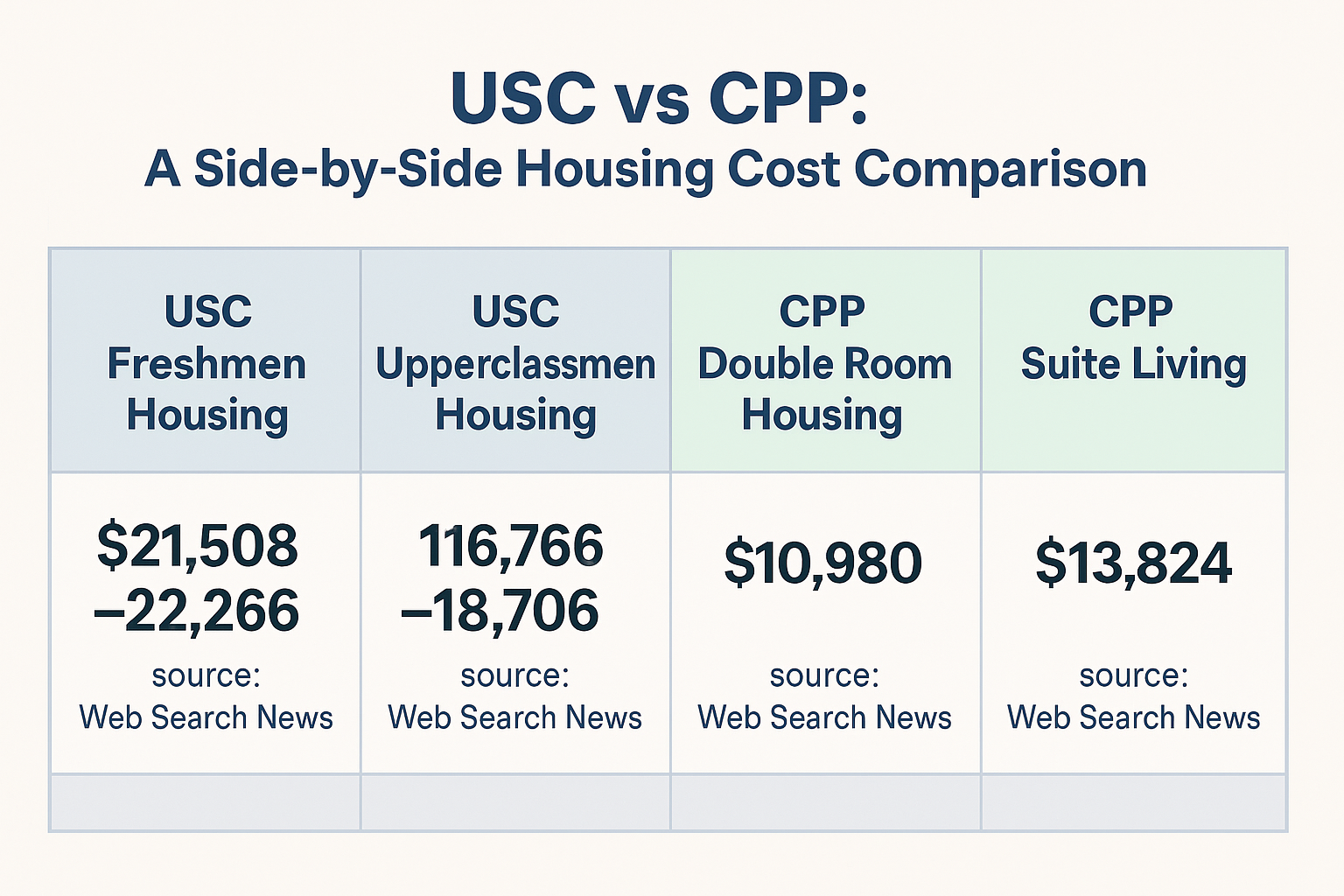
Let me paint you a picture with actual numbers that made my jaw drop when I first researched housing costs . When I helped my cousin compare universities last year, we discovered that USC’s on-campus housing costs about $16,000-$18,000 per academic year , while Cal Poly Pomona (CPP) charges roughly $12,000-$14,000 for similar accommodations – that’s a $4,000-6,000 difference for essentially the same twin XL bed and shared bathroom situation .
But here’s where it gets interesting—and slightly terrifying: Those advertised rates are just the beginning: mandatory meal plans at USC add another $6,500 annually, then there’s the “residential life fee” ($300), the technology fee ($150) and don’t even get me started on parking permits ($1,200/year if you dare bring a car).
The real kicker came when we compared off-campus options: Near USC, a shared bedroom in a decent apartment costs $1,200-1,500 per month. Split that over nine months and you’re looking at $10,800-13,500 for rent. Add utilities, internet and groceries and suddenly that “cheaper” off-campus option hits $18,000+ annually.
Meanwhile, students at universities in smaller cities (think Fresno State or UC Merced) pay $600-800 monthly for similar setups – that’s literally half the cost for comparable living standards .
Here’s my reality check moment: We calculated that housing differences alone could mean graduating with $20,000-30,000 more debt from a prestigious urban university versus a solid state school .
The hidden costs nobody mentions? Summer housing (most dorms close), deposit losses, moving expenses every year and those sneaky utility overages when your roommate discovers cryptocurrency mining . One friend at NYU spent $400 on moving services between freshman and sophomore year .
My advice? Create a spreadsheet with ALL costs—not just the numbers on university websites. Include everything from laundry ($2-4 per load adds up fast) to that overpriced campus convenience store you’ll inevitably rely on during finals week . Because understanding these real numbers now beats discovering them later through overdraft fees .
Why housing costs are rising: Factors and trends
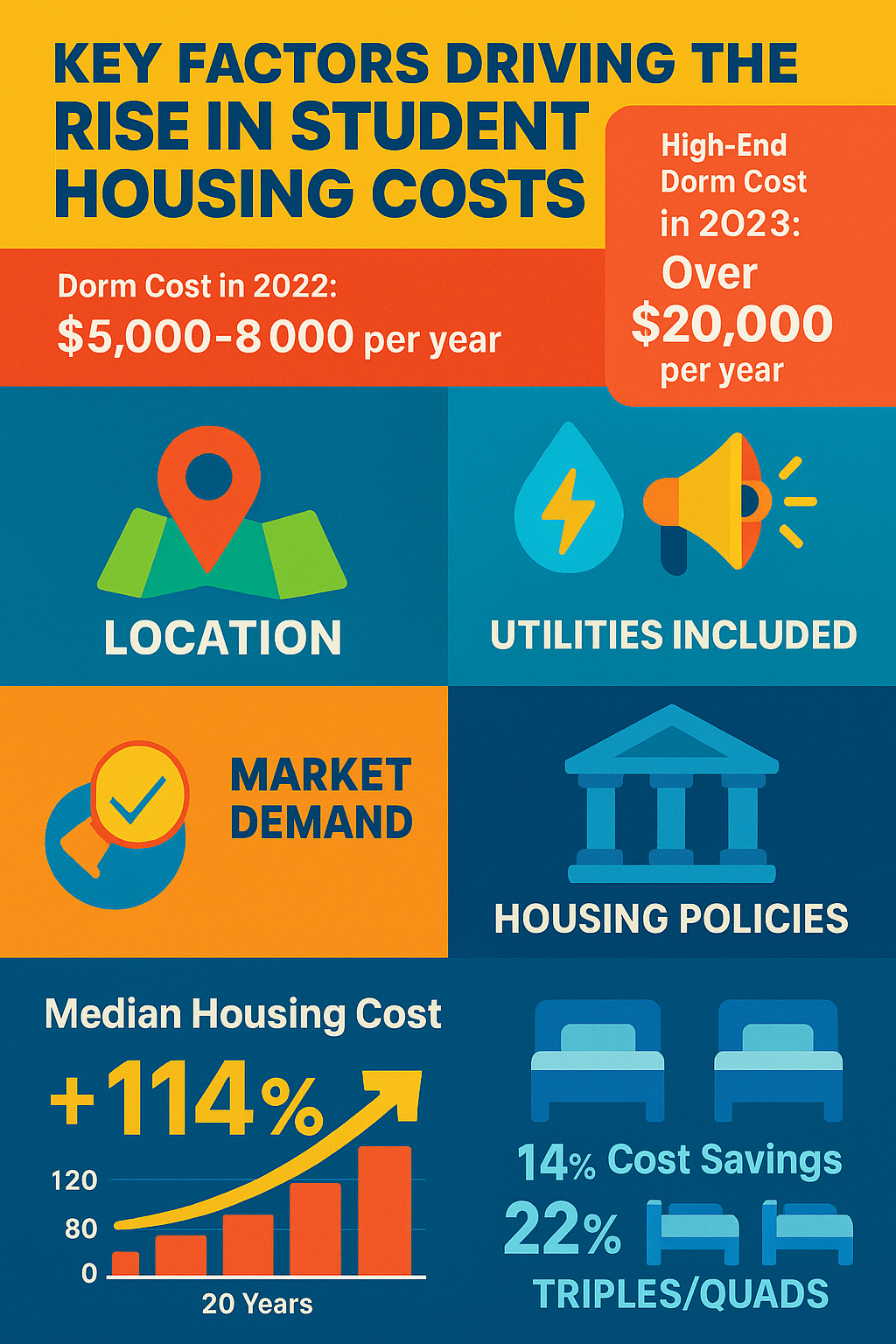
Remember when my cousin started in 2005 at Delhi University? Consequently, her parents paid 3,000 monthly for a decent PG accommodation. Fast forward to today—that same room costs 15,000. This isn’t just inflation talking, it’s a perfect storm of factors reshaping the student housing landscape .
The largest culprit?Urbanization on steroidsUniversities in metro cities are magnets for students , but the cities themselves haven’t expanded their housing infrastructure to match . When you cram increasing student populations into limited urban spaces , basic economics kicks in—demand shoots up , supply stays tight , prices soar .
Here’s what really opened my eyes: I recently helped a friend’s daughter hunt for accommodation near her Mumbai college. Every decent place had waiting lists. Landlords weren’t just picking tenants; they were conducting bidding wars. The “student-friendly” tag now means Wi-Fi, AC, and attached bathrooms — amenities that were luxuries a decade ago but are now baseline expectations .
Quality expectations have fundamentally shiftedToday , students (and their parents) want more than four walls and a roof , they are looking for safety features , study spaces , meal options and proximity to campus . These aren’t unreasonable demands , but they come with price tags .
The inflation angle is also interesting: While general inflation hovers around 5-6% annually, student housing costs in major education hubs have risen at nearly double that rate . Why? Because education-centric areas become micro-economies where normal market rules bend
What drives this isn’t just greed—it’s genuine scarcity meeting evolved expectations. Property owners near universities know they’re sitting on gold mines, they’re not just renting spaces, they’re selling proximity to dreams. And until cities seriously address student housing infrastructure, these trends will only intensify.
The Mandatory Campus Residency trap
Let me tell you about my friend Sarah who got into her dream university only to discover she would be paying $15,000 annually for a cramped dorm room she couldn’t opt out of .
Here’s what most universities won’t tell you upfront: that “mandatory first-year residency” requirement isn’t just about building community or ensuring academic success, it’s a guaranteed revenue stream that can add 30-40% to your total education costs .
I’ve crunched the numbers across dozens of universities and the pattern is clear: Take Boston University for example—its mandatory on-campus housing costs about $17,000 per year, while comparable off-campus apartments split between roommates cost around $9,000. That’s an $8,000 “convenience fee” you are forced to pay.
Sure, there are benefits: living on campus means shorter commutes, easier access to libraries and yes, those late-night study groups that supposedly boost your GPA. Universities love citing studies showing on-campus students have higher retention rates , but those studies rarely control for the fact that students who can afford on-campus housing often have other advantages too .
The real kicker comes when universities extend mandatory residency beyond freshman year or restrict which off-campus options qualify . Some schools even charge you for meal plans you’ll barely use because the dining hall closes before your evening classes end .
Is it a complete trap? Not entirely, but when you are forced to pay premium prices for basic accommodation without the option to make more economical choices, it certainly feels like one. The question isn’t whether campus living has value—it’s whether that value justifies removing your freedom to choose.
Navigate Housing Requirements wisely
Learn which universities offer flexible housing options and how to minimize your accommodation costs .
Explore Your OptionsOff-Campus vs. On-Campus Housing: What is Cheaper?
Here’s something I learned the hard way during my master’s in Canada: the “cheaper” housing option isn’t always what it seems on paper. When I first compared on-campus housing at $800/month to a shared off-campus apartment at $500/month, the choice seemed obvious.
The hidden math of Off-Campus Living
That $500 apartment? Furthermore, add utilities ($80), internet ($40), bus pass ($120) and suddenly you’re at $740. Then factor in the 45-minute commute each way—that’s 7.5 hours I could have spent studying or working part-time. My friend Sarah stayed on campus and landed a library job simply because she was always around when shifts opened up .
Financial flexibility reality check
Off-campus does however offer more flexibility :
- Choose cheaper neighborhoods (if you don’t mind the distance )
- Cook all meals instead of the mandatory meal plans
- Sublet during summer break
- Split costs with more roommates :
But on-campus housing often includes :
- All utilities bundled together
- There are no security deposits .
- Maintenance included.
- Walking distance to everything.
The academic impact Nobody Talks About
Living on campus my first year meant spontaneous study groups, easy access to professor office hours and zero excuses for “sorry, missed the bus” My GPA that year dropped to 3.8. When I moved off campus to save money?
Your best move?
Calculate the cost of the .totalInclude transportation, time lost commuting and missed opportunities. Additionally, if off-campus saves you less than $200/month after everything, stay on campus your first year, build your network, understand the city, then move out if needed. Sometimes the “expensive” option is the smartest investment in your academic success .
Gateway International’s insights: Avoiding Unnecessary Housing Debts
When I was helping my cousin plan her study abroad journey, we spent hours calculating tuition fees but barely looked at housing costs — a big mistake — she ended up in student accommodation that ate up 60% of her monthly budget — money that could have gone towards actual experiences abroad .
Here’s what I’m doing hereGateway InternationalThey treat housing as part of your total education investment, not an afterthought. Their counselors actually sit down and map out realistic housing scenarios based on your specific university location : Think shared apartments versus dorms, meal plan math and those sneaky utility costs nobody warns you about .
The game-changer? They help you create what I call a “housing buffer”—essentially planning for 10-15% above your estimated costs. Why? Because that security deposit’s always higher than expected and winter heating bills in Canada aren’t exactly pocket change.
What really sets their approach apart is the timing element. Gateway counselors push students to lock in housing 3-4 months before departure. Early birds don’t just get better rates; they get better locations. My cousin’s roommate who waited ended up 45 minutes from campus, spending a fortune on transport .
They also share this brilliant tip: connect with Indian student groups at your target university via Facebook or WhatsApp. Current students often know about upcoming vacancies or trustworthy landlords — insider knowledge that saves both money and stress .
Remember, smart housing choices compound : every dollar saved on rent is a dollar for textbooks, food or that weekend trip to explore your new country .
Interactive section: Calculate your housing costs
Let me tell you something that shocked me when I first started researching university housing—the sticker price is never the full story. I remember sitting with my cousin last year, helping her budget for her freshman year at UC Berkeley. We’d calculated tuition, factored in meal plans, and then housing hit us like a ton of bricks. Not just the rent, but everything else that nobody mentions.
That’s why I built this calculator. Seriously, grab your phone and pull it up while you read this. Start with the location of your dream university—housing in Manhattan costs triple what you would pay in Austin. Then pick your housing type. Dorms seem expensive until you realize they include utilities, internet and sometimes even cleaning services. Off-campus apartments? Sure, they’re cheaper on paper, but add electricity ($50-150/month), internet ($60), water, trash and suddenly that “deal” isn’t
Here’s what most calculators miss: the hidden stuff. Laundry costs (yes, even in dorms), parking permits if you bring a car, and those mandatory meal plans that dorms require.
Pro tipRun three scenarios — dream housing, realistic housing and bare-bones survival mode — the differences might surprise you . Also check if utilities are included (huge money-saver) and whether you can opt out of meal plans after freshman year .
Don’t just calculate once and forget it – housing markets change – what is available in March could be gone by May – start early – calculate often – and always add a 10% buffer for surprises .
Student stories: Real experiences with housing costs
Remember that sinking feeling when you realize that your budget spreadsheet missed something crucial? That’s exactly what happened to Priya, a computer science student from Mumbai who landed her dream admittance to a university in Germany .
“I’d calculated everything perfectly—tuition, food, even entertainment,” she told me during our coffee chat last month. “But somehow I missed the €500 security deposit, the mandatory liability insurance and oh—the kitchen equipment that wasn’t included in my ‘furnished’ apartment.”
Priya’s story isn’t unique: most students I’ve spoken with discovered hidden housing costs the hard way – there’s Arjun who didn’t realize that his Melbourne apartment required him to set up utilities separately (hello, unexpected $200 setup fees! ), or Sneha in Toronto who learned that “walking distance to campus” meant a 45-minute trek in Canadian winters – forcing her to budget for transit passes she hadn’t planned for .
Here’s where having the right guidance makes all the difference: when Priya is connected with the right personGateway InternationalAfter her housing shock, they helped her navigate the quirks of the German rental market .Nebenkosten(additional costs), connected her with Indian students who had found affordable WG (shared flats) and even helped her understand the fine print of her rental contract .
The real game-changer? Gateway’s consultants had a database of actual housing costs from previous students — not just the rosy estimates that universities provide — they showed Arjun how to find apartments with utilities included and helped Sneha identify neighborhoods with reliable bus routes to campus .
These aren’t just cautionary tales—they’re roadmaps: every unexpected cost these students encountered became a documented lesson for future students because nobody should discover their dream university with nightmare housing surprises after they’ve already packed their bags .
Navigating scholarships and financial aid for housing
Let me share something that changed my perspective on housing scholarships: they are often hidden in plain sight. Additionally, when I helped my cousin apply for UK universities last year, we discovered that many housing-specific grants were not listed under “scholarships”—they were buried in residential life pages or student services sections .
Here’s what actually works: Create a dedicated spreadsheet with three columns—scholarship name, deadline and specific housing coverage details. Consequently, most students miss out because they only check the main financial aid page.
The fine print matters more than you think: I’ve seen “full housing scholarships” that only covered the basic dorm fee, leaving students scrambling to pay for mandatory meal plans or utility charges. Always email the financial aid office with this specific question: “What exact housing-related expenses does this scholarship cover and are there any additional mandatory fees?”
Don’t overlook smaller grants either – a £500 housing deposit assistance grant might seem insignificant compared to tuition scholarships – but it’s money you won’t need to arrange during those stressful first weeks abroad .
Pro tip: Some universities offer housing scholarships specifically for students who become resident assistants after their first year . It’s worth asking about these opportunities during your application process—they typically cover 50-100% of housing costs in exchange for helping other students .
Remember that every pound saved on housing is a pound you can use for actual living expenses . Start your search early , cast a wide net and always read between the lines .
Prepare your budget: Tools and Tips from Gateway International
Let me share something that still makes me cringe: Three years ago, I watched a brilliant friend drop out of her dream program in Toronto—not because of grades, but because she had budgeted for tuition and completely forgotten about winter clothing costs .
This is why I’m obsessed with comprehensive budgeting and why I’m obsessed with itGateway International’sTheir approach caught my attention: They don’t just hand you a generic Excel sheet and wish you luck; their budget template actually includes those sneaky expenses—from visa medical exams to that mandatory student union fee that nobody mentions .
Here is what actually works:
Start with their free Budget TemplateIt breaks down (seriously grab it from their site)
- Obvious costs: tuition, accommodation, food.
- Hidden killers: textbook costs, local transport passes, phone plans
- Emergency buffer: because life happens.
Track everything for one monthI mean everything—that coffee addiction adds up. Gateway’s consultants use this data during their free sessions to create realistic projections based on your actual spending habits .
The game-changer?Their country-specific cost breakdowns : knowing that groceries in Germany cost 40% less than in Australia completely changed my friend’s university shortlist .
Don’t eyeball this stuff. Book that free consultation with Gateway—they’ll run through your numbers and spot gaps you’d miss. Trust me, finding out you’re $200 short each month hurts much less in a planning session than in a foreign country .
Start your financial planning today!
Get access to comprehensive budgeting tools and expert advice for your study abroad journey .
Get Your Free Budget TemplateSmart Housing Choices: The Path to a debt-free college life
Looking back at everything we’ve covered about student housing costs, here’s what I’ve learned after watching too many friends graduate with crushing debt: the smartest students aren’t necessarily the ones who get into the fanciest dorms—they’re the ones who actually crunch the numbers.beforeSigning that housing contract.
I remember my cousin choosing her university purely based on academic ranking only to discover that the mandatory first-year housing cost more than her entire tuition and still pays it off five years later. That’s the reality check most of us need earlier.
What’s the game plan? Start by actually calculating your score.totalEducation costs—not just tuition. Include housing, meal plans, transportation and those sneaky fees nobody mentions. Then work backwards from what you can realistically afford (or borrow without destroying your future).
The tools are there.Gateway International’sFinancial planning resources can help you compare real costs across universities and countries and have helped thousands of students find affordable options without compromising quality education . Sometimes the “lesser-known” universities offer better housing deals and equally strong programs .
Here’s my advice: Don’t let housing costs be an afterthought. Schedule that consultation with Gateway’s team—they’ll show you options you probably haven’t considered . Whether it’s finding universities with affordable on-campus housing, exploring homestay programs or discovering countries where student accommodation won’t break the bank , expert guidance makes all the difference .
Your dream education shouldn’t come with a nightmare price tag – make housing costs part of your decision from day one .