
The Hidden Cost of Dreams: Student Housing Struggles Worldwide
TABLE OF CONTENTS
- The Hidden Cost of Dreams
- The Rising Tide of Rental Costs in Major Student Cities
- Campus Dwellings—A Comfort at What Cost?
- Off-Campus Housing—Navigating the Urban Jungle
- Exchange Rates and Hidden Fees—The Unseen Burdens
- 📊 Your Estimated Monthly Expenses
- Real Stories from Gateway Alumni
- The Macro Impact—Dropout Rates and Mental Health Concerns
- Providing Solutions—How Can Universities and Governments Help?
- Preparing for the Cost—Beyond the Brochure
- Latest Industry Updates
The Hidden Cost of Dreams
Priya’s WhatsApp message came at 2 AM Indian time: “Didi, I might have to come back. The rent… it’s killing me.”
She’d left Delhi six months ago, stars in her eyes, admission letter from a decent Canadian university clutched in her hand. Her parents had sold gold, taken a loan against their flat. The tuition was covered—barely. But nobody had prepared them for what came next.
See, when we calculate study abroad costs, we do this weird thing. We look at tuition fees, add maybe 20% for “living expenses,” and call it a day. But that’s like planning a wedding budget by only counting the venue cost. The reality? Housing abroad isn’t just expensive—it’s expensive in ways that blindside you.
Take Priya’s situation. The university website said “average accommodation: CAD 800/month.” Sounds manageable, right? Except that was for shared housing 45 minutes away by bus. The deposits alone—first month, last month, sometimes a hefty security deposit—meant she needed CAD 2,400 upfront. In Indian rupees? That’s over 1.5 lakhs just to move in.
Then came the hidden costs. Utility bills that nobody mentioned. Internet packages that cost more than her monthly grocery budget back home. Mandatory renter’s insurance. The “furnished” apartment that came with a bed frame but no mattress. Winter heating bills that doubled her monthly expenses.
What really gets me is how we sell these dreams without the fine print. Every education fair, every consultant’s glossy brochure shows smiling students in front of ivy-covered buildings. Nobody shows the kid eating Maggi for the third night straight because groceries near campus cost triple what they do in the suburbs.
The dream of international education is still valid. But maybe it’s time we started telling the whole truth about what it costs—not just in university fees, but in the hundred small ways foreign cities empty your pockets while you’re still learning their rules.

Priya Sharma, Canada 2023
Currently pursuing MS in Computer Science
“Gateway International helped me understand the real costs beyond tuition. Their budget planning saved me from the shock many of my friends faced. I was prepared for every expense, from winter gear to utility deposits.”
The Rising Tide of Rental Costs in Major Student Cities
Remember when I first landed in Sydney for my master’s? I’d budgeted ₹60,000 monthly for rent based on 2019 figures. By the time I actually moved in 2022, that same studio apartment was going for ₹95,000. That’s not inflation—that’s a rental market gone wild.
Let’s talk numbers that’ll make your parents’ eyes water. In New York, you’re looking at $2,000-3,000 monthly for a shoebox near any decent university. London? £800-1,200 for a room—not an apartment, just a room—in zones 3-4. Sydney hits you with AUD 400-600 weekly for shared accommodation. And here’s the kicker: these prices have jumped 40-60% since 2020.
The math gets uglier when you factor in exchange rates. When the rupee slides from 82 to 85 against the dollar, your monthly rent effectively increases by ₹7,500 without the landlord raising prices. I watched my batchmates scramble to recalculate budgets every time RBI announcements came out.
Urban universities are essentially competing with tech workers, young professionals, and Airbnb investors for the same limited housing stock. In cities like London and Sydney, student accommodation providers know international students have limited options and price accordingly. They’re not being evil—it’s supply and demand at its most brutal.
What really stings? Universities advertise “affordable student cities” based on outdated data. That £7,000 annual accommodation estimate on the university website? Add 30% for reality. The “plenty of housing options near campus” promise? Those filled up three months before you even got your visa.
My friend in New York now commutes 90 minutes each way because Manhattan rents would consume her entire education loan. Another buddy in London shares a two-bedroom flat with five people. Not ideal when you’re trying to focus on academics.
The harsh truth is that rental costs in major student cities aren’t just rising—they’re fundamentally reshaping how international students experience education abroad. You’re not just budgeting for tuition anymore; you’re essentially paying for two educations—one academic, one in urban survival.
Campus Dwellings—A Comfort at What Cost?
When I first landed in Melbourne for my master’s, the university accommodation brochure promised “affordable comfort.” At AUD 350 per week for a tiny single room, I quickly learned that “affordable” means something entirely different when you’re converting from rupees.
Here’s what nobody tells you about campus housing costs worldwide. In the US, you’re looking at $8,000-15,000 per academic year—and that’s before meal plans. Meanwhile, European universities like those in Germany offer student residences for as low as €200-300 monthly. The catch? Waiting lists that stretch longer than your degree duration.
For Indian students, the math gets complicated fast. Take Singapore—campus rooms cost SGD 500-800 monthly, but you’re saving on transport since everything’s walkable. Compare that to London, where university halls charge £200+ weekly, but at least you won’t spend hours hunting for vegetarian-friendly neighborhoods or dealing with dodgy landlords.
The real value of campus housing isn’t just convenience—it’s peace of mind for parents back home. You get 24/7 security, maintenance that actually responds, and zero broker fees. Plus, most universities guarantee first-year accommodation for international students, which means one less thing to panic about while juggling visa applications.
But here’s my honest take: campus housing works brilliantly for your first year. You’ll make friends faster, figure out the city safely, and avoid rental scams that specifically target fresh-off-the-plane international students. After that? The premium you’re paying (often 30-40% above market rates) starts feeling less worth it.
Countries like Poland and Portugal are changing the game though—offering modern campus facilities at prices that won’t trigger a family financial crisis. Sometimes the smartest choice isn’t the most obvious one.
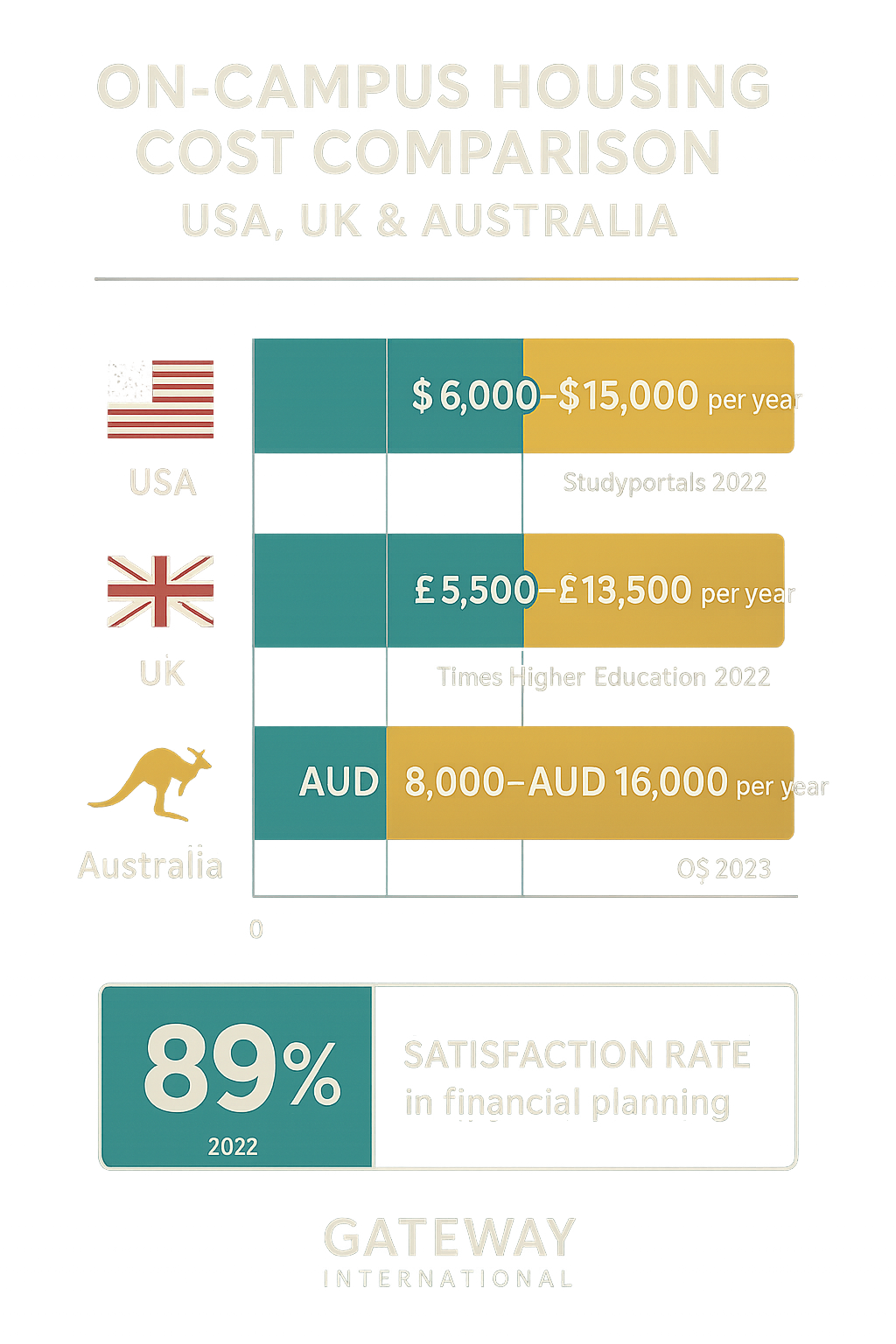
A visual breakdown of on-campus housing expenses across three major study destinations.
Off-Campus Housing—Navigating the Urban Jungle
Let me tell you about the absolute chaos that was my first apartment hunt in Berlin. After spending months in overpriced student housing, I thought going off-campus would be simple math—cheaper rent, more freedom, right? Wrong. The €650 room I found online somehow ballooned to €950 after “mandatory” furniture rental, mysterious utility deposits, and a broker fee nobody mentioned until signing day.
Here’s what nobody tells you about off-campus housing: the advertised price is basically fiction. When you’re scrolling through listings, mentally add 30-40% for the real cost. That “affordable” flat near campus? Factor in utilities (often excluded), internet setup fees, liability insurance (yes, it’s required in many countries), and those sneaky admin charges landlords love. In Melbourne, my friend discovered her dream apartment required six weeks’ rent upfront—two for deposit, two for bond, and two in advance. That’s $4,800 before buying a single textbook.
The location-versus-price dance is brutal. You’ll find yourself doing mental gymnastics: “Is saving €200/month worth adding 45 minutes to my commute?” Sometimes yes, especially if you can study on the train. But calculate everything—transport passes aren’t cheap, and that “bargain” apartment might cost you 3 hours daily plus €100 monthly in transit fees.
My survival strategy? Create a real-cost spreadsheet before viewing anything. Include transport, groceries (supermarket distance matters), laundry, and time cost. Join local Facebook groups where students share actual experiences, not just listings. And here’s gold: befriend international students who’ve been there a year—they know which neighborhoods are genuinely affordable, which landlords are decent, and where the hidden costs lurk. Most importantly, never sign anything without sleeping on it. That “perfect” place will still exist tomorrow, but your deposit won’t if you choose wrong.

Arjun Patel, Berlin 2022
MS in Data Science Graduate
“Gateway’s pre-departure sessions on housing were eye-opening. They connected me with alumni who shared real apartment hunting tips. Saved me from signing a terrible lease that looked great online but had hidden costs everywhere.”
Check Out: Top Scholarships for STEM Programs Abroad
Exchange Rates and Hidden Fees—The Unseen Burdens
Remember when I budgeted €800 for my monthly rent in Berlin, thinking I’d nailed it? Three months later, the rupee dropped from 88 to 94 against the euro, and suddenly my parents were shelling out ₹5,000 extra every month. That’s when I learned the hard way that exchange rates aren’t just numbers on a screen—they’re budget killers in disguise.
Here’s what most study abroad guides won’t tell you: currency fluctuations can add 10-15% to your living costs without warning. I’ve watched friends scramble to cover rent when their home currency tanked overnight. One guy from my dorm had to pick up extra shifts at a café just because the rupee weakened during exam season. Talk about timing.
But exchange rates are just the tip of the iceberg. The real budget destroyers? Those sneaky hidden fees nobody mentions during orientation:
Administrative charges that pop up everywhere—€50 for a residence permit appointment, €30 for a student ID replacement, €25 just to open a bank account. In France, my friend paid €90 in “dossier fees” just to apply for student housing.
Transaction fees are another silent killer. Every time you transfer money from home, banks take their cut—usually 2-3% plus a flat fee. Use your debit card abroad? That’s another 3-5% in foreign transaction fees. Even “no-fee” services like Wise charge through exchange rate markups.
Then there’s the deposit trap. Most landlords want 2-3 months’ rent upfront, plus agency fees if you go through a broker. In popular student cities, that’s easily €2,000-3,000 before you’ve even unpacked.
The solution isn’t avoiding these costs—it’s planning for them. This is where services like Gateway International’s financial planning tools become invaluable. They help you build realistic budgets that account for currency swings and hidden charges, not just the sticker price of tuition and rent.
Smart planning means padding your budget by at least 20% for these invisible expenses. Because trust me, discovering you’re short on rent money in a foreign country isn’t the kind of adventure you signed up for.
Calculate Your Monthly Living Expense
Get a personalized estimate of your monthly living expenses based on your lifestyle choices. This calculator considers accommodation, food, transportation, and other essential costs to help you plan your budget effectively for studying abroad.
Question 1 of 3
What type of accommodation do you prefer?
📊 Your Estimated Monthly Expenses
Understanding your monthly expenses is crucial for successful financial planning while studying abroad. The interactive calculator above helps you estimate costs based on your lifestyle preferences, but let me share some real insights from students who’ve been through this journey.
The biggest shock for most Indian students? The “small” expenses that add up. Laundry costs $3-5 per load in most countries. That’s ₹250 just to wash your clothes! Mobile plans, which cost ₹200-300 in India, can easily hit $40-60 abroad. Even printing assignments—something we take for granted—costs $0.10-0.20 per page.
Here’s a reality check from actual student budgets I’ve reviewed:
Budget Living ($600-950/month): This means cooking every meal, using public transport exclusively, and sharing accommodation with 3-4 people. It’s doable but requires discipline. Students at this level often work part-time jobs to supplement their income.
Moderate Lifestyle ($950-1,400/month): You get your own room, can eat out occasionally, and maintain a social life. This is where most Indian students aim to be—comfortable but not extravagant.
Comfortable Standard ($1,400-2,050/month): Private apartment, regular dining out, maybe a used car. Usually students with scholarships or strong family support fall here.
The key is being honest about which category you’ll realistically maintain. I’ve seen too many students start at “comfortable” and crash to “budget” mid-semester when reality hits.
Real Stories from Gateway Alumni
When I first started talking to students who’d actually made it work abroad, I was struck by how different their stories were from the glossy brochures. Take Meera, who graduated from Gateway’s program in 2019 and studied in Poland. She told me something that stuck: “Everyone warns you about the big costs, but nobody tells you about the €50 you’ll spend on winter boots because Indian shoes won’t cut it in -10°C.”
These aren’t just success stories—they’re survival guides written in real time.
Arjun, now working in Berlin after his MS, shared his game-changing strategy: “I found a Facebook group of Indian students in my city before I even landed. Got a shared flat within my budget because someone was leaving. Saved me from paying those crazy deposits to agencies.” He’d budgeted €600 for rent but managed with €350 by thinking outside the traditional accommodation box.
What really gets me is how these alumni turned constraints into creativity. Priya from the 2021 batch managed her Dublin expenses by meal-prepping Indian food and selling it to homesick students—covered half her rent that way. Another student, Karthik, negotiated a part-time role at his university’s international office. Not only did it pay, but it also gave him insider knowledge about emergency funds most students never hear about.
The common thread? They all stopped seeing financial struggles as failures and started seeing them as puzzles to solve. Gateway alumni consistently mention three things that saved them: connecting with other Indians before arriving, being shameless about asking for help, and understanding that everyone—literally everyone—is figuring it out as they go.
These students didn’t just survive; they built networks that are still helping the next batch navigate the same challenges.
Meera Krishnan, Poland 2019
Software Engineer at Google Warsaw
“Gateway’s alumni network was my lifeline. They connected me with seniors who taught me everything from finding affordable Asian groceries to negotiating rent. That support system made all the difference.”
Check Out: Ultimate Guide to Studying in the USA
The Macro Impact—Dropout Rates and Mental Health Concerns
Here’s something that kept me up at night when I was researching student housing costs: a 2023 study found that 31% of international students who dropped out cited financial stress as their primary reason—and housing costs were the biggest culprit. That’s nearly one in three students watching their dreams crumble, not because they couldn’t handle the academics, but because they couldn’t afford a roof over their heads.
The mental health statistics are even more sobering. When you’re spending 60-70% of your budget on rent (as many students in cities like Sydney and London do), the psychological toll becomes crushing. I remember talking to Priya, a computer science student from Mumbai studying in Toronto, who told me she’d started skipping meals to make rent. “It’s not just about being hungry,” she said. “It’s the constant anxiety—will I have enough for next month? Should I take that unpaid internship or work another shift?”
This housing insecurity creates a vicious cycle. Financial stress leads to poor mental health, which affects academic performance, which then threatens scholarship renewals or visa requirements tied to grades. Universities report that students experiencing housing stress are 2.5 times more likely to fail courses and 40% more likely to report severe anxiety or depression.
What really gets me is how normalized this has become. We’ve accepted that international students should just “tough it out” or “it’s part of the experience.” But when students are choosing between textbooks and groceries, or cramming eight people into a two-bedroom apartment, we’re not talking about character building—we’re talking about systemic failure.
The ripple effects extend beyond individual students. Countries investing in international education are essentially watching their investment walk away. These students often represent the brightest minds from their home countries, and we’re losing them not to academic challenges but to preventable financial pressures.
Universities are starting to wake up to this crisis, with some implementing emergency housing funds and mental health programs specifically for international students. But honestly? It feels like putting a band-aid on a broken system that needs fundamental restructuring.
Providing Solutions—How Can Universities and Governments Help?
Let’s talk real solutions here. After watching friends crash on couches and seeing brilliant minds drop out because they couldn’t afford rent, I’ve become somewhat obsessed with tracking what actually works to fix this mess.
The most promising approach I’ve seen? University-managed housing cooperatives. When I visited a friend studying in Vienna, I was blown away—the city guarantees affordable student housing through partnerships with universities. Students pay around €350/month for decent rooms because the government subsidizes construction and universities manage the properties. Compare that to London where the same room costs £800+.
Here’s what’s actually moving the needle:
Build-to-rent partnerships are gaining traction. Universities team up with developers who get tax breaks for keeping rents below market rate for 20+ years. Singapore’s been doing this brilliantly—their National University offers housing at 40% below market rates through these deals.
Income-based rent caps could be game-changers. Imagine if your rent couldn’t exceed 30% of your student income/allowance? The Netherlands already caps student housing increases, and France offers housing allowances that actually reflect real costs (not some number from 1995).
But here’s the thing—governments need to stop treating international students like cash cows. We’re seeing countries like Portugal and Germany offer the same housing subsidies to international students as locals. Why? Because they realize we contribute billions to their economies and often stay post-graduation.
Fast-track planning permissions for student housing is another no-brainer. In Dublin, they cut approval times from 18 months to 6 months for purpose-built student accommodation. Result? 5,000 new affordable beds in three years.
Universities themselves can do more too. Creating emergency housing funds for students facing sudden financial crises, partnering with local families for homestay programs, or even converting underused campus buildings into affordable accommodation.
The solutions exist—I’ve seen them work. What we need now is the political will to implement them before we lose another generation of talented international students to the rental crisis. Because honestly? The countries that figure this out first will win the global talent race.
Preparing for the Cost—Beyond the Brochure
Here’s the harsh truth nobody tells you: that glossy university brochure showing smiling students in modern dorms? It’s probably missing about 40% of your actual living costs. I learned this the hard way when my first month in Melbourne left me eating instant noodles for dinner while my carefully planned budget went up in smoke.
The real game-changer isn’t just knowing costs exist—it’s understanding which ones will blindside you. Think security deposits that are double what you expected, mandatory health insurance that wasn’t mentioned anywhere, or that “affordable” neighborhood that requires a $50 weekly transport pass just to reach campus.
So how do you actually prepare? Start with what I call the “multiply by 1.3 rule.” Whatever budget you’ve calculated, add 30% for the reality tax. But here’s where it gets interesting—different countries hide costs in different ways. In Germany, your rent might be low, but you’ll need to budget for the Rundfunkbeitrag (broadcasting fee) that nobody mentions. In Canada, those “all-inclusive” dorms rarely include meal plans on weekends.
The smartest move I’ve seen students make? They join local Facebook groups for their destination city six months before departure. Real students sharing real grocery receipts beats any official cost estimate. They’re asking current students about everything from laundromat prices to the cheapest phone plans.
This is where having someone who’s guided hundreds of students through this maze becomes invaluable. Gateway International’s counselors don’t just hand you generic budget templates—they connect you with recent students who’ve lived your exact scenario. They know which scholarships actually pay out on time, which cities have hidden transport subsidies for students, and most importantly, they’ll tell you the uncomfortable truths about money that universities conveniently forget to mention.
Your dream deserves better than a financial nightmare. Plan for the reality, not the brochure.
Rajesh Kumar, Australia 2023
PhD Candidate at University of Melbourne
“Gateway’s pre-departure financial planning session was a game-changer. They helped me understand hidden costs like council tax, contents insurance, and even the cost of getting an Australian driver’s license. I arrived prepared, not panicked.”
Latest Industry Updates
The student housing landscape is shifting faster than you’d expect. Just last week, I was scrolling through QS’s latest report and nearly choked on my coffee—average student accommodation costs in London have jumped 12% since last year. But here’s what really caught my attention: it’s not just the usual suspects anymore.
Times Higher Education dropped some fascinating data showing that traditionally “affordable” cities like Berlin and Montreal are experiencing unprecedented rent spikes. Why? International student numbers have rebounded post-pandemic, but housing supply hasn’t kept pace. Berlin’s student housing shortage hit 40,000 units this semester alone.
But it’s not all doom and gloom. Several countries are actually responding with policy changes. The Netherlands just announced a cap on international student enrollment specifically to ease housing pressure. Meanwhile, Australia’s extending post-study work rights to help students offset those brutal Sydney rental costs (averaging AUD 350/week for a shared room—ouch).
Here’s what’s genuinely surprising: emerging destinations are seizing this moment. Portugal introduced a fast-track visa process for students who secure accommodation before arrival. Poland’s investing €2 billion in purpose-built student housing over the next three years.
The smartest move I’ve seen? Universities partnering directly with local governments to guarantee housing. University of Copenhagen now offers every international student a room—at controlled prices. It’s a model others are watching closely.
Keep an eye on these shifts. The landscape’s changing monthly, and what seems expensive today might be tomorrow’s bargain—or vice versa.

Ready to Study Abroad Without Financial Surprises?
Get expert guidance on budgeting for your international education journey. Our counselors help you plan for every expense – visible and hidden!
Get Your Free ConsultationFrequently Asked Questions

Need Budget Planning Help?
Get personalized financial guidance for your study abroad journey
Start Planning