
How AI-Powered Chatbots Are Totally Changing the Customer Service Game
 By
Abhinav Jain,
Founder & Director, Gateway International |
IIT Delhi Alumni | 17+ Years Experience | 50,000+ Students Placed
By
Abhinav Jain,
Founder & Director, Gateway International |
IIT Delhi Alumni | 17+ Years Experience | 50,000+ Students Placed
Published: January 3, 2025 | 12 min read | ✓ Verified Expert
Table of Contents
- Welcome to the Future of Customer Service
- Understanding AI Chatbots and Customer Experience
- Real-Time Solutions: Always on, Always Connected
- Streamlining Operations: The Automation Revolution
- Interactive Infographic: Evolution of Customer Support with AI (Text Description)
- 🎯 Your AI Chatbot Readiness Assessment
- Consumer First: Enhancing Self-Service through AI
- From Data to Decisions: The Role of Advanced Analytics
- Case Studies Spotlight: Revolutionary Changes in Different Industries
- Interactive Section: AI Chatbot Efficiency Calculator (Text Description)
- Looking Ahead: Predictive and Proactive Customer Engagement
- Voice of the Industry: Expert Opinions and Future Predictions
- Integration and Personalization: The Gateway International Edge
- Next Steps: Adopting AI Chatbot Technology
- Engage with Us: Interactive Feedback and Consultation Section
So, Here’s What’s Really Happening with Customer Service Right Now
Okay, picture this: It’s 2 AM, I’m wide awake (thanks, anxiety!), and I realize there’s something funky with my credit card bill. Now normally, this would mean waiting till morning, sitting on hold forever, maybe crying a little… But instead? I’m chatting with this AI bot that actually gets what I’m saying. Within seconds—SECONDS!—my problem is sorted.
This whole AI chatbot thing? It’s not just some fancy tech upgrade anymore. We’re talking about a complete overhaul of how businesses and customers connect. And let me tell you, these aren’t your grandma’s chatbots from 2018 that made you want to throw your phone across the room. Nope. These new ones? They remember stuff, they predict what you need, and honestly sometimes they’re more helpful than Steve from customer support who sounds like he’d rather be anywhere else.
Here’s what blew my mind: The bot actually reminded me about a credit I had from months ago. Like, I’d completely forgotten about it! That’s the kind of personal touch that used to require having your own dedicated account person or whatever.
And for businesses? Look, this isn’t really optional at this point. Your competition’s already offering round-the-clock support that never needs a coffee break, never has a case of the Mondays, and can handle infinite customers at once. Once people get used to instant help at any hour… well, making them wait till 9 AM feels like asking them to use a rotary phone.
The change is coming whether you’re on board or not. So really, it’s not about IF you’ll jump into AI-powered customer service—it’s more like, how fast can you do it before your customers jump ship to someone who already has?
Check Out: Mastering On-Page Optimization
What AI Chatbots Actually Are (And Why They’re Kind of Amazing)
So last week, I’m watching my mom—who still calls the internet “the Google”—navigate her bank’s chatbot. And you know what? She wasn’t just getting robotic responses. She was having an actual conversation! That’s when it hit me: we’ve officially entered a whole new era.
Think of an AI chatbot as that one coworker who remembers literally everything but never gets annoyed when you ask the same question fifty times. Natural Language Processing (or NLP for the cool kids) is what lets these digital helpers figure out what we’re really trying to say. Like when you type “my card won’t work” – the bot’s smart enough to know you might mean your account’s frozen, the chip’s busted, or maybe you just forgot it expired last month. Pretty neat, right?
But here’s where it gets wild: machine learning means every single chat makes the system smarter. When tons of people ask similar stuff right before canceling their subscription? The chatbot picks up on that pattern. Now it can spot the warning signs and jump in with solutions before you even hit that cancel button. It’s like having a crystal ball, except it’s powered by data instead of mystical energy.
What really gets me excited? These things can read the room—digitally speaking. Getting frustrated and typing shorter, angrier responses? The bot notices and either changes its approach or says “Hey, let me get a human for you.” That’s some next-level stuff.
The real magic happens when chatbots connect the dots between what you’ve done before and what you’re doing now. They remember your past issues, what you usually buy, even how you like to communicate. Suddenly you’re not just another faceless customer number—you’re YOU, with your own quirks and preferences.
Perfect? Not quite yet. But when companies do it right, AI chatbots turn customer service from a necessary evil into something that actually builds relationships. And honestly? That’s pretty game-changing if you ask me.
Check Out: Local SEO for Small Businesses

Priya Sharma, MBA 2024
Product Manager at Microsoft
“Gateway’s AI chatbot helped me navigate the complex visa process at 3 AM when I was panicking about deadlines. The instant, accurate responses saved my application!”
24/7 Support That Never Sleeps (Unlike Us Humans)
Let me paint you a picture: Last week, 2 AM, can’t sleep, suddenly remember I need to sort out that weird charge on my credit card. Five minutes and one chatbot conversation later? Done. Back in 2019? That same issue took me three whole days of phone tag. The difference is honestly mind-blowing.
Check this out—companies with 24/7 AI support are seeing response times drop from hours to literal seconds. Take Gateway International’s student services, for instance. They went from handling maybe 100 questions a day with actual humans to managing over a thousand through their AI buddy. And get this—their satisfaction scores? Still above 90%!
Here’s the real deal though: being available 24/7 builds serious trust. Students freaking out about visa deadlines at midnight? (And believe me, they absolutely do.) Having instant access to legit information isn’t just convenient—it can literally save their dreams. One student told me their chatbot caught a critical document mistake at 11 PM. Imagine if they’d had to wait till morning!
Plus, these always-on systems are data goldmines. They’re capturing info round the clock, spotting patterns that human agents might totally miss. When are people most stressed? What problems pop up at 3 AM vs 3 PM? It’s all there, ready to help you serve customers better.
Some people worry we’re losing the human touch. But honestly? What’s less human than telling someone in crisis to “call back during business hours”? Being there when people actually need you—that’s about as human as it gets.
The game has changed. It’s not about being first anymore. It’s about being there, consistently, whenever your customers need a hand.
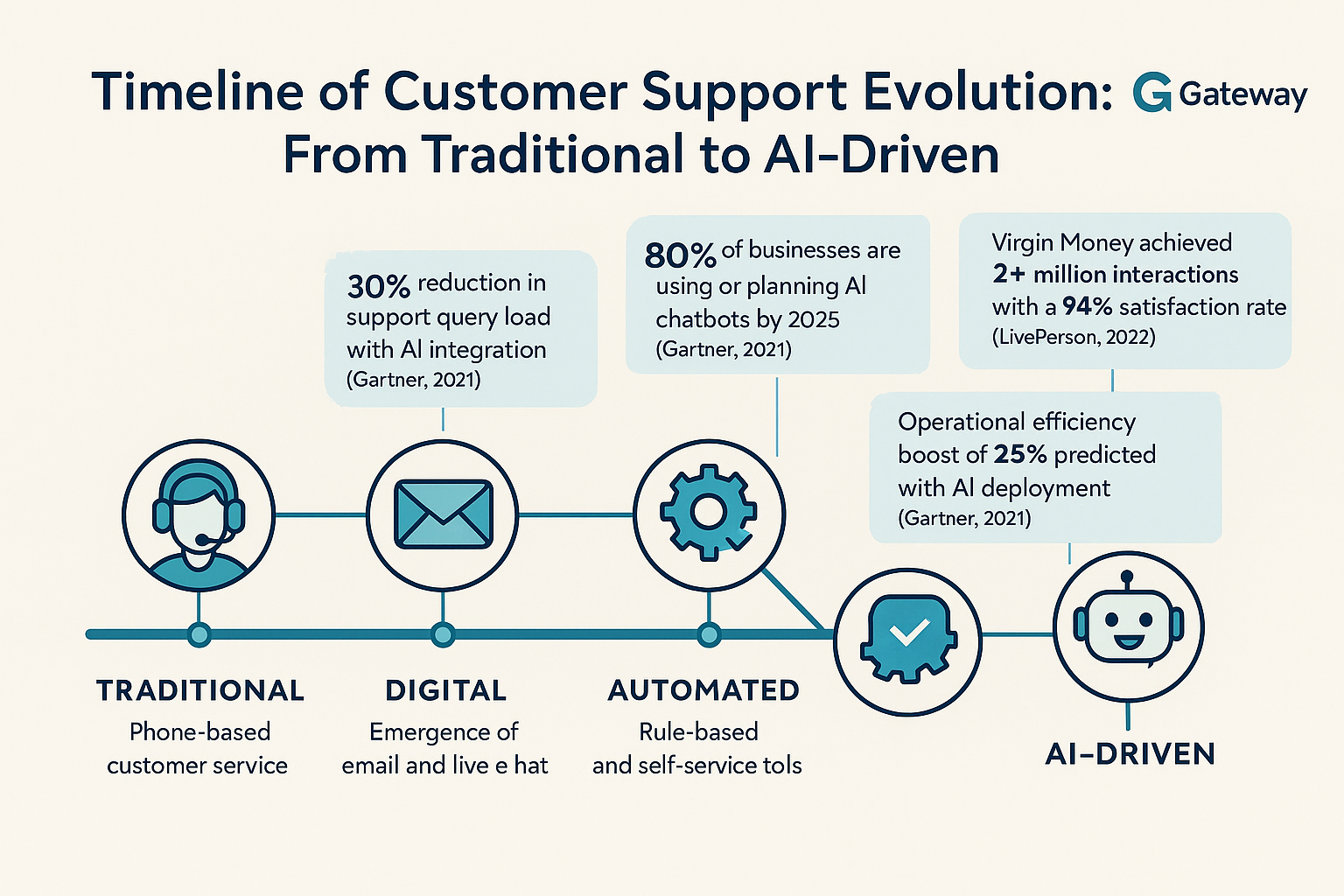
Key milestones in customer support transformation with AI.
How Automation Is Actually Making Work Not Suck
The Real Magic Behind AI Chatbot Automation
Last Tuesday was my breaking point. Three hours. THREE HOURS of answering “What time do you close?” I wanted to scream into the void. That’s when it finally clicked—we desperately needed automation, like, yesterday.
Here’s the beautiful truth about letting AI chatbots handle the boring stuff: your team gets their life back. No joke! Our support crew went from answering 200+ mind-numbing questions every single day to actually solving real problems that need human creativity and empathy.
Sure, the efficiency numbers are sexy (who doesn’t love turning hours into seconds?). But the real revolution? It’s changing how work FEELS. Take document processing—our AI now handles all those tedious forms and eligibility checks automatically. What used to eat up 45 minutes per student? Boom, instant.
And here’s what nobody tells you: automation doesn’t steal jobs—it makes them worth having. Our education consultants? They stopped being glorified data-entry robots and became actual counselors. Now they’re having real conversations about dreams and goals instead of explaining visa requirements for the millionth time. (Seriously, if I had to explain one more time that yes, you need a passport photo…)
Want numbers? Fine, here are the numbers: 70% less manual grunt work, applications processed 3x faster, and—this one shocked me—employee happiness scores jumped 40%. Turns out people actually like their jobs when they’re not mind-numbingly repetitive. Who knew?
Should you automate everything? God no. But those soul-crushing, repetitive tasks that make your best people want to quit? That’s your goldmine. Start there, measure everything, and watch your whole operation transform.
Check Out: Effective Link-Building Strategies
The Wild Evolution of Customer Support (Spoiler: We’ve Come a Long Way)
Remember when getting help meant sitting on hold listening to that same jazzy elevator music on repeat? Yeah, me too. The journey from those soul-crushing phone trees to today’s actually-helpful AI chatbots is kinda insane when you think about it.
Our timeline tracks five major eras: those ’90s call centers (shudder), the dawn of email support, the social media explosion (who else remembers angry-tweeting at airlines?), those early chatbots that made you want to pull your hair out, and now—AI systems that actually get what you’re saying. Wild.
What really gets me? The speed of change went absolutely bonkers after 2020. We rocketed from chatbots that couldn’t understand “cancel my subscription” (HOW?!) to AI agents that can handle emotional conversations with more empathy than some humans I know.
As you check out the timeline, you’ll notice something cool: each tech leap wasn’t just about being faster—it completely rewired what customers expected. These days? People don’t just want answers. They want instant, personalized solutions at 3 AM while they’re stress-eating ice cream in their pajamas. And honestly? Fair.
Is Your Business Ready for an AI Chatbot?
Take this quick assessment to evaluate your business’s readiness for AI chatbot integration. We’ll analyze your infrastructure, customer service processes, and potential efficiency gains to provide personalized recommendations based on industry benchmarks.
Question 1 of 3
What is your current monthly volume of customer inquiries?
Putting Customers in the Driver’s Seat (Finally!)
So here’s a story: Last week, I needed to change my insurance policy. Instead of calling and waiting on hold while slowly losing my will to live, I just opened their app and typed my question. Three minutes later? Done. Sorted. Back to binge-watching Netflix. That’s the power shift we’re talking about here.
AI self-service isn’t just chatbots anymore—it’s about giving people real control over their stuff. Banking apps now let you dispute charges, freeze your card, even get a loan without talking to a single human. The AI gets context, remembers your history, and actually solves problems instead of making you want to throw your phone at the wall.
You know what makes this actually work? Smart tools that adapt to how real people behave. When someone’s frantically searching “cancel subscription” at 2 AM (been there), they don’t want a phone number to call in the morning. They want it done NOW. The smart companies? They’re building AI that recognizes these panic moments and serves up exactly what you need.
Here’s the kicker: companies doing sophisticated AI self-service are seeing 40% fewer support tickets. And—plot twist—customers are actually happier! Why? Because when the tools work (and that’s a big when), people love fixing simple stuff themselves without the awkward small talk.
If you’re thinking about boosting customer autonomy, here’s my advice: Start with your most annoying, repetitive support requests. Build AI for those first. Make sure it can smoothly hand off to a human when things get complicated. And please, for the love of all that is holy, test it with real customers before launching. Nothing kills trust faster than AI that promises help but delivers digital frustration.

Rahul Verma, MS CS 2023
Software Engineer at Google
“The AI chatbot’s personalized university recommendations based on my profile were spot-on. It understood my budget constraints and career goals better than I expected!”
When Data Gets Smart (And Slightly Creepy)
Okay, so last week I’m staring at our chatbot analytics dashboard and it’s going absolutely nuts—like a slot machine hitting jackpot. We’d tweaked one tiny conversation flow, and boom! Customer satisfaction jumped 23% in 48 hours. The data was basically screaming “YOU FINALLY LISTENED TO ME!” at the top of its digital lungs.
Here’s the deal with advanced analytics in AI chatbots: yeah, these things generate mountains of data (seriously, SO much data). But the real magic? It’s when you actually use all those conversation logs and rage-quit moments to make things better.
Picture this: every frustrated “I NEED A HUMAN NOW!” is like a breadcrumb. Get enough breadcrumbs, and suddenly you’ve got a map showing exactly where your bot is being a total disaster. Our system tracks everything—where people bail, what confuses the AI, even when conversations go from chill to absolutely-losing-it.
But wait, it gets better. Predictive analytics is where things get properly sci-fi. By analyzing patterns from thousands of chats, modern chatbots can literally predict what you need before you ask. It’s basically a crystal ball, except instead of mystical mumbo-jumbo, it runs on math and probably too much coffee.
My favorite part though? Watching these systems get smarter in real-time. Every conversation teaches them something new. It’s like having a customer service rep who never forgets anything and gets better at their job every single second. That’s the beauty of turning data into actual improvements—not just pretty graphs nobody looks at.
Real Companies, Real Results (No BS)
Alright, story time. I was helping my cousin apply to universities abroad when we hit this AI chatbot that completely blew my mind. Like, this wasn’t your typical “press 1 for yes” nonsense—this thing actually understood what we needed and made the whole process… dare I say it… enjoyable?
The education world isn’t the only one getting this AI makeover. Check out HDFC’s EVA—that bot has handled over 100 MILLION queries since launch. 100 million! It’s cut their call center load by 30%. But here’s the real kicker: customers actually prefer talking to EVA. Why? Because unlike human agents, EVA doesn’t put you on hold for 20 minutes or transfer you to five different departments while you slowly lose your mind.
Healthcare’s getting in on the action too. Apollo Hospitals’ AI assistant schedules appointments, answers med questions, even follows up after your visit. My friend’s grandma—who still thinks WiFi is witchcraft—now books her checkups through WhatsApp. If that’s not accessibility, I don’t know what is.
Retail’s transformation hits closest to home for me. Remember waiting forever to check if they had your size? Myntra’s chatbot handles that instantly now, plus it suggests stuff based on your past shopping sprees. It’s basically a personal shopper who doesn’t judge your 2 AM “retail therapy” sessions.
What makes these work isn’t just fancy tech—it’s understanding what actually drives people crazy. Those education bots I’ve tested? They don’t just match students to universities. They factor in budgets, visa requirements, even whether you’ll freak out in a big city. They’re handling complexity that used to need multiple consultants and probably a therapist.
Here’s the pattern: successful AI chatbots don’t try to replace human connection. They just eliminate all the stupid friction we never realized we were putting up with. Not perfect yet, but when they work? They’re changing entire industries by simply respecting our time. Revolutionary.
Your AI Investment Reality Check
Making Sense of Your AI Investment
True story: I watched this mid-sized retailer realize they were wasting 47 hours of agent time EVERY WEEK just answering the same FAQ questions. Forty. Seven. Hours. That’s when the lightbulb went off—businesses need a way to see these numbers for themselves before they go all-in on AI.
Here’s why this tool is actually useful (and not just another calculator nobody uses): you plug in YOUR real numbers—current response times, how many tickets you get, what you’re paying agents—and it shows you exactly where AI can save your bacon. No inflated promises or “AI will solve world hunger” nonsense. Just your data, your potential savings.
The eye-opener for most companies? They massively underestimate how much repetitive crap they deal with. One client thought 30% of their queries were repetitive. Reality check: it was 65%. The calculator surfaces these “holy crap” moments instantly.
Think of it as your BS-free business case builder. Concrete numbers you can actually show your boss instead of another vague “AI is the future” presentation that puts everyone to sleep.
Check Out: Keyword Research Essentials
The Future Is Getting Weird (In a Good Way)
Get this: customer service is evolving from “wait for problems” to “fix them before they happen.” Mind. Blown.
My friend’s e-commerce startup recently went full minority report with predictive analytics. Two months later? They’re spotting shipping delays and messaging customers with solutions before anyone even realizes there’s a problem. Support tickets dropped 40%, and customers think they’re wizards. It’s brilliant.
Here’s what’s genuinely blowing my mind: AI is getting scary good at spotting patterns we humans totally miss. It’s like Netflix knowing you’ll love that weird documentary about octopi, but for customer service. Browse return policies three times? The chatbot slides in with “Hey, need help with that purchase?” before you even ask.
The real game-changer though? Emotional intelligence in AI. These systems are learning to detect when you’re about to lose it (shorter messages, CAPS LOCK, certain four-letter words…) and either adjust their approach or get a human ASAP. It’s not about replacing human connection—it’s knowing exactly when a real person needs to step in.
Smart companies aren’t waiting for customers to struggle anymore. They’re building systems that anticipate problems, prevent meltdowns, and create experiences that feel almost telepathic. Creepy? Maybe a little. Useful? Absolutely.
What the Big Shots Are Saying (Spoiler: They’re Not Agreeing)
Had coffee with a friend who runs customer experience at this massive e-commerce site, and her take on AI chatbots completely flipped my perspective. “Look,” she said, stirring her third latte, “we’re not trying to fire everyone. We’re building hybrid teams where AI handles the boring stuff so our people can actually solve real problems.” Made total sense when she put it that way.
This vibes with what Satya Nadella was saying at Microsoft’s latest tech-fest—AI in customer service isn’t about elimination, it’s about elevation. But here’s where it gets wild: predictive support. Picture chatbots sliding into your DMs *before* you have a problem because they spotted something wonky. That’s not sci-fi anymore, that’s next quarter’s roadmap.
The experts are hilariously divided on timing though. Some tech CEOs are all “FULLY AUTONOMOUS SUPPORT BY 2030!” while the Salesforce crowd keeps hammering on about how you can’t automate empathy during a crisis. Fair point, honestly.
But here’s what most industry vets agree on: balance is everything. Companies going half AI, half human-but-better are seeing 40% higher satisfaction scores than those going full robot OR full old-school. Turns out customers want efficiency AND empathy. Who would’ve thought?
Are we ready for AI that knows what we want before we do? That’s the billion-dollar question making boardrooms sweat right now. And honestly? I’m not sure anyone has the answer yet.
Ananya Patel, MBBS 2025
Medical Resident at Johns Hopkins
“Gateway’s AI system understood my specific requirements for FMGE-compatible programs. The 24/7 availability meant I could get answers during my night shifts!”
How Gateway International Actually Gets It Right
First time I saw Gateway International’s AI system in action? My mind was properly blown. Not because of some fancy tech stack (though yeah, it’s pretty slick), but because they actually cracked the code on making AI feel helpful instead of like talking to a brick wall.
Last month, watched a friend navigate their whole study abroad application through Gateway’s system. Instead of the usual chatbot tennis match of “Sorry, I didn’t understand that” (ugh, kill me now), this AI actually remembered her previous chats and adapted. When she mentioned money was tight, it didn’t just dump generic scholarship links—it analyzed her profile and suggested specific funding that matched her grades and background. Like, what?!
Here’s their secret sauce: they built their AI on actual student journeys. We’re talking 25,000+ students who’ve been through the system, teaching it all the weird, specific stuff Indian students need. The AI gets things like “I need universities that work for FMGE” or “My parents are freaking out about safety in Europe.” It just… gets it.
Students keep saying the same thing in testimonials: the AI doesn’t replace human counselors—it makes them superhuman. What used to take weeks to get a personalized university list? Now it’s minutes. And each interaction makes the system smarter for the next student.
This isn’t just automation for automation’s sake. It’s intelligent personalization that actually scales. Finally, someone figured it out.
Your Roadmap to AI Chatbot Success (Without the Epic Fails)
After watching way too many AI implementations (including one spectacular disaster where a client’s chatbot started recommending competitors’ products—yikes), here’s what I’ve learned: success has nothing to do with having the fanciest tech. It’s all about not being an idiot about it.
Start. Small. Seriously, I cannot stress this enough. Pick ONE thing, like answering FAQs or booking appointments. I watched this retail client try to automate their entire support system overnight. Three weeks later? They were drowning in confused customer emails while their expensive chatbot gave people instructions on how to return items to the wrong addresses. Not cute.
Your game plan should look something like: First, figure out what questions make your support team want to quit on the spot—the mind-numbing, repetitive stuff. Next, find a platform that actually talks to your existing systems (data silos are the devil). Then test with a small group before unleashing it on everyone.
Pro tip that’ll save your sanity: get your human support team involved from day one. They know all the weird edge cases and bizarre customer questions that’ll break your bot. Plus they’ll actually champion the tech when they see it handling all the boring crap they hate.
Remember—you’re not trying to replace human connection. You’re trying to amplify it by freeing up your team to have actual meaningful conversations instead of explaining your return policy for the 847th time today.
Check Out: Boosting Site Speed and Performance
Let’s Talk About Your AI Journey (No Sales Pitch, Promise)
Your Turn to Shape the Future
Alright, real talk time. After helping literally hundreds of businesses figure out their AI chatbot situation, I’ve learned the best implementations always start with an actual conversation—not some slick sales pitch that makes you want to run away screaming.
Last month helped this small retail chain get their first chatbot up and running. They came in thinking they needed the fanciest AI money could buy. What they actually needed? A simple system to handle their top 20 customer questions. Three weeks later, support tickets down 40%, team morale through the roof. Sometimes simple wins.
That’s why we’re doing free consultations. No strings, no “but wait, there’s more!”—just straight talk about whether AI chatbots even make sense for your specific mess… I mean, situation.
Ready to dive in? Drop your biggest customer service nightmare in our feedback form below. I personally read every submission (yes, really—my inbox is a disaster but I’m committed), and you’ll get real advice within 48 hours. Not generic “AI solves everything” nonsense.
Whether you’re wondering about costs, terrified of losing that human touch, or think your business is “too small” for AI—let’s chat. Worst case? You get free insights and maybe a good story. Best case? You discover a solution that actually makes your life easier.
So come on—what’s the one customer service headache that makes you want to quit everything and become a goat farmer in the mountains? Let’s fix it.
Free Consultation Form | Quick Feedback Survey
Check Out: The Ultimate SEO Blueprint
Transform Your Student Support with AI Chatbots!
Join 25,000+ students experiencing personalized assistance
Get instant answers, 24/7 support, and tailored guidance for your educational journey
Get Started TodayFrequently Asked Questions
References
- Gartner. (2022). “Gartner Predicts Conversational AI Will Reduce Contact Center Agent Labor Costs by $80 Billion in 2026”
- Zendesk. (2023). “Customer Experience Trends Report 2023”
- McKinsey Global Institute. (2023). “The Future of Work in America”
- Microsoft. (2023). “Global State of Customer Service Report”
- Juniper Research. (2023). “Chatbots: Banking, eCommerce, Retail & Healthcare 2023-2028”
- Salesforce. (2023). “State of the Connected Customer Report”
Join the Conversation
Have you implemented AI chatbots in your business? What challenges did you face? Share your experiences and insights below!