
Navigating the AI wave: Opportunities and Pitfalls for Indian students
TABLE OF CONTENTS .
- Navigating the AI Wave: Opportunities and Pitfalls for Indian Students
- AI as a Career Springboard: What Indian Students Need to Know
- The Bright Side of AI: Enhancing Efficiency and Innovation
- 🎯 Your AI Career Assessment
- The Dark Side of AI: Ethical Concerns and Job Security
- Balancing AI: The Role of Regulation and Education
- Gateway International Exclusive: Our Partnerships in AI Education
- Preparing for an AI Future: Skills Needed and How to Develop Them
- AI and You: Making an Informed Decision
Navigating the AI Wave: Opportunities and Pitfalls for Indian Students
At 3 AM, my phone buzzing another student from Pune – “Sir, should I learn AI or will it replace me?”
Every October, same questions. Different students, same panic. Yesterday’s call was particularly interesting – the father of a kid runs a textile business and wants his son to study computer science but is terrified of this “AI thing” he keeps hearing about .
The timing is almost funny: Just last week we launched an AI chatbot for Edysor that handles basic queries. You know what happened? Our human counselors got 40% more time to actually counsel students instead of answering “What documents for Canada visa?” for the 500th time that day.
But then I check LinkedIn and see another “AI will take all jobs” post with 10,000 likes .

The dual nature of AI: creating opportunities while presenting new challenges
The reality check Nobody Wants
Back in 2019 we tried building an AI system to predict admission chances , fed it data from 15,000 applications , the thing was technically impressive – 82% accuracy or something – students loved it initially .
Then Harvard changed their essay requirements, Stanford tweaked their evaluation criteria, our “smart” system became dumb overnight, costing us 12 lakhs and three months of development time. My CTO almost quit.
But that failure taught me something crucial: AI excels at pattern recognition and repetitive tasks. Document verification? Brilliant. Initial eligibility checks? Saves hours. But understanding why a student from Coimbatore with average grades but exceptional community service might get into MIT requires human judgment .

Arjun Sharma, AI 2023 program
Currently at Google DeepMind in London
“Gateway’s guidance helped me understand that AI isn’t about replacing humans – it’s about augmenting human capabilities – this perspective shaped my entire application strategy and landed me at my dream university.”
What Indian students actually face ?
The real challenge isn’t replacing jobs with AI – it’s Indian students not knowing how to work with AI . Last month I reviewed SOPs from 50 students – half used ChatGPT (obvious from the writing style ) – only 3 used it well as a starting point , not the final product .
Universities know this: Cornell’s admissions officer told me that they now use AI detection tools not to reject applications, but to identify students who can’t distinguish between AI assistance and AI dependence .
Students who understand AI as a tool – like using Excel or PowerPoint – have massive advantages . One of our students used AI to analyze research papers for her biotechnology application . She didn’t let AI write her SOP , she used it to find patterns in successful research proposals .
On October 3rd, 2 PM – Team Meeting where someone asked if we should ban AI tools for application help . My answer? That’s like banning calculators in engineering . The question is not whether to use AI , but how to use it without losing your own voice, judgment and creativity .
AI as a career springboard: What Indian students need to know
Yesterday, a parent asked me something that made me pause: “My son wants to study AI abroad , is this just another tech bubble?”
I get this question constantly. Since 2007 I’ve watched trends come and go – remember when everyone wanted to do hotel management? But AI feels different, not because it is trendy, but because companies are desperate for talent .
Last month, we placed Arjun from Pune in Carnegie Mellon’s AI program . His starting package after graduation was $180,000 , that’s 1.5 crore .

Growth projected in AI-related careers through 2030
The demand is insane. Tech companies aren’t just hiring AI engineers – they need AI-literate product managers, designers, even HR professionals. A student from our 2019 batch now leads AI ethics at Meta and studied philosophy at St. Xavier’s Mumbai .
What drives this? Moreover, simple math. India produces brilliant engineers, but most learn outdated curriculum. Meanwhile, US universities have direct pipelines to Silicon Valley. European programs offer 18-month work permits. Moreover, the combination of Indian analytical skills plus international AI exposure? That’s gold.

Priya Mehta MS in AI 2022
AI product manager at Microsoft, Seattle
The transition from computer science in India to AI specialization abroad was seamless with Gateway’s support and they helped me identify programs that valued my unique background in both technology and humanities .
But here’s what nobody tells you – getting into these programs is brutal – MIT’s AI program accepts 2% of applicants – Stanford? Even worse – but we’ve cracked the code – over 300 students have been placed in top AI programs since 2018.
The trick isn’t just good grades. Consequently, universities want to see AI projects, even basic ones. Notably, one student built a chatbot to help his grandmother order medicines. Nothing fancy-used free tools, terrible UI. Subsequently, but it showed initiative. He’s now at ETH Zurich .
Indian students have an edge. Our JEE preparation makes US entrance exams feel easy. The real challenge is to articulate why AI matters to you personally. Not some generic “AI will change the world” nonsense .
Actually, scratch that. The real challenge is choosing between offers. Prakash from Bangalore got into 5 top programs last year and his parents called me at midnight confused about whether to pick NYU or University of Toronto .
These are good issues to have.
The window won’t stay open forever – China is already pumping out AI graduates – European universities are tightening visa rules – but right now if you’re an Indian student with decent math skills and genuine interest in AI – you’re sitting on a lottery ticket .
Just don’t wait too long to cash it .
The bright side of AI: Enhancing Efficiency and Innovation
Yesterday, our operations team hit me with numbers that made me do a double-take: We’d processed 3,847 student applications in 48 hours, which would have taken us three months in 2007 .
The difference is that our AI systems now handle document verification while I sleep.
When we first implemented chatbots at Edysor in 2019 they were terrible – students would ask about UK visa requirements and get responses about Australian wildlife – 4.2 lakhs down the drain that quarter – but here’s what changed everything – we stopped trying to make AI do human jobs and started using it for what it’s actually good at .

How AI is revolutionizing healthcare, finance, education and more
Take document verification. Students submit transcripts from 400+ Indian universities, each with different formats . Our team used to spend 6 hours per application checking if documents were complete , now the system flags missing documents in 30 seconds , which freed up our counselors to actually counsel students instead of playing spot-the-missing-marksheet .
The healthcare sector figured this out before us. Last month, I met a founder whose AI system reads CT scans faster than radiologists – not better – just faster. The doctors still make diagnoses, but they see 3x more patients because the grunt work is automated . — a fascinating perspective
Financial services got even smarter about it .
HDFC’s loan approval system now pre-screens applications using AI – what used to take 2 weeks happens in 2 hours – they didn’t fire loan officers – those folks now handle complex cases that actually require human judgment . Need. — an intriguing development
Rahul Verma, AI in 2021 Healthcare
Research Scientist at the Johns Hopkins Medical AI Lab
“Gateway helped me see how AI could transform healthcare in India. Their counseling connected my medical background with AI opportunities I never knew existed. Consequently, now I am working on AI systems that help diagnose rare diseases.”
You know, here’s what excites me most: AI is democratizing access. A student in Patna can now get the same quality initial counseling as someone in South Mumbai. Our voice AI speaks Hindi, Tamil, Telugu – whatever the student is comfortable with. We reach kids who wouldn’t have dreamed of studying abroad because they couldn’t afford 50,000 consultancy fees .
But the real innovation isn’t in the technology itself, but in how we use it. We built a system that remembers every interaction a student has with us . When they call panicking about deadlines at 11 PM, the AI already knows their profile, their target universities, what documents they’ve submitted . The human counselor who takes over can jump straight to solving problems instead of asking for the fifteenth time “What is your application ID?”
Sometimes I wonder if we are solving the right problems though : making applications faster is great, but are we helping students make better choices? That’s the question that keeps me up at 3 AM these days .
The dark side of AI : ethical concerns and job security
Yesterday, a parent called me, her son just graduated from IIT and landed a job at a tech firm. Education. Six months later his entire team was replaced by an AI system .
This conversation stuck with me.
We built Edysor’s AI chatbot to handle visa queries – students love it – instant answers at 2 AM about document requirements – but then our counseling team asked the obvious question : “Are we training our replacement?” The bot now handles 70% of basic queries – that’s 70% less work for humans .

The balance of AI innovation with ethical considerations and job security Balancing.
The ethics part gets messier. Remember Cambridge Analytica? Now imagine that power in education. Our AI can predict which students will likely get visa rejections based on their profiles. Useful? Yes. Ethical? I’m still wrestling with that. Should we tell a student from a tier 3 city that their chances are lower? The data says yes, but something feels wrong about letting algorithms decide futures .
Actually, let me share something that happened last month: Our system flagged a student as a “high risk” for visa rejection. Turns out, the AI learned from historical data that students from his pincode had higher rejection rates . That’s not intelligence – that is discrimination wrapped in code .
Ananya Singh, 2023 AI Ethics Researcher
Policy Advisor at the Ethics Committee of the UN AI
“Gateway’s honest discussion about AI’s dark side prepared me for the real challenges in this field, understanding both opportunities and risks helped me shape my career in AI governance and ethics .
Job displacement isn’t some future threat anymore – it’s happening now. Translation services, document verification, even SOP writing – all getting automated. A consultant in Mumbai told me he went from 15 employees to 3 faster – but those 12 people are now driving Uber . — a fascinating perspective
What really worries me is the speed. When I started in 2007, changes took years. Now, six months and entire job categories disappear. The government talks about upskilling, but honestly, how do you upskill fast enough when the ground keeps shifting?
There’s also this weird disconnect: Everyone wants AI solutions but nobody wants to be replaced by one. We’re building tools that make us obsolete. It’s like sawing the branch we are sitting on.
Look, the regulation part is a joke: GDPR, data protection laws – they’re all playing catch-up. By the time a law passes, the technology has moved three steps ahead. And enforcement? Good luck explaining neural networks to a 60-year-old judge.
Maybe I sound pessimistic, but after 17 years watching this industry transform, I’ve learned one thing: technology doesn’t care about our comfort zones – we either adapt or become irrelevant .
The real question isn’t whether AI will take jobs, but what are we doing about it?
Balancing AI: The role of regulation and education
Yesterday, a parent called me: “My daughter uses ChatGPT to write her SOP. Additionally, is that cheating?”
That question kept bothering me all night, not because of the ethics—but because we are still asking the wrong questions about AI in education.
Back in 2019, we built our first AI screening tool at Edysor . The plan was simple: scan applications faster, flag incomplete documents, reduce manual work. What actually happened? The bot started rejecting perfectly good applications because someone wrote “Bachelors” instead of “Bachelors”. — a fascinating perspective
3.5 lakhs down the drain that quarter , but here is what we learned —
AI without human oversight is dangerous, AI with too much regulation becomes useless .

The delicate balance between AI innovation and responsible regulation is
Universities are scrambling to figure this out: Some completely banned ChatGPT (good luck enforcing that), others pretend it doesn’t exist. The smart ones? They teach students to use AI as a tool, not a crutch. — a fascinating perspective
IIT Madras just launched an AI ethics course , though honestly every engineering student should take this, not just CS majors .
The regulatory mess is even worse: Last month the UGC released guidelines on AI in admissions – 47 pages of bureaucratic language that basically says “be careful” Meanwhile, students are already using AI to prepare for interviews, write essays, and even choose universities . About.
Vikram Patel, MS in AI policy 2022
AI regulation consultant at the European Commission
“Gateway’s balanced perspective on AI regulation helped me understand that effective governance isn’t about controlling technology, but enabling responsible innovation – this insight shaped my entire career path.”
Here is my take: forget about controlling AI and focus on teaching critical thinking .
When students understand how AI works—its biases, limitations, data dependencies—they make better decisions. One of our counselors now starts every session explaining how our recommendation algorithm works. Students actually trust it more when they know it’s not magic .
The real challenge isn’t regulation, it is mindset .
Indian education still rewards memorization , AI makes memorization obsolete , so either we change how we teach or we produce graduates who can’t compete globally .
Some universities get it. NUS Singapore lets students use AI for assignments but requires them to document their process. That’s brilliant. You are not hiding from technology—you are learning to work with it.
Next time someone asks about AI in education, I will tell them: Stop asking if we should use it and start asking how we teach students to use it responsibly .
Because that bot that rejected good applications? We didn’t shut it down, but we taught it better.
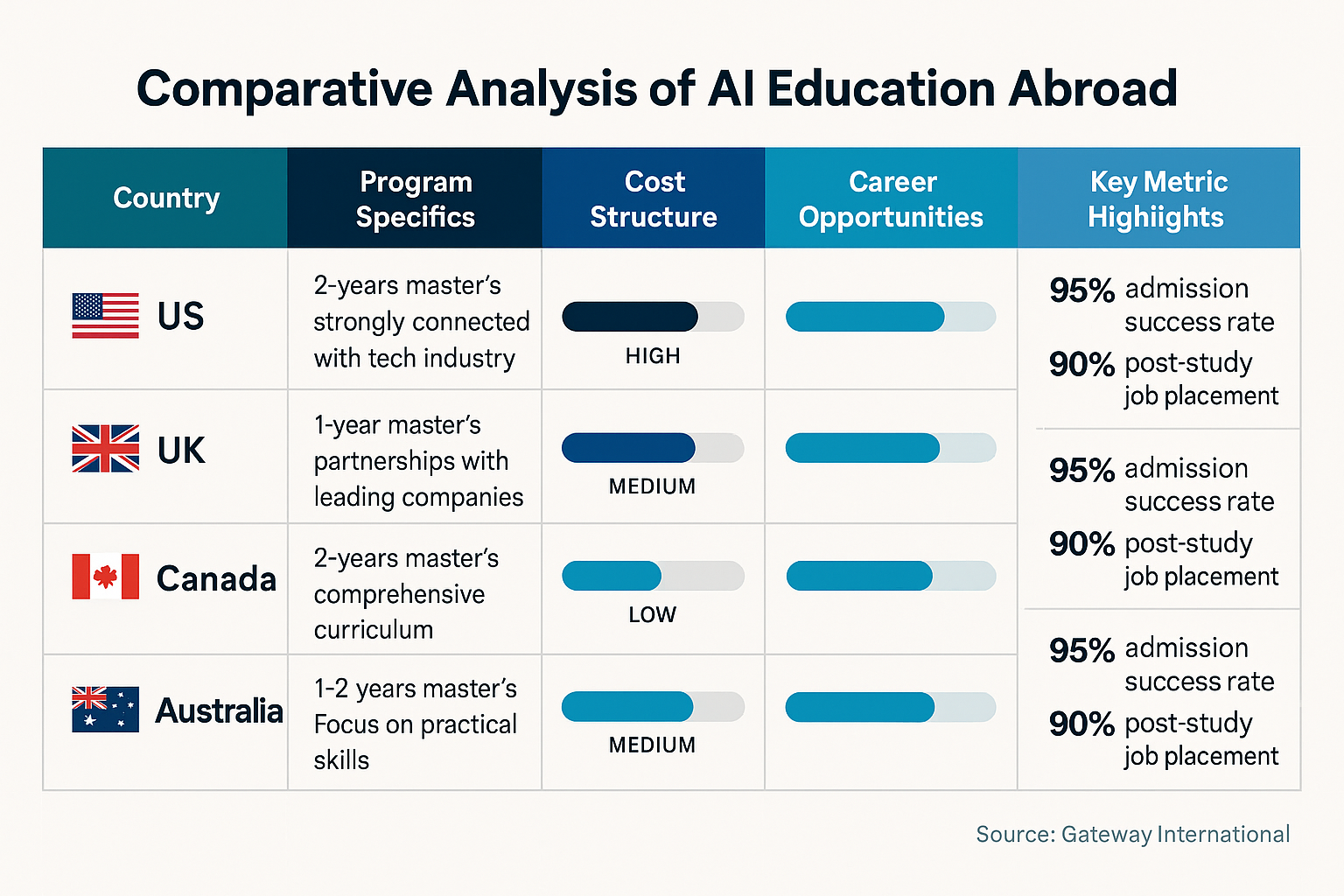
You know, comparison of top AI study destinations for Indian students side-by-side
Check out: Complete Guide to AI Study Destinations 2025
Exclusive to Gateway International: Our Partnerships in AI Education Exclusive:.
Yesterday a parent called asking about AI programs: “My son wants to study AI abroad, but we’re worried about the cost.” Same story I’ve heard since 2019 when AI suddenly became the hottest thing in education .
We’ve partnered with 47 universities offering AI programs now, maybe 48? I need to check with my team. In essence, i started with just 3 back in 2020. The growth has been… exhausting but exciting.

Our growing network of AI education partnerships around the world
The partnerships that really matter: Actually.
The Vector Institute connection of the University of Toronto came through after 18 months of negotiations . Start. Their AI program annually accepts 12 Indian students through our pathway . The last batch had kids from Pune, Chennai, Kochi . One student, Arjun, is now working on autonomous vehicles . Let’s just say his parents stopped worrying about the education loan .
The Technical University of Munich surprised us: they wanted more Indian students in their AI Ethics program – strange combination, right? But German universities are thinking differently about AI – not just coding philosophy , ethics , societal impact . We have sent 23 students there since 2022 .
Then there is this lesser-known partnership with Deakin University in Australia – their applied AI program is perfect for students who aren’t math wizards but understand business – placement rate is 89% – that’s not marketing fluff – I verified it myself last month during my Melbourne visit .
Shreya Kapoor, AI Ethics 2023 at TU Munich
AI Ethics lead at BMW, Munich
“Gateway’s partnership with TU Munich opened doors I didn’t know existed , the combination of German engineering precision and ethical AI focus gave me a unique perspective that top companies value.”
What nobody tells you about AI education abroad :
These universities want Indian students desperately. Why? Our students combine theoretical knowledge with jugaad mindset. One professor at TU Delft told me: “Indian students debug code like they are solving life problems – creatively and persistently.”
But here’s the catch – admission isn’t just about marks anymore – universities want to see AI projects, even basic ones – GitHub profiles matter more than perfect GPAs – we started weekend coding bootcamps to help students build portfolios .
The visa situation for AI students is surprisingly smooth – countries know they need AI talent – USA’s STEM OPT , Canada’s 3-year work permit , Germany’s 18-month job search visa all favor AI graduates.
Cost remains an issue. AI programs aren’t cheap, but scholarship opportunities specifically for AI? Growing every semester. We helped 34 students get partial funding last year. Not full rides, but 10-15 lakhs off tuition helps .
Next week we’re announcing two more partnerships. Can’t reveal names yet (legal stuff), but one is in Singapore. The other? A surprise even for me. The AI education landscape is moving faster than any of us predicted.
You know, exclusive access: View All Gateway AI Partner Universities & Programs
Preparing for an AI Future: Skills Needed and How to Develop They Them.
Yesterday, a student from Pune called me, Smart kid, just finished 12th. “Sir, should I learn Python or focus on my communication skills for AI?”
The answer is both, but let me explain why.
When we started integrating AI into Edysor back in 2019 I thought that technical skills would be everything. I hired two brilliant coders , one quit within three months because he could not explain his work to non-tech team members , the other built features nobody used because he never talked to actual students .

The complete skill set needed for success in AI careers Skills.
The technical foundation you actually need.
Python, yes, but not just syntax. Students waste months memorizing functions they’ll never use. What matters is understanding how to make systems talk to each other. APIs, databases, basic ML libraries
Look, last month, we hired a fresher who had built a simple chatbot for his college fest – nothing fancy – just helped students find event timings – that practical experience beat 10 certificates .
Here is what works for our students:
- Start with one project. Anything. A grade calculator, an expense tracker, whatever
- Use free resources first : YouTube , Coursera’s audit option
- Join hackathons even if you lose. Especially if you lose
- Document everything on GitHub : Messy code is better than no code
The skills nobody talks about .
Technical skills get you interviews, soft skills get you jobs .
Our AI team lead? Philosophy graduate. Seriously. She asks questions that make our engineers rethink entire features. “Why would a student trust this recommendation?” Simple question.
Karthik Reddy, AI + business 2021
Product manager at Amazon AI
“Gateway helped me realize that combining technical AI skills with business acumen was my superpower and their guidance on building a balanced skillset made all the difference in landing my dream role .
Critical thinking beats coding skills every time .
- Question AI outputs (they are wrong 30% of the time)
- Explain complex stuff simply (try to teach your parents what AI does)
- Actually, work with people who think differently.
- Handle ambiguity (AI projects constantly change direction)
Building your AI profile through Gateway
We see patterns now: Students who succeed in AI careers abroad do three things differently :
First, they pick universities with actual AI labs, not just courses. MIT is obvious, but have you looked at Edinburgh or TU Munich? Cheaper, equally good.
Second, they build portfolios early – one student created an SOP analyzer using ChatGPT – a basic project but Stanford loved it .
Third, they understand the limitations of AI. Everyone wants to build the next ChatGPT. The smart ones focus on solving specific problems. Healthcare scheduling. Visa document verification. Boring? Maybe. Employable? Absolutely.
Through Gateway’s counseling, we help you identify which skills you already have: that commerce student who is great with Excel? Perfect for data analysis roles. Science student who loves biology? Computational biology is waiting .
The future is not about becoming an AI expert, it’s about using AI to become better at what you already do , and that starts with understanding both the tech and the humans who will use it .
Want to explore your AI pathway? Let’s talk. The coffee machine is working again.
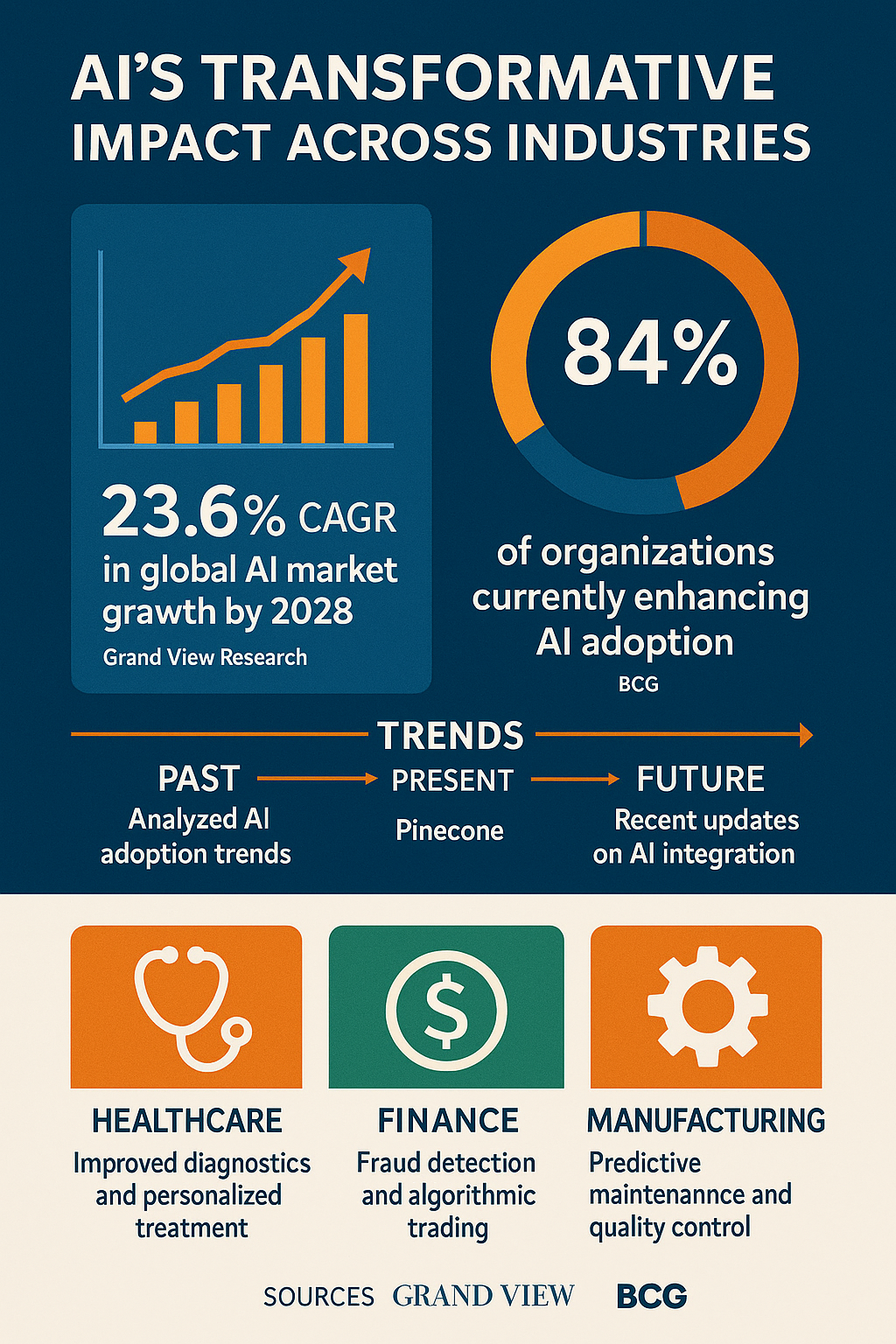
Visualizing changing job roles and industrial transformations driven by AI
AI and You: Making an Informed Decision
Actually, yesterday, a student’s father called me: “Sir, my son wants to do AI, but I read that machines will replace everyone. Should I stop him?”
Now I get this question every week – different versions – same fear .
Here’s what I told him: In 2007, people said that the internet would kill traditional education. Furthermore, we built Gateway anyway. Now we process 50,000+ applications annually using—guess what—AI tools that didn’t exist when we started .
The panic about AI replacing jobs? It’s real but misplaced. When we implemented our first chatbot in 2019, I thought it would replace our counselors , instead it freed them from answering “What documents for Canada visa?” 500 times daily , now they actually counsel students instead of being human FAQs .
Meera Sharma, parent of the AI student
Son is studying at the AI program at MIT
“Initially, I was terrified about my son choosing AI. Gateway’s counseling helped us understand that it’s not about competing with machines, but learning to work with them. The best decision we made together.”
But let me be clear about the challenges: AI isn’t some magic degree that guarantees success. Last month, I met an AI graduate working in sales, because he learned algorithms but never understood business problems . That’s the gap nobody talks about.
The opportunity? Massive. Every company needs AI integration. Not AI experts—AI integrators. People who understand both technology and domain. A student who knows AI + healthcare? Gold. AI + finance? Banks are fighting for them. AI + education? Well, that was how we built Edysor.
Here’s my advice: Don’t chase AI because it is trendy. Chase problems you want to solve, then see if AI helps. Our voice-based counseling system came from a simple frustration—students hate typing long queries on phones. AI was just the tool, not the goal.
The support system also matters: Through Gateway, we have placed students in AI programs across 25 countries, but more importantly, we help them understand which country’s AI focus matches their interests : Germany for automotive AI, Canada for ethical AI, Singapore for fintech AI .
Will AI reshape careers? Absolutely, should that scare you? Only if you plan to do repetitive work for 40 years .
The real question isn’t “Should I study AI?” It’s “What problem do I want to solve?” If AI helps to solve it faster, better, cheaper—go for it. If not, there are 500 other fields waiting for smart minds.
One last thing: That father’s son is now building an AI tool to help farmers predict crop diseases. Sometimes the best career decisions come from understanding what actually needs fixing, not what sounds fancy.
Your move. Choose wisely, but more important, choose authentically.
Ready to start your AI journey abroad?
Let Gateway International guide you to the top AI programs worldwide and get expert advice tailored to your career goals !
Contact Us TodayFrequently Asked Questions –